What Venezuela’s ‘Stained’ US Relationship Really Means
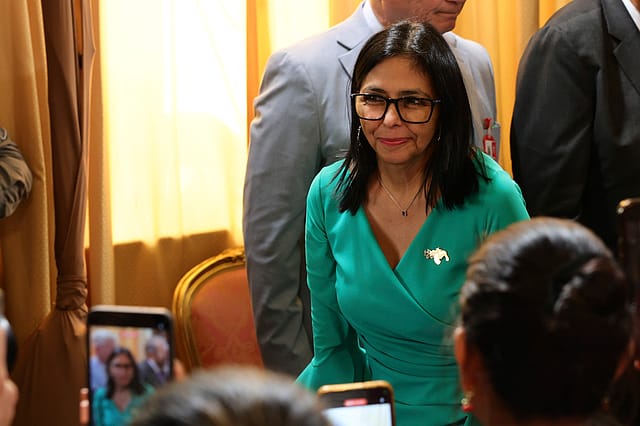
Venezuela’s relationship with the United States now carries what its leadership calls an “unprecedented stain.” But even as Caracas condemns Washington’s policies, it is signalling something equally clear: Venezuela is open for business, with or without the US at the centre.
Speaking on state television, interim President Delcy Rodríguez said US–Venezuela relations had suffered damage unlike anything seen before, accusing Washington of pursuing a policy of “exclusion.” Yet she was careful to separate politics from commerce, stressing that trade ties between the two countries are neither extraordinary nor disproportionate
Rodríguez pointed out that 71% of Venezuela’s exports go to just eight countries, with about 25% destined for the US, underscoring that while the US remains important, it is far from dominant. Venezuela, she said, is pursuing a diversified global economic strategy, engaging markets across continents and opening access to both public and private sector players.

Zeroing In on ECI
09 Oct 2026 - Vol 05 | Issue 41
Constitutional legitimacy versus political opportunism
“Products made in Venezuela will be our greatest ambassadors,” Rodríguez said, adding that the country remains open to collaboration and cooperation globally even as it resists political pressure from Washington.
The government is also preparing a fresh wave of domestic reforms. Rodríguez announced plans for legislation on socioeconomic rights, including measures to regulate price formation and curb speculation. She also outlined reforms to the National Electric Service Law, alongside a new framework to promote the “rational use of energy,” as Venezuela seeks to stabilise and modernise its power infrastructure.
On energy ties, Rodríguez rejected US-linked allegations around narcotics trafficking, calling them a pretext for resource-driven pressure. Venezuela, she said, remains open to energy relationships, provided they are structured as clearly defined commercial agreements that benefit all sides.
The messaging from Caracas, however, collided with statements from Washington.
Hours earlier, US President Donald Trump said Venezuela had committed to using revenues from a new oil agreement to purchase goods exclusively from the US, including agricultural products, medicines, medical devices and equipment for Venezuela’s power grid. Trump described the move as “wise and very beneficial,” framing the US as Venezuela’s primary economic partner.
The contrast highlights the fragile and transactional nature of the reset. While Caracas speaks the language of diversification and sovereignty, Washington is signalling leverage through trade and energy access.
Inside Venezuela, the political push continues. The National Assembly has begun a new legislative session, laying out six priority areas ranging from economic growth and peace consolidation to reorganising the country’s legal framework. Proposed reforms include new commercial, civil, environmental and electoral codes, an effort to streamline governance and project institutional stability amid ongoing tensions.
Rodríguez used the moment to call for reconciliation across political lines, warning against extremist forces and urging unity around sovereignty, development and peace.
The result is a familiar paradox: public estrangement paired with quiet economic engagement. For Venezuela, the strategy is clear: reduce dependence on any single partner while keeping the door open where interests align. For the US, energy and trade remain powerful tools, even as political trust erodes.
The relationship may be stained but it is far from severed.
(ANI and yMedia are content partners for this story)