What Does Zelenskyy Want India to Do About Russian Oil, and How Could Trump Apply Pressure?
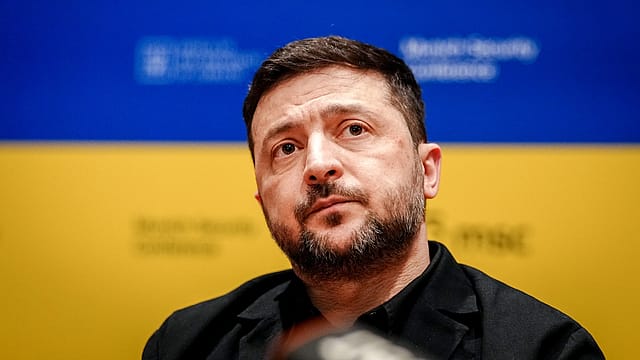
Ukrainian President Volodymyr Zelenskyy wants India to go further in reducing its energy trade with Russia, arguing that pressure from major buyers could help bring Moscow closer to ending the war. His appeal comes as India’s imports of Russian crude have fallen, while US President Donald Trump has signed legislation that gives Washington another instrument to pressure countries purchasing Russian oil and gas.
The two developments put India’s energy choices under renewed scrutiny. Zelenskyy is asking major economies to use their commercial relationships with Russia as leverage; Trump’s new law creates the possibility of tariffs against countries that continue buying Russian energy under specified conditions. Neither development, however, means that India has already agreed to halt its purchases or that new tariffs have automatically been imposed on it.

Zeroing In on ECI
09 Oct 2026 - Vol 05 | Issue 41
Constitutional legitimacy versus political opportunism
What does Zelenskyy want India to do?
Zelenskyy has called on India, China and Turkey to stop trading in Russian energy, saying pressure from these countries, alongside the United States, could help stop the war. His argument is that Russia’s ability to earn revenue from energy exports helps sustain its capacity to continue fighting.
The appeal places India in a difficult position between its energy requirements and the international pressure surrounding Russia’s invasion of Ukraine. India has continued to buy Russian crude even as Western governments have sought to limit Moscow’s energy earnings through sanctions and other measures.
For Kyiv, the issue is not only diplomatic support but also the economic resources available to Russia. Zelenskyy has repeatedly called for greater pressure on Moscow and has sought additional military assistance from Washington, including air-defence systems to protect Ukraine during the winter.
He has also expressed interest in a truce focused on energy infrastructure. Zelenskyy has said Ukraine would be prepared to stop attacks on Russian energy facilities if Russia halted strikes on Ukraine’s energy infrastructure. Such a proposal would depend on reciprocal action; it does not amount to an agreed ceasefire.
India’s Russian oil imports are falling, but Russia remains its largest supplier
India’s purchases of Russian crude have declined, but the trade has not stopped. Reuters reported that Indian imports of Russian oil fell 16.5 per cent month-on-month in August to about 2.1 million barrels per day. They were forecast to fall further to around 1.9 million barrels per day in September.
Even at those lower levels, Russia remained India’s largest oil supplier. The figures point to a changing import pattern rather than a complete break in energy ties.
The movement in imports comes amid wider uncertainty in global energy markets, including tensions involving the United States and Iran and disruption risks around the Strait of Hormuz. Such conditions can complicate decisions by refiners, who must balance price, availability, shipping and the risk of sanctions.
Indian refiners have been looking at spot-market purchases for the coming months and considering diversification of supply. Potential US sanctions and the need to manage procurement risks are among the factors shaping those decisions.
A decline in Russian crude imports does not, on its own, establish that India is responding directly to Zelenskyy’s appeal or to the new US legislation. Import volumes can reflect multiple commercial and geopolitical factors, and the available figures do not identify one cause as decisive.
How could Trump apply pressure?
Trump has signed the Sanctioning Russia and Iran Act, legislation associated with Senator Lindsey Graham that authorises tariffs of up to 100 per cent under specified criteria for countries purchasing Russian oil or gas, or helping evade sanctions.
The law gives the US administration another potential tool in its effort to put economic pressure on Russia and countries doing business with it. But the authorisation should not be confused with an automatic 100 per cent tariff on India. Any action against a particular country would depend on the law’s conditions and how the administration chooses to apply it.
That distinction matters for India, whose energy trade with Russia is substantial but whose purchases have already been moving lower. The possibility of tariffs adds another uncertainty for refiners and policymakers weighing the cost and reliability of different crude supplies.
Trump has also been engaging directly with Zelenskyy over the conduct of the war and the prospect of an energy truce. Reports have described US concern about Ukrainian strikes on Russian refineries, partly in the context of global oil prices. Ukraine, meanwhile, has sought further military support, including Patriot air-defence systems, as it prepares for winter.
These strands of policy do not necessarily point in the same direction: Washington is seeking to pressure Russia and has created a tariff mechanism aimed at countries buying its energy, while also expressing concern about attacks on Russian energy infrastructure that could affect oil markets.
What is at stake for India?
India’s immediate question is how to preserve energy security while navigating competing demands from its partners. Russian crude has remained an important part of its supply mix, but continued purchases may carry greater geopolitical and commercial uncertainty if Washington decides to use the new tariff authority.
A sharp reduction in Russian imports could require refiners to find replacement supplies and assess the effect on costs, logistics and availability. Continuing purchases, meanwhile, could expose India to diplomatic pressure and the possibility of US trade measures, depending on how the law is implemented.
For Zelenskyy, the appeal is part of a broader effort to reduce the resources Russia can draw on to sustain its war. For Trump, the legislation adds a potential means of applying pressure beyond direct measures against Moscow. For India, the outcome remains a matter of energy procurement and foreign policy, with no announced blanket halt to Russian oil purchases in the developments described here.
The central uncertainty is how these pressures will translate into policy. India’s imports have already declined, but Zelenskyy is asking for a more consequential step. Trump’s law creates a further possibility of economic pressure, but its impact on India will depend on whether and how the administration invokes it.
(With inputs from ANI)