18 Years of Talks, No Reform: India, G4 Demand UNSC Overhaul
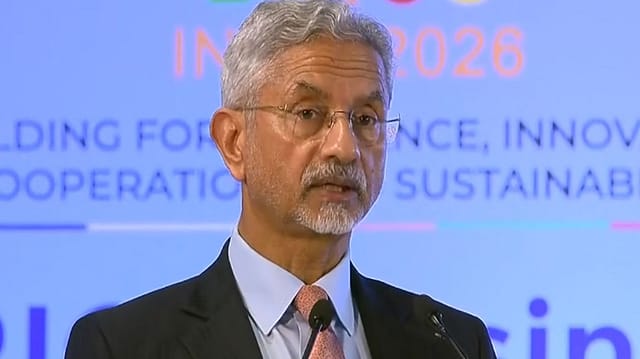
Eighteen years of negotiations have failed to deliver substantive reform of the United Nations Security Council, the G4 countries said, calling for an early overhaul of a body they accused of being unable to fulfil its central responsibility of maintaining international peace and security.
India, Brazil, Germany and Japan issued the appeal after their foreign ministers met in New York on September 22, on the sidelines of the 81st UN General Assembly. Their joint statement questioned the Council’s representativeness, legitimacy, credibility and effectiveness, arguing that its structure no longer reflected the world it was meant to serve.
An Eight-Decade-Old Structure Under Scrutiny
External Affairs Minister S Jaishankar met Brazil’s Mauro Vieira, Germany’s Johann David Wadephul and Japan’s Motegi Toshimitsu for the G4 discussions.
The ministers said an increasingly difficult geopolitical environment had made reform “more necessary than ever before”.
“The G4 Ministers noted that the UNSC is currently unable to effectively discharge its core responsibility of maintaining international peace and security,” their statement said.

Zeroing In on ECI
09 Oct 2026 - Vol 05 | Issue 41
Constitutional legitimacy versus political opportunism
They attributed the shortcomings to the Council’s “anachronistic eight-decades-old architecture”, describing it as an obstacle to addressing current and future security challenges. An early restructuring, they argued, was necessary to make the institution fit for contemporary global realities.
More Seats, Wider Representation
The G4 reiterated that expansion in both permanent and non-permanent membership must be central to reform.
The ministers sought greater representation for regions and groups inadequately represented on the Council, including Africa, the Asia-Pacific, and Latin America and the Caribbean. They also called for increased participation by countries making significant contributions to international peace, security and the UN’s wider objectives.
Africa’s demand for stronger representation received particular emphasis. The G4 welcomed the African Group’s reform model, presented during the Intergovernmental Negotiations in the UN General Assembly’s 80th session, and reaffirmed support for African representation in the permanent membership category.
Eighteen Years, No Substantive Breakthrough
The ministers expressed concern that the Intergovernmental Negotiations, or IGN, had continued for 18 years without producing concrete outcomes towards substantive Council reform.
They also raised objections to the presentation of a “bridging proposal” before negotiations on a reform text had begun. In the G4’s assessment, the proposal did not reflect the position of a clear majority of UN members favouring expansion in both membership categories.
The four countries further argued that consensus was not the benchmark for decisions on Security Council reform under the UN Charter and the IGN mandate.
Their immediate priority is to begin text-based negotiations. They said they would work with other groups seeking reform to find common ground and develop a consolidated model reflecting the majority view among member states.
Jaishankar Seeks a More Responsive Council
Following the meeting, Jaishankar said the discussions centred on reformed multilateralism and a Security Council capable of reflecting present-day realities.
“Discussed the imperative of reformed multilateralism and a more representative, responsive and effective UN Security Council that reflects today’s global realities,” he wrote on X, adding that the four countries would continue working towards that objective.
Wadephul similarly argued that changes in the international system needed to be reflected in the Council’s composition.
“Since the founding of the UN the world has changed profoundly,” he wrote, calling for a more inclusive Council and more appropriate representation for African voices.
New Delhi to Host the Next Review
The G4 agreed to maintain close coordination during the UN General Assembly’s 81st session and instructed officials to follow up on the ministerial discussions.
Progress will be reviewed at the next Director General-level meeting in New Delhi.
Jaishankar also held a separate meeting with Wadephul to exchange assessments of the Ukraine and Gulf crises. Describing Germany as a G4 partner, he said cooperation between the two countries at the UN and other multilateral forums remained robust.
With inputs from ANI