Crimea Bridge Closed After Ukrainian Attack; Russia Strikes Two Kyiv Bridges
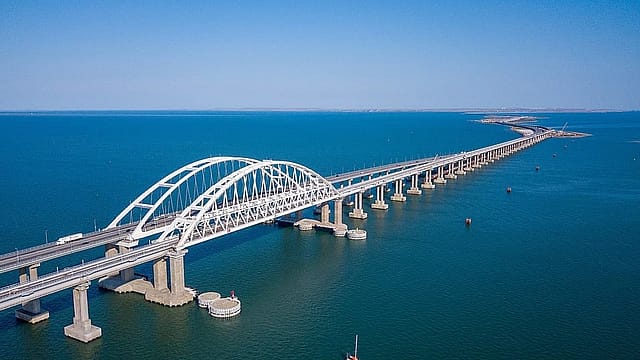
The war between Russia and Ukraine has entered another phase of escalation, with both sides targeting strategically important bridges and transport infrastructure. Ukraine struck the Kerch Bridge, also known as the Crimea Bridge, for a second consecutive day, forcing its closure, while Russian forces hit two major bridges in the Ukrainian capital, Kyiv.
The latest Ukrainian attack on Tuesday damaged the bridge connecting mainland Russia to the Crimean Peninsula, which Moscow annexed in 2014. The Russian-installed governor of Crimea, Sergey Aksyonov, confirmed that traffic had been suspended following the strike and advised residents and visitors against travelling towards the crossing.
According to reports, photographs circulating after the attack appeared to show a section of the bridge's road arch collapsing into the Kerch Strait. The railway section also reportedly sustained damage. Russian authorities said experts were assessing the extent of the damage.

The Wealth Issue 2026
06 Nov 2026 - Vol 05 | Issue 45
Portraits of Dreamers and Doers under 35
The attacks came after Ukraine targeted the bridge on Monday as well, leading to a temporary suspension of traffic. The second strike has raised fresh questions about the ability of Russian forces to protect one of Moscow's most important logistical links to Crimea.
WHY THE KERCH BRIDGE MATTERS
Stretching approximately 19 kilometres across the Kerch Strait, the bridge connects Russia's Krasnodar region with the Crimean Peninsula. It carries both road and rail traffic and has served as an important supply route for Russian military operations in southern Ukraine.
The bridge is also politically significant for Russian President Vladimir Putin. Constructed after Russia's annexation of Crimea in 2014, it was inaugurated by Putin in 2018 and became a symbol of Moscow's control over the peninsula.
Ukraine has repeatedly targeted the structure since Russia launched its full-scale invasion in February 2022.
In October 2022, a truck bomb caused a major explosion on the bridge, damaging its road section and setting several fuel tankers on a passing train ablaze. In July 2023, Ukrainian sea drones struck the crossing again, damaging another section.
The latest attack could complicate Russian military logistics, particularly if repairs take an extended period. With the bridge shut, alternative movement between Crimea and mainland Russia would depend heavily on routes through Russian-occupied parts of southern Ukraine.
RUSSIA STRIKES TWO KEY BRIDGES IN KYIV
While Ukraine targeted the Crimean crossing, Russian forces struck two major bridges over the Dnipro River in Kyiv late on Monday.
Kyiv Mayor Vitali Klitschko confirmed the attacks on the Northern and Southern bridges, saying preliminary information indicated that both structures had been hit.
"According to preliminary information, there have been hits on the North and South bridges in the capital," Klitschko wrote in a Telegram post.
The strikes were part of a wider overnight barrage involving missiles and drones. According to Klitschko, the attacks also damaged critical infrastructure, partially affected the city's subway system and triggered water and electricity disruptions in some neighbourhoods. Traffic restrictions were imposed as authorities assessed the damage.
The Northern and Southern bridges are important transport arteries connecting different parts of Kyiv across the Dnipro River. Any disruption to these crossings can affect daily commuting and the movement of essential supplies across the capital.
Russia's Defence Ministry confirmed that its forces had struck transport, military and energy facilities in Kyiv, Zaporizhzhia, Cherkasy and Dnipropetrovsk. It also said port infrastructure and cargo vessels had been targeted.
Local officials reported that three people were injured in the Cherkasy region. Other areas, including Kharkiv, Ukraine's second-largest city, also reported attacks.
RECORD DRONE BARRAGE AND WIDER ESCALATION
The exchange of attacks followed an extensive Ukrainian drone offensive against Russian territory. Russia's Defence Ministry claimed that its air defence systems intercepted 1,441 Ukrainian drones overnight across 22 regions, including Russian-controlled parts of Ukraine.
Moscow Mayor Sergei Sobyanin said more than 800 drones had been directed towards the capital region, with air defence systems intercepting them.
The figures released by Russian authorities could not be independently verified.
Ukraine has increasingly targeted Russian oil refineries, military facilities and transport infrastructure as part of its strategy to disrupt Moscow's war effort. Russian forces, meanwhile, have continued strikes on Ukrainian energy facilities, transport networks and other critical infrastructure.
TRUMP'S CHINA MEETING ADDS A DIPLOMATIC DIMENSION
The latest attacks come just ahead of a planned trilateral meeting between US President Donald Trump, Russian President Vladimir Putin and Chinese President Xi Jinping in Shenzhen, China.
The meeting, expected to bring together the three leaders for the first time in this format, is likely to address nuclear proliferation and wider geopolitical tensions, including the conflicts in Ukraine and Iran.
Trump has indicated that the Russia-Ukraine war will feature in his discussions with Putin and Xi, even as Washington continues to pursue diplomatic efforts to end the conflict.
Ukrainian President Volodymyr Zelenskyy had earlier warned that Russia was preparing fresh attacks, urging citizens to remain alert to missile and drone threats.
The latest strikes also follow discussions involving Ukrainian, American and European negotiating teams. US special envoys Steve Witkoff and Jared Kushner have been involved in efforts to bring the sides closer to a peace agreement.
However, the targeting of major transport links on both sides underlines how far the conflict remains from a resolution. With the Crimea Bridge shut and two important crossings in Kyiv damaged, the latest exchange demonstrates the continuing vulnerability of critical infrastructure nearly five years after Russia launched its full-scale invasion in February 2022.