‘We Do Not Seek War’: Iran President’s Strong Message to Muslim Nations
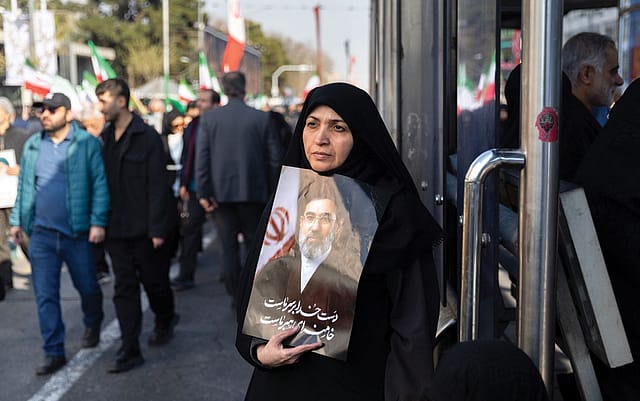
On the occasion of Nowruz and Eid al-Fitr, Iran President Masoud Pezeshkian has proposed the formation of an “Islamic Assembly of the Middle East,” underscoring the fact that regional nations must take ownership of their security and future.
“There is no need for foreign presence in the region. Together, we can form an 'Islamic Assembly of the Middle East' to coordinate security, economic, cultural, and political relations. We have no right to fight with one another. We must not, under any pretext, fall into the traps set for us by our enemies,” he added.
Pezeshkian also pushed for an Islamic security framework to ensure lasting peace.
“Our dear neighbours who surround Iran, you are our brothers. For any misunderstandings or damage that may have arisen in our relations, we pray that God helps remove these differences. We are ready to resolve all issues with you, dear ones. To ensure regional peace and stability, an Islamic security framework among Middle Eastern countries should be established in order to guarantee peace, security and the stability of the region,” the Iranian president said.
Does Iran truly seek peace with its neighbours?
Reiterating Tehran’s stance, Pezeshkian stated that Iran does not seek conflict or interference in the affairs of other nations.
The Abandoned Kejriwal
01 May 2026 - Vol 04 | Issue 69
Brain drain from AAP leaves Arvind Kejriwal politically isolated
“We declare to the world that we are not seeking turmoil in the region. We do not want any country to be forced to stockpile weapons and ammunition just to defend itself, constantly waiting and wondering whether its territory will be attacked or not. We are in no way thinking of interfering in the internal affairs of other countries. We absolutely do not wish for the security and stability of the region to be disrupted,” Pezeshkian said in a statement issued by the Iranian Embassy in Sri Lanka.
He further stressed unity among Muslim nations, warning against divisions.
“At the outset, I find it necessary to offer my condolences to the noble people of our country on the martyrdom of the Supreme Leader and the devoted servants of this nation. "We do not seek conflict with Muslim countries. We are not pursuing war with Islamic nations; they are our brothers. The divisions that have emerged are the work of a treacherous enemy seeking to create discord among Muslims," Pezeshkian said.
Who does Iran blame for the region’s turmoil?
In a sharp critique, Pezeshkian accused Israel of fuelling instability across West Asia.
“This is something we can resolve ourselves, by working together and joining hands. This is a message to the countries of the region: instead of using the media to promote the narrative to your own people that Iran is the cause of instability in the region, you should recognise and understand that it is Israel that is responsible for turmoil, instability, acts of genocide, terrorism, and sabotage in the region,” he added.
Amid ongoing conflict entering its fourth week, the Iranian president also called for internal unity, invoking both grief and resilience.
“We must strive to set aside all grudges, resentments, and differences. This year, more than ever, we need a Nowruz that reflects unity, cohesion, and national solidarity. We must abandon hatred, overcome hardships, and join hands and ensure that our Iran stands proud amidst these storms and crises. Eid al-Fitr is a celebration of self-purification after a month of spiritual discipline,” Pezeshkian said.
(With inputs from ANI)