Venezuela After Maduro: Oil Is Flowing Again. Democracy Is Still Waiting
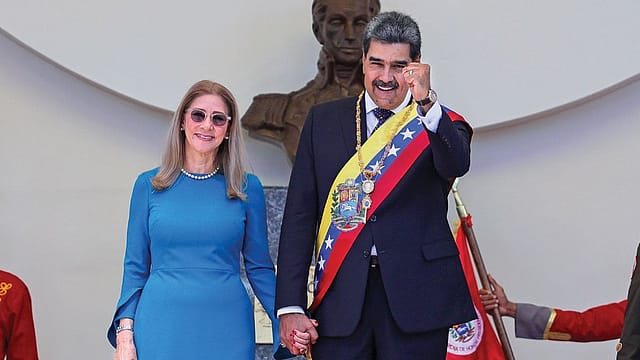
Nicolás Maduro is gone. The oil is moving. The Americans are back.
Venezuela, however, is still waiting for democracy. Seven months after US forces stormed Caracas, captured Maduro and flew him to New York to face drug-trafficking charges, the country he ruled for more than a decade occupies a strange political space. It is no longer quite Maduro's Venezuela. It is not yet the Venezuela his opponents spent years fighting for either.
The US embassy in Caracas has reopened after years of broken relations. Venezuelan oil exports have rebounded to levels not seen in years. The IMF and World Bank have resumed dealings with the country. Political prisoners have been released. Media criticism has become somewhat less dangerous. And interim President Delcy Rodríguez, once one of Maduro's most important allies, is now working closely with Washington.

Zeroing In on ECI
09 Oct 2026 - Vol 05 | Issue 41
Constitutional legitimacy versus political opportunism
But look beneath that transformation and the old architecture of power remains remarkably intact. Rodríguez still runs the government. Interior Minister Diosdado Cabello, one of the most powerful figures of the Chavista establishment and a man wanted by the US, remains in office. María Corina Machado, Venezuela's most prominent opposition leader, remains outside the formal transition. And as of August 14, human-rights group Foro Penal still counted 391 political prisoners in Venezuela. So, has Venezuela really changed or has Washington engineered an economic and geopolitical reset without yet producing a democratic one?
What actually happened to Maduro?
On January 3, US forces carried out an extraordinary military operation inside Venezuela, capturing Maduro and his wife, Cilia Flores, and taking them to the United States. Reuters reported that the operation involved more than 150 aircraft, US special forces, intelligence collected by a CIA team inside Venezuela and rehearsals using a mock-up of Maduro's secure residence. Maduro was subsequently taken to New York, where he pleaded not guilty to US narcotics charges and insisted that he remained Venezuela's legitimate president. What happened next was almost as striking as the raid itself. Washington did not immediately hand power to Venezuela's opposition. Instead, Maduro's vice-president, Delcy Rodríguez, became interim president. That decision established the contradiction that still defines Venezuela today: the man at the top was removed, but much of the system underneath him survived.
So, who is really running Venezuela?
Formally, Rodríguez. In practice, power remains distributed among several figures from the old establishment. Rodríguez controls the civilian government and has rapidly built a working relationship with the Trump administration. Her brother, Jorge Rodríguez, remains head of the National Assembly. Cabello remains interior minister and a major force within the ruling PSUV party and security apparatus. Reuters reported in January that the Trump administration had also been communicating with Cabello, despite the US indictment against him and a $25 million reward offered for information leading to his capture. That helps explain why describing Venezuela as a straightforward democratic transition is misleading. Maduro was removed. The political machine that sustained him was not dismantled.
How deeply is Washington involved now?
Very deeply. On January 15, CIA Director John Ratcliffe flew to Caracas to meet Rodríguez, becoming the highest-level known US visitor after Maduro's removal. According to Reuters, the two discussed intelligence cooperation, economic stability and ensuring Venezuela was no longer a haven for drug traffickers and other US adversaries. By March, the United States had formally reopened its embassy in Caracas. The symbolism was enormous. Diplomatic relations that had effectively collapsed years earlier were being reconstructed within months of the US military operation. Washington is also heavily involved in Venezuela's energy future, with US officials pushing for foreign investment and greater access to the country's enormous oil reserves. The relationship is no longer defined principally by sanctions and isolation. It is increasingly defined by leverage and cooperation.
Has Venezuela's oil comeback begun?
Yes. And this may be the clearest measurable change since Maduro's removal. Reuters reported that Venezuelan oil exports reached 1.25 million barrels per day in May, their third consecutive monthly increase and 61% above the level a year earlier. The US was the largest destination, followed by India and Europe. That rebound followed Washington's easing of restrictions and changes to Venezuelan law giving foreign producers greater freedom to operate and export crude. The turnaround is remarkable considering where Venezuela began the year. Immediately after Maduro's capture, the US blockade had effectively frozen exports and forced PDVSA to cut production as storage tanks filled. Months later, oil was moving again. The oil ministry has forecast crude production of 1.37 million barrels per day by the end of 2026, according to Reuters, which would represent a significant recovery from late 2025 levels. But Venezuela remains far below its historic production peaks, and rebuilding its neglected oil infrastructure will require enormous investment. AP has noted that decades of underinvestment, sanctions and deterioration mean a full recovery could take years.
Have sanctions actually been lifted?
Some have been eased. That distinction matters. Washington has issued licences allowing more activity in Venezuela's oil, gas and financial sectors and has progressively reopened economic channels since Maduro's removal. Reuters reported in March that the US had been easing sanctions while taking control of Venezuelan oil-sales proceeds through a fund. But Venezuela is not suddenly free of the sanctions architecture built up over years. The interim government continues to push Washington for the removal of remaining restrictions, including during US-backed negotiations with sections of the opposition. So, the cleaner description is not “sanctions lifted”. It is sanctions relief and selective economic reopening.
What about the IMF and World Bank?
They're back. In April, the IMF and World Bank resumed formal dealings with Venezuela after relations had been frozen since 2019. Reuters described the move as potentially opening the way for the IMF's first comprehensive assessment of the Venezuelan economy in roughly two decades and eventually giving Caracas access to billions of dollars in frozen special drawing rights. Venezuela is also attempting to restructure an external debt pile estimated at $150 billion to $170 billion. That matters enormously. For years Venezuela existed largely outside the global financial system. Re-engagement with the IMF, World Bank and international creditors represents a major step towards normalisation. Yet financial rehabilitation and political rehabilitation are two very different things.
Are ordinary Venezuelans feeling the recovery?
For many, not yet. Oil exports may be rising, but everyday purchasing power remains battered. Rodríguez raised the country's monthly minimum income package to $240 in May, though Reuters noted that much of the income comes through bonuses rather than the statutory base wage. Inflation remains brutal. In July alone, consumer prices rose 19.9%, according to central-bank data reported by Reuters. Annual inflation had reached 575.9%. That is the fundamental disconnect in Venezuela's recovery. Tankers can leave ports again. Foreign investors can return. Embassies can reopen. But none of those developments immediately makes food, medicine or rent affordable. For the Venezuelan household, geopolitical normalisation is still some distance from economic normality.
Did the earthquakes make everything worse?
Dramatically. On June 24, Venezuela was hit by two devastating earthquakes of magnitude 7.2 and 7.5. The initial casualty reports were in the dozens. The eventual scale was catastrophic. By early August, the official death toll had risen to 6,125, according to figures reported by Reuters. Nearly 61,000 people had been treated at hospitals, while only 16.5% of the debris generated by the quakes had been cleared. The disaster also exposed the weakness of Venezuelan institutions. Residents and opposition figures criticised the government's slow response, with reports of civilians digging through rubble while state assistance struggled to reach victims. Reuters and AP have both documented criticism of delayed and poorly coordinated rescue efforts. The earthquakes therefore became more than a natural disaster. They became an early stress test for the post-Maduro state. And the state struggled.
Has there been any genuine political opening?
Yes. Just not enough to call it a democratic transition. After Maduro's removal, prominent opposition figures, activists and journalists began emerging from hiding. Some television channels reopened space for critical voices that had disappeared under the previous government. AP reported in February that Venezuelans were beginning to test the boundaries of free speech again. An amnesty law followed. By late February, the government said nearly 2,200 people had either been released from prison or had legal restrictions removed under the law. That sounds dramatic. Yet human-rights organisations argued that the amnesty remained incomplete and excluded significant numbers of political detainees. The latest evidence reinforces that. On August 14, the government announced alternative detention measures for 131 prisoners. Foro Penal said it had confirmed 29 releases and still counted 391 political prisoners in the country. Progress, then. But not closure.
What happened to María Corina Machado?
This may be the clearest indication of how incomplete the political transition remains. Machado became the dominant figure of Venezuela's opposition after winning its primary before the disputed 2024 presidential election. Maduro's government barred her from standing, and she eventually left the country after living largely in hiding. Her ally Edmundo González was widely considered by outside observers to have won the 2024 election, despite Maduro declaring victory. After Maduro's capture, many Venezuelans assumed Machado would become central to the country's political future. That didn't happen. Trump publicly questioned whether she had enough domestic support to govern, while Washington chose to work with Rodríguez instead. More recently, US-backed talks about Venezuela's political future began without Machado participating directly. She has said she will judge any negotiations on whether they restore democratic institutions, free political prisoners and schedule elections. Seven months after Maduro's removal, Venezuela's most prominent opposition leader remains outside the room where much of the country's future is being negotiated.
So, when are Venezuela's elections?
That is the problem. There is still no clear timetable for a genuinely free and competitive presidential election. And frustration is growing even inside Washington. Earlier this month, a bipartisan group of US senators, including Republican Ted Cruz and Democrat Jeanne Shaheen, introduced a resolution calling for free and fair elections, the release of political prisoners and guarantees that all political actors, including Machado, can safely participate. That intervention is revealing. The United States removed Maduro in January. Seven months later, American senators are still asking Venezuela to produce the democratic transition that many assumed would follow.
Has US strategy worked?
It depends entirely on what Washington's objective was. If the objective was to remove Maduro, weaken Venezuela's alignment with US adversaries, reopen access to its oil, tackle narcotics networks and restore American influence in Caracas, there has been substantial progress. Venezuela has moved closer to Washington. Its oil is once again flowing strongly to the US. The embassy has reopened. The CIA is cooperating with the interim leadership. The IMF and World Bank are re-engaged. And Venezuela has even begun repairing relationships far removed from the Chávez-Maduro foreign-policy orbit, including a recent move towards restoring consular ties with Israel after a 17-year break. But if the objective was the rapid creation of a functioning liberal democracy, the verdict looks very different.
So, is Venezuela finally free?
That depends on what you mean by free. Free of Maduro? Yes. Free of the political system built around him? No. Free to sell more oil? Increasingly. Free of crushing inflation? Far from it. Free of political prisoners? No. Free to choose a new government in a genuinely competitive election? Not yet. That is Venezuela's strange post-Maduro reality. The country's tankers are moving faster than its politics. Washington has achieved a dramatic geopolitical realignment in barely seven months. The economic doors that were once bolted shut are opening one after another. But democracy has proved much harder to restart than oil production. Maduro was removed in a night. Rebuilding the country he left behind may take years.
(With inputs from yMedia)