QUICK TAKE | China Returns US Airmen’s Remains. What Was the WWII ‘Hump’ Route From Assam? Seven Things to Know
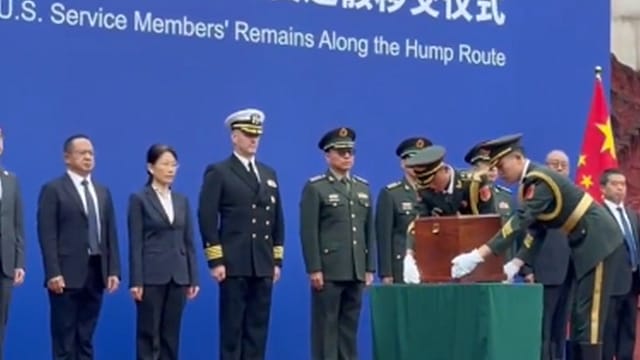
1. What happened in Chengdu?
China handed over remains recovered along the Hump route to the US military at a ceremony in Chengdu, Sichuan, on November 10. China’s defence ministry did not say how many airmen the remains represented or whether they had been identified.
2. What was the Hump?
It was the Allied supply route from airfields in Assam, then part of British India, across the eastern Himalayas to southwest China. Kunming was a key destination. Aircrews called the mountains they had to cross “the Hump”. The airlift ran from 1942 to 1945.
3. Why did the Allies have to fly the supplies in?
Japan’s advance through Burma in 1942 cut the Burma Road, the main overland supply route into China. Flying from Assam kept fuel, ammunition and other supplies reaching Chinese and Allied forces fighting Japan.
4. What made the flights so dangerous?
Transport aircraft could take off from airfields barely 100 feet above sea level and climb to around 18,000 feet to clear the mountains. Crews flew unpressurised aircraft through storms and icing, with limited navigation aids. On some routes they also faced Japanese fighters.

The Wealth Issue 2026
06 Nov 2026 - Vol 05 | Issue 45
Portraits of Dreamers and Doers under 35
5. How much did the airlift carry, and at what cost?
The operation delivered about 650,000 tons of cargo. A wartime Air Transport Command tally listed 509 aircraft that crashed and another 81 that went missing. It recorded 1,314 crew members killed and 345 still missing.
6. When did trucks start reaching China again?
Allied engineers built a road from Ledo in Assam through Burma and linked it to the old Burma Road. The first convoy reached Kunming in February 1945. The airlift continued alongside the road convoys and officially closed in November, after the war ended.
7. Has India helped recover airmen from the Hump?
Yes. In 2018, the US military accounted for Joseph Natvik, a flight engineer whose aircraft left Jorhat for China in July 1945 and crashed en route. The US agency responsible for finding missing service members credited India for its help in that recovery.