EXPLAINED | Chinese Vloggers Filmed in Dhaka. Why Call It New Delhi?
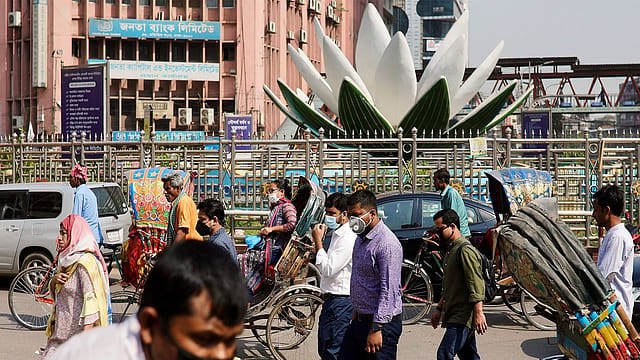
On 1 November, a woman livestreaming beside a canal in Dhaka told viewers, “This is New Delhi,” according to the Bangladeshi newspaper Prothom Alo. Its report identified her as a Chinese streamer called Mianmian. On 10 November, India’s foreign ministry called the reported misrepresentation unfortunate and urged the authorities concerned to act. For India, the story is about a false portrayal of its capital. For the people whose homes appear in the videos, it is also about who gets to film them and where those pictures end up.
How did a canal in Dhaka become ‘New Delhi’ on camera?
The switch was in what the streamer said. Prothom Alo placed Mianmian beside a canal in Uttara’s Sector 12, in northern Dhaka. She showed viewers Tekpara, a neighbourhood on the banks of that canal, and described the homes and living conditions as if she were in India’s capital. The paper also described a broadcast in which another streamer, identified as Wang Wei, mocked what people were drinking at tea stalls near a small bridge in Tekpara.

The Wealth Issue 2026
06 Nov 2026 - Vol 05 | Issue 45
Portraits of Dreamers and Doers under 35
The newspaper visited the area on 27 October and 3 November, photographed people filming and tried to speak to 17 Chinese nationals. It says it used Google Translate to interpret some of the commentary, then had four Bangladeshis who knew Chinese check it. The examples here come from that reporting. OPEN could not independently retrieve the original livestreams or verify the accounts’ audience figures.
How long has this been going on?
The filming was visible by May. On 28 May, Bangladeshi outlet The Business Standard reported seeing several people filming and talking into their phones in Tekpara. A resident told the paper he had seen vloggers there for about a year and that neighbours had already objected to people entering homes with cameras. That earlier report establishes a history of filming and complaints. The specific claim about Dhaka being passed off as Delhi comes from Prothom Alo’s November reporting.
Were 150 vloggers really doing this?
The figure is a neighbourhood estimate. Residents told Prothom Alo they thought more than 150 Chinese nationals had been filming in the area. The newspaper said it had no accurate count. The estimate covers people seen filming. How many accounts made the Delhi claim, how often they made it and how many people saw it are separate questions. The report also describes streamers who spoke about Bangladesh by name.
What could the streamers get out of it?
One streamer gave a commercial explanation. A man identified as Fangyou told Prothom Alo that his group went live on WeChat to promote products. Ritu Akhter, a local guide, said she earned 700 to 800 Bangladeshi taka a day helping the streamers and that they made money from videos on WeChat and Douyin, ByteDance’s short-video app in China. The newspaper described one streamer asking viewers to guess the brand of an air conditioner for a prize.
In China’s livestream shopping business, presenters can hold an audience’s attention while showing products and inviting viewers to buy. That makes commerce a plausible explanation for some of the activity. Fangyou declined to explain why his group chose that neighbourhood or broadcast for so long. His account leaves the central question open. Why tell viewers they were in Delhi?
Has anyone shown that this was a coordinated campaign?
The public evidence establishes individual examples of misleading commentary. It leaves who directed or paid for those examples unresolved. At his 10 November briefing, Indian foreign ministry spokesperson Randhir Jaiswal referred to reports of people being paid to portray Dhaka as Delhi. He called for action. The briefing coverage cited no sponsor or evidence of Chinese government involvement. Akhter’s account describes payment for guiding visitors around Dhaka. Payment to producers for using a false location would require separate evidence, such as instructions, contracts or transfers.
What do the people being filmed say?
Some say streamers went into homes without asking. Residents told both Bangladeshi newspapers about cameras entering private spaces. One woman told Prothom Alo that people were sometimes filmed at home while they were unprepared to be seen. Several residents also said they could see the phones but could not understand the commentary. For them, the intrusion would matter even if the videos had correctly identified Dhaka.
How do you check a video when the pictures are real?
Start with something that stays put. In June 2026, AFP examined a video shared as footage of people being evicted in India. It found an earlier upload from a Bangladeshi news outlet, matched buildings to street imagery and called a shopkeeper who confirmed the scene was in Pallabi, Dhaka. In January, AFP used signs, station images and a police check to trace footage shared as an attack in Bangladesh to a railway station in Indian Punjab. In the Uttara case, a saved stream would let others match the canal, bridge or storefronts to the location and check the spoken claim against the original audio.
Has filming vulnerable people for overseas viewers caused trouble before?
Yes. In 2022, BBC Africa Eye traced videos sold online in China to a village in Malawi. Children had been prompted to repeat phrases they did not understand, including racist language. A Malawian court convicted the producer, Lu Ke, in 2023. That case shows what a documented chain of evidence can establish about a producer and the people filmed. The Dhaka reporting leaves the streamers’ business arrangements and motives largely unresolved.
What can Dhaka’s police and the platforms establish now?
The local police chief, Mohammad Khalid Mansur, told Prothom Alo that he had informed senior officers and that work was underway. He said he did not know why the videos were made or where they were shown. As of 10 November, OPEN could not verify a public finding from Bangladesh’s authorities or a response from the Chinese embassy or the platforms. A police account could clarify the complaints about people entering homes. The original streams, account records and any sponsorship or sales records could show how often the false location was used and whether someone paid for it.