Valentino Garavani (1932-2026): Purveyor of Beauty
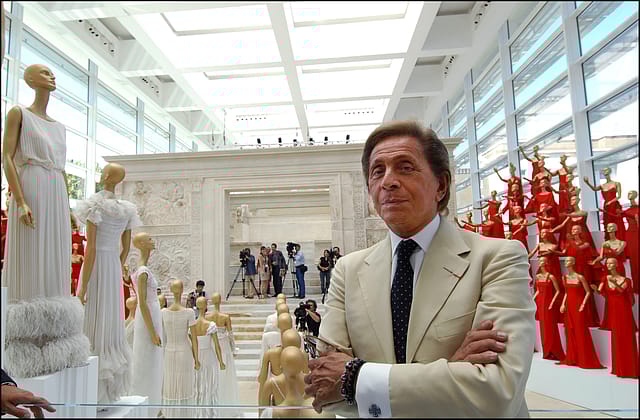
“This was the best thing for me, to create dresses. I am a disaster in everything else,” says Valentino Garavani, to a room full of people, drawing laughter, in Valentino: The Last Emperor. Released in 2008, the film shadowed the Italian couturier between 2005 and 2007, as he mounted his final show before retiring from the brand and making way for other creative directors. Almost two decades later, when Valentino died on January 19, 2026, the film’s title returned to headlines and social media. The last emperor of 20th-century fashion was gone.
The documentary’s title echoed a moniker that had come to be associated with Valentino over the decades. It wasn’t because he dressed royalty—although he outfitted plenty of them, along with A-list movie stars and celebrities. It was more likely because, since opening his own fashion business in the beginning of the Sixties, Valentino had grown to be one of the most, powerful figures in fashion and haute couture. The Italian designer was born in Voghera, on May 11, 1932, and named after a popular Italian matinee idol. Growing up with a love for cinema and the arts, Valentino has said in interviews that he developed a love for dresses and beauty as a child. He began apprenticing while still in school and worked in Paris with Jean Dessès and Guy Laroche (who was a friend) before returning to Italy and opening his own fashion house in 1960. Around the same time, he met Giancarlo Giammetti, who would go on to become his partner in life and in business, helming the brand together over decades.
Making his international debut in 1962, Valentino caught the attention of the era’s most fashionable women, beginning with Jackie Kennedy who wore his garments on several occasions, be it during the year of mourning that followed the death of her first husband, John F Kennedy or her wedding to Aristotle Onassis (Valentino made the wedding gown). She was not his only famous patrons. Valentino’s star-studded clientele has grown over the years—Princess Margaret to Diana, Princess of Wales; Sophia Loren and Elizabeth Taylor to Julia Roberts (who wore a black and white dress by the designer to the Oscars in 2001 when she won Best Actress for Erin Brockovich) and Anne Hathaway. In 2025, we saw Gen Z stars wearing his archival designs, from Ariana Greenblatt in a black and white number from Fall/Winter 2006 to Kaia Gerber, model and actor, in a pale yellow from Valentino’s Spring/Summer 1997 Haute Couture collection, its tiered, romantic vibe still relevant and seductive. Gerber’s mother, supermodel Cindy Crawford was a regular on Valentino’s runway.
Bengal Thriller 2026: The Plot Thickens
17 Apr 2026 - Vol 04 | Issue 67
Mamata Banerjee faces her toughest battle

Valentino’s appeal lay in his ability to blend the sumptuous with the simple. He favoured glamour and elegance over gimmickry, and understanding the zeitgeist over following trends. He made body-hugging dresses for summer and oversized cocoon-like jackets for winters, revealed his romantic aesthetics in the whimsy of a ruffled tunic or the curve of a bow and kept his heart and creativity open to new influences and aspirations. Luxury was stitched into the details—from cut and construction to texture and fabric—and lingered in the enduring ethos that beautiful garments must also be wearable. He was also a master of colour, dipping his designs into pastels and bright colours with the same ease as understated neutrals. Valentino Red was his signature, a leitmotif across collections, referencing his love for cinema and red-carpet glamour. “I think a woman dressed in red is always wonderful, she is the perfect image of a heroine,” Valentino wrote in his 2002 book, Rosso (Red). In his last show, every model was dressed in red. Subsequent creative directors, particularly Pierpaolo Piccioli (who served in the role until 2004) continued the fashion’s house exceptional use of colour.
Along with other luminous contemporaries like Karl Lagerfeld and Giorgio Armani, Valentino defined fashion in the late 20th-century. His personal life echoed the extravagance he brought into his atelier—a life of beautiful chateau homes, yachts and private jets, pampered pugs and lavish entertainment. He gauged the power of iconography in fashion and embodied it. If kings rule with power and diplomacy, this fashion emperor understood that power could also be stitched into the folds of a beautiful garment. As he said in an interview with The Talks, “As a creator, beauty is the most important.”