US to Release 172 Million Barrels of Oil; Maritime Attacks in Gulf Escalate
The United States Department of Energy announced plans to release 172 million barrels from the strategic petroleum reserve beginning next week, following significant volatility in oil prices triggered by the ongoing conflict in the Middle East.
In a post to X, the department indicated that the distribution process would take approximately 120 days to deliver based on planned discharge rates.
Global oil prices have climbed steadily since February 28, when US and Israeli forces initiated air strikes against Iran.
Iranian retaliatory measures involving drones and missiles have disrupted shipping through the Strait of Hormuz, a vital maritime corridor for 20 per cent of global oil supplies.

Losing Memory
16 Oct 2026 - Vol 05 | Issue 42
The making of a medical and social emergency
The disruption has forced international governments to mitigate economic consequences by triggering emergency reserve releases.
How Is the IEA Releasing 400 Million Barrels of Oil Amid Middle East Conflict?
Earlier, the International Energy Agency announced the release of 400 million barrels from emergency reserves held by its 32 member countries to address supply disruptions amid the conflict.
The emergency stocks will be released based on the national circumstances of each member country and supplemented by additional emergency measures by some governments.
IEA member countries collectively hold more than 1.2 billion barrels in emergency reserves, along with around 600 million barrels of industry stocks maintained under government obligations.
Despite these measures, a Wall Street Journal report indicated that futures for Brent crude traded 4.8% higher to $91.98 a barrel.
The US Energy Department further alleged that Iran was actively threatening the energy security of America and its allies.
Will US Strategic Reserves Be Used to Stabilise Oil Markets Amid the Middle East Conflict?
In response, Tehran cautioned that it was prepared for an extended military confrontation with the US and Israel, warning such a conflict would destroy the global economy.
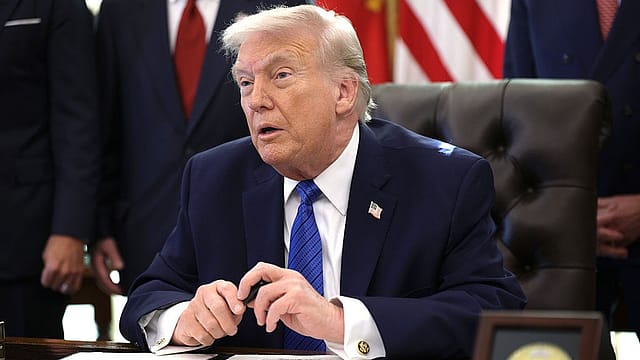
US President Donald Trump pledged on Thursday to finish the job, asserting that American military operations had already depleted the majority of viable Iranian targets.
Addressing the US-Israeli campaign in Hebron, Kentucky, President Trump said, "We don't want to leave early, do we?"
He confirmed that Washington intended to utilise US strategic reserves a little to assist in market stabilisation.
Trump maintained control over the timeline, stating in an interview with Axios, "Any time I want it to end, it will end."
How Are Maritime Attacks in the Gulf Escalating the Middle East Conflict?
The Israeli military, however, indicated that the operation is ongoing and that their forces maintain a broad bank of targets.
Tensions in the Middle East have escalated further following multiple maritime attacks in the northern Gulf.
The United Kingdom Maritime Trade Operations issued urgent ATTACK warnings after incidents involving commercial vessels.
One occurred five nautical miles south of Al Basrah, Iraq, where two tankers were struck by unknown projectiles, causing fires onboard.
All crew members were evacuated safely. A second incident occurred 35 nautical miles north of Jebel Ali, United Arab Emirates, where a container ship was struck by an unknown projectile, causing a small fire onboard. All crew members were reported safe.
Turkey's state-run Anadolu Agency reported that a foreign oil tanker caught fire in territorial waters near Basra, Iraq, after an attack near the Umm Qasr port in the Persian Gulf, with video footage circulating widely on social media.
The footage showed a large blaze rising into the sky before engulfing the vessel completely.
These attacks follow a series of earlier maritime incidents. On March 1, Iran launched a sea-based drone strike against the MKD VYOM crude oil tanker approximately 44 nautical miles off the coast of Oman, killing one crew member.
Another small craft struck the Bahamas-flagged tanker Sonangol Namibe near Iraq's Khor al Zubair port.
Why Is India Concerned After the Mayuree Naree Incident in the Strait of Hormuz?
India expressed grave concern after the Thai vessel Mayuree Naree, bound for India, was hit by two projectiles of unknown origin while navigating the Strait of Hormuz.
The Ministry of External Affairs stated, "India deplores the fact that commercial shipping is being made a target of military attacks in the ongoing conflict in West Asia. Precious lives, including of Indian citizens, have already been lost in multiple such attacks in the earlier phase of this conflict, and the intensity and lethality of the attacks only seems to be increasing."
In response to the growing maritime threat, President Trump and the US military have discussed the potential destruction of Iranian mine-laying vessels to prevent the placement of mines within the strategic Strait of Hormuz.
(With inputs from ANI)