US Midterm Elections 2026| Vivek Ramaswamy: Why Is Trump's Ohio Bet in a Bitter Fight?
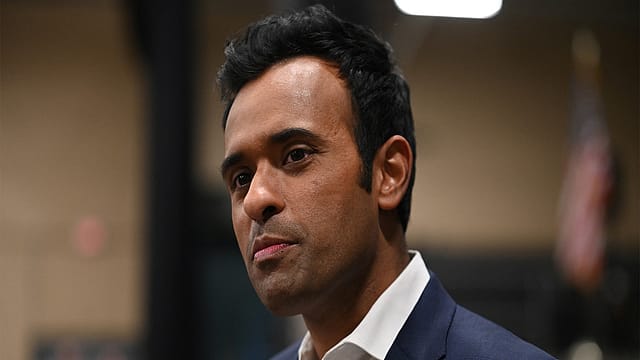
Can Vivek Ramaswamy win the race?
Ramaswamy, the Indian-American entrepreneur who sought the Republican presidential nomination in 2024, is trying to become governor of Ohio. President Donald Trump backs him. Democrat Amy Acton, a physician who previously led the state's health department, stands in his way. Libertarian Don Kissick is also on the November 3 ballot.
The final days have brought a fierce argument over Ramaswamy's campaign tactics. On October 29, he said an attack ad featuring Acton's estranged mother was no longer airing because its planned run had ended. Trump supported the ad; Ohio's Republican governor, Mike DeWine, had urged him to remove it.

The Era of Forever Wars
30 Oct 2026 - Vol 05 | Issue 44
Coping with an explosive Middle East
That split gives the election an extra edge. Ramaswamy is seeking to turn national fame and Trump's endorsement into responsibility for running a state, while persuading voters that his promises will improve their everyday lives.
Who is he, and what is his India connection?
Ramaswamy was born in Cincinnati to parents who immigrated from southern India. Raised Hindu, he attended a Catholic high school before studying biology at Harvard and law at Yale.
His career began in finance and expanded into biotechnology, the business of developing treatments using biological science. In 2014, he founded Roivant Sciences, which acquired rights to medicines that larger companies had not finished developing. It pursued further testing through separate businesses. He stepped down as chief executive in 2021.
His Indian ancestry explains the interest in him here. His campaign, however, is for an American state office, with decisions about Ohio's schools, taxation, energy and public services at its centre.
How did a businessman become a Trump ally?
His 2021 book, Woke, Inc., attacked corporate involvement in causes such as social justice and climate policy, helping establish his conservative public profile. He then entered the 2024 Republican presidential contest, finished fourth in Iowa and withdrew, endorsing Trump.
Trump later selected him and Elon Musk to lead the initiative called the Department of Government Efficiency, or DOGE. Ramaswamy left that role on Trump's inauguration day in January 2025 as he moved towards an Ohio campaign.
Winning the governorship would give him an executive record beyond campaigning and business. That could strengthen his national standing, although it would also make him answerable for how his policies work.
Why did one campaign ad cause such an uproar?
It brought Acton's traumatic childhood into the campaign through her estranged mother, Donna Arthur, who challenged her daughter's account and urged voters to reject her. Acton says they have not seen each other since 1978. Her brother has supported her account of childhood sexual abuse.
DeWine objected to the ad, even though he supports Ramaswamy. Trump and Vice President JD Vance defended it. Ramaswamy's campaign argued that Acton's credibility was a legitimate issue. Acton's campaign condemned the spot and said it should never have aired.
There is an important distinction in the spending figures. Ramaswamy's campaign initially announced a $4 million investment. AP reported on October 29 that AdImpact's tracking showed roughly $1 million spent. His explanation for its disappearance was that the run was complete.
The disagreement is about political judgment as well as advertising. Republicans who support the same candidate have publicly disagreed over whether this attack was acceptable.
What is he promising Ohio voters?
Lower taxes and energy bills are central to his pitch. His published plan proposes cutting property taxes and phasing out state income tax, beginning with taxes on capital gains, the profit from selling investments. It also promises fewer business regulations, expanded energy production and greater parental choice in education.
On October 29, his campaign added a promise to investigate localities where property taxes had more than doubled since before the pandemic. That is a proposed first-day action, rather than an investigation already underway.
The practical test is how tax reductions would be financed while maintaining public services. Winning an election would give him authority to pursue a programme; substantial changes to state law would still require lawmakers' agreement.
Why are data centres part of this election?
They bring investment and construction work, but their demand for electricity and water has become a political issue. Ramaswamy proposes pausing new approvals until legislation establishes conditions for further development.
His pledge includes full property-tax payments by developers, environmental requirements and free household electricity within a defined area around a project. He says developers could supply surplus power or reimburse residents' bills. These are campaign proposals whose costs and implementation would have to be worked out.
Acton also wants conditions on expansion, including ensuring that data centres cover their own utility costs. Both candidates are responding to the question residents ask when a large project arrives: who gets the benefit, and who pays the bill?
Who is Amy Acton, and what is her alternative?
Acton became widely known while leading Ohio's health department under DeWine during the pandemic. Her campaign emphasises healthcare affordability, public education, reproductive rights and lower household costs.
She has proposed a working-families tax cut and expanding property-tax relief for seniors. The difference between the candidates therefore extends beyond their personalities to how they would raise and spend public money.
Ramaswamy's business record is also under attack. Acton's campaign accused him of knowingly promoting an ineffective Alzheimer's treatment. The drug, intepirdine, did fail a major trial in 2017, as Axovant's regulatory filing confirms. PolitiFact rated the broader allegation Mostly False, finding that the evidence did not establish the claimed knowing scam. A failed drug trial cannot, by itself, settle that accusation.
Is Ramaswamy losing?
The result remains open. A Suffolk University/USA TODAY Network Ohio poll released on October 28 put Acton at 48%, Ramaswamy at 44% and Kissick at 3.6%. It surveyed 500 likely voters on October 21–26, with a stated margin of error of plus or minus 4.4 percentage points.
Those figures describe a survey at a particular time. Turnout and polling error can change the picture. They also cannot establish how many votes an individual advertisement will ultimately cost or gain.
What happens next?
Ohio votes on November 3 for a four-year gubernatorial term. Ramaswamy's running mate is Republican Robert McColley; Acton's is Democrat David Pepper. Voters choose governor and lieutenant governor together.
The winner will lead Ohio's executive branch, with powers to administer state government and sign or veto legislation. Washington's congressional majorities are decided in separate races. For Ramaswamy, the immediate test is whether Ohio voters will entrust him with those governing responsibilities.