US May End Iran Conflict Without Reopening Hormuz: What It Means
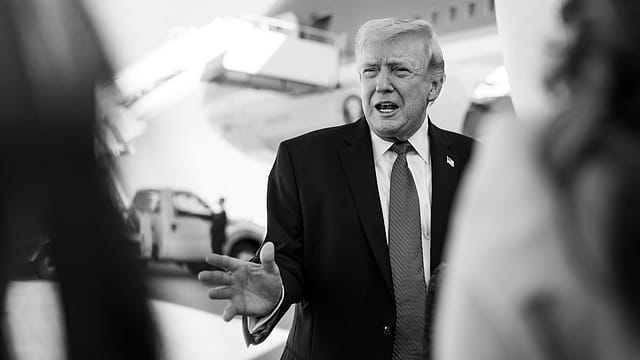
A dramatic shift may be underway in West Asia. Donald Trump is signalling a possible early end to the US military campaign against Iran even if the strategically crucial Strait of Hormuz remains shut. The move blends military calculation with diplomatic messaging, even as tensions and contradictions persist on the ground.
Is the US Preparing to Exit Without Securing Hormuz?
According to The Wall Street Journal, Trump has indicated to aides that he is prepared to wind down military operations within a four-to-six-week window, regardless of whether the Strait of Hormuz is reopened. The calculation appears rooted in what the administration considers mission success, crippling Iran’s naval and missile capabilities, without being dragged into a prolonged and complex maritime operation.
Officials suggest Trump believes the US can declare victory after achieving its “core” objectives. The closure of the strait, he argues, disproportionately impacts Asia and Europe, noting that 84% of the oil flowing through it is destined for Asian markets. He has maintained that the US is now far less dependent on Middle Eastern energy supplies.
Can Diplomacy Replace Military Pressure?
Even as military operations continue, the White House is foregrounding diplomacy. Press Secretary Karoline Leavitt pointed to recent tanker movements through the Strait of Hormuz as evidence of ongoing engagement between Washington and Tehran.
“That's not something we support, and I would reject that they are cherry-picking. In fact, these tankers that are moving through - the 10 that were previously announced and now the new 20, the announcement of 20 additional tankers, which we expect to see over the coming days - are a result of the direct and indirect talks that are taking place between the United States and Iran,” she claimed.

Open Minds 2026
26 Jun 2026 - Vol 05 | Issue 26
The power of ideas and arguments in 50 portraits
Leavitt emphasised that diplomacy has been central to these developments. “So, you wouldn't have seen those tankers if not for the president's diplomacy and his team engaging on this matter, which we expect that compliance moving forward, and it's again something that we're working on very closely,” she added.
Trump, speaking aboard Air Force One, reinforced this narrative, stating that Iran’s decision to allow tanker passage was a gesture of goodwill. He said Iran initially cleared 10 vessels and later added 10 more, calling it a “sign of respect.”
What Explains the Contradictions on the Ground?
Despite talk of de-escalation, the US military footprint in the region continues to expand, painting a contradictory picture. The arrival of the USS Tripoli alongside the 31st Marine Expeditionary Unit, and the potential deployment of elements from the 82nd Airborne and thousands of additional troops, suggests preparedness for escalation even as exit signals grow louder.
At the same time, Trump has oscillated in tone, threatening to target Iran’s civilian energy infrastructure if the strait remains closed, while also describing the conflict as a “lovely stay” and an “excursion.”
On the Iranian side, moves to formalise control over the Strait of Hormuz are intensifying. The country’s parliament has approved a management plan that includes imposing tolls, banning US and Israeli vessels, and restricting access for nations enforcing sanctions. The proposal also outlines coordination with Oman and reinforces Iran’s sovereign control over the waterway.
The situation remains deeply fluid. While Washington hints at an early exit, Tehran is entrenching its leverage over one of the world’s most vital energy corridors. With oil prices already surging past $100 a barrel and global supply chains under stress, the battle over the Strait of Hormuz may be shifting from military confrontation to high-stakes diplomacy without any guarantee of stability.
(With inputs from ANI)