US-Iran Standoff Intensifies with Washington Shipping Alert and Khamenei Address
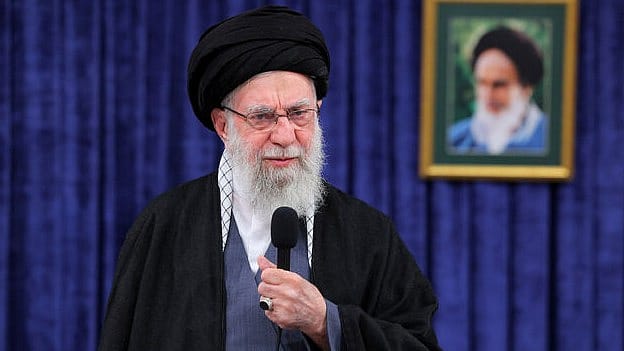
As regional and diplomatic pressures mount, the United States has issued fresh maritime advisories in the Strait of Hormuz, while Iran’s Supreme Leader has called for unity and resistance on the Islamic Revolution anniversary, underscoring deepening geopolitical fault lines.
The United States has updated navigational guidance for US-flagged commercial vessels transiting the Strait of Hormuz, urging them to remain “as far as possible” from Iran’s territorial waters amid persistent tensions between Washington and Tehran.
The advisory, issued by the US Maritime Administration, cautioned ship captains against allowing Iranian forces to board US-registered vessels and advised crews not to forcibly resist if such boarding occurs, stressing that non-resistance does not imply consent.
The Modi Years
02 Oct 2026 - Vol 05 | Issue 40
A Nation Rebuilt
Officials recommended that vessels travelling eastbound sail close to Oman’s territorial sea to minimise risks while ensuring navigational safety. The guidance follows indirect talks between the US and Iran in Oman, held after weeks of heightened rhetoric that fuelled fears of military escalation.
Shipping routes in the Middle East have frequently been disrupted during periods of instability. Historical precedents include the “Tanker War” during the Iran-Iraq conflict in the 1980s, while more recently, Yemen’s Houthi group has targeted vessels linked to Israel in the Red Sea.
Tensions intensified further after Israeli strikes on Iran last year, when Iranian lawmakers suggested that closing the Strait of Hormuz could be considered in case of escalation. The US continues to describe the strait as the world’s most important oil chokepoint due to the volume of energy supplies passing through it.
In January, Iran’s Revolutionary Guard conducted naval drills in the area, prompting US warnings against unsafe conduct. Washington has also seized Iranian oil tankers under its sanctions regime, and in the past reported drone-related incidents near US warships.
Meanwhile, the US has strengthened its military posture in the region. President Donald Trump has repeatedly warned of renewed strikes, stating in December that Washington would act if Iran revived its nuclear or missile programmes. US forces previously bombed key Iranian nuclear facilities during the June 2025 conflict.
Iran maintains that ongoing negotiations are limited to nuclear issues, while Washington seeks to address missile development and Tehran’s support for groups such as Hezbollah and Hamas. Uranium enrichment remains a central dispute, with Iran citing sovereign rights and the US pushing for zero enrichment.
Vice President JD Vance said President Trump prefers to keep negotiation red lines private, adding that earlier efforts had aimed to achieve a mutually beneficial agreement.
Khamenei Calls for Unity on Islamic Revolution Anniversary
Against this backdrop, Iran’s Supreme Leader Ayatollah Seyyed Ali Khamenei has urged the nation to demonstrate unity and resolve on the 47th anniversary of the Islamic Revolution, calling public participation a key factor in frustrating foreign adversaries.
In a televised address ahead of the 11 February rallies, Khamenei described the anniversary as a powerful display of Iran’s strength, dignity, and collective determination. He said the Iranian people remain resilient, aware of their circumstances, and committed to national independence.
Referring to the 1979 revolution, he said Iran had freed itself from foreign interference but continues to face efforts to undermine its achievements. He described the annual rallies as “unparalleled” and said they force hostile forces to retreat.
Khamenei stressed that national power depends more on public will and steadfastness than on military hardware. He urged citizens to maintain unity, motivation, and resistance to external pressure, calling these the pillars of Iran’s strength.
“Disappoint the enemy,” he said, warning that nations remain vulnerable as long as adversaries are not discouraged. He also encouraged young Iranians to advance in science, ethics, and personal development to strengthen national pride.
He expressed hope that this year’s commemorations would further elevate Iran’s standing, as citizens gather to reaffirm loyalty to the Islamic Republic and demonstrate solidarity.
Together, the US maritime warnings and Iran’s revolutionary rhetoric highlight a fragile regional environment, where diplomatic negotiations, military posturing, and public mobilisation continue to shape the evolving standoff.
(With inputs from ANI)