US Fighter Jets, Warships Enforce Iran Blockade; 57 Vessels Redirected, $13 Billion in Oil at Stake
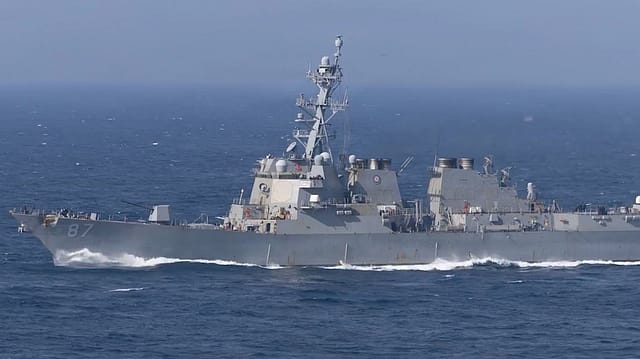
Three U.S. Navy destroyers, USS Truxtun (DDG 103), USS Rafael Peralta (DDG 115), and USS Mason (DDG 87), are currently operating in the Arabian Sea in support of an ongoing U.S. blockade against Iran, the US Central Command said in a post on X on Friday.
Till May 8, CENTCOM forces have redirected 57 commercial vessels and disabled four to prevent ships from entering or leaving Iranian ports.
On Friday, U.S. forces disabled two Iranian-flagged unladen oil tankers, M/T Sea Star III and M/T Sevda, as both vessels attempted to enter an Iranian port on the Gulf of Oman in violation of the blockade.

The Health and Wellness Issue
25 Sep 2026 - Vol 05 | Issue 39
A U.S. Navy F/A-18 Super Hornet from USS George H.W. Bush (CVN 77) fired precision munitions into the smokestacks of both tankers, disabling them and preventing their entry into Iran.
Two days earlier, on May 6, U.S. forces disabled a third vessel, Iranian-flagged M/T Hasna, as it attempted to sail to an Iranian port in the Gulf of Oman.
An F/A-18 Super Hornet from USS Abraham Lincoln (CVN 72) disabled the unladen oil tanker's rudder by firing several rounds from a 20mm cannon gun. All three vessels are no longer transiting to Iran.
What Did CENTCOM Commander Admiral Brad Cooper Say About the Iran Blockade?
Admiral Brad Cooper, CENTCOM commander, issued a statement reaffirming the mission's objectives.
"U.S. forces in the Middle East remain committed to full enforcement of the blockade of vessels entering or leaving Iran," he said. "Our highly trained men and women in uniform are doing incredible work."
Beyond the disabled vessels, U.S. forces are currently preventing more than 70 tankers from entering or leaving Iranian ports.
These commercial ships have the combined capacity to transport over 166 million barrels of Iranian oil, estimated to be worth in excess of $13 billion.