UK Pushes Back as Trump Threatens Tariffs Over Greenland
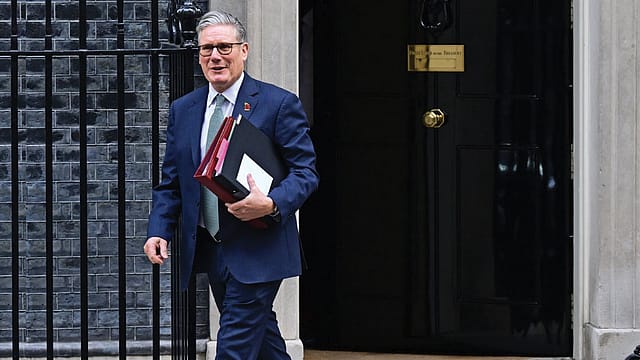
The Arctic island of Greenland has become the unlikely fault line in a growing transatlantic dispute, after UK Prime Minister Keir Starmer publicly rejected US President Donald Trump’s threat to impose tariffs on European allies to force the sale of the territory.
Speaking at a press conference, Starmer was unequivocal. Greenland, he said, belongs to its people and to Denmark, and any attempt to use economic pressure against allies to alter that status was “completely wrong.”
The remarks came amid Trump’s renewed push to acquire Greenland, which he has framed as a US national security necessity, citing rising Chinese and Russian interest in the Arctic. Trump has warned that if European countries—including the UK and Denmark—do not agree to negotiations, Washington would impose tariffs of 10% from February 1, 2026, escalating to 25% from June 1, 2026.

Zeroing In on ECI
09 Oct 2026 - Vol 05 | Issue 41
Constitutional legitimacy versus political opportunism
Starmer’s response was measured but firm. He stressed that Greenland’s security matters, and will matter even more as climate change reshapes the Arctic, opening new sea routes and intensifying strategic competition. But he cautioned that such high-stakes issues must be handled through calm dialogue among allies, not coercion.
“The security of Greenland matters,” Starmer said, “but there is a principle here that cannot be set aside.” Decisions about Greenland’s future, he added, rest solely with the people of Greenland and the Kingdom of Denmark, a right he described as “fundamental.”
The UK Prime Minister went further, reframing the issue as one of alliance values rather than territory. Denmark, he noted, is a close ally and a committed NATO member that has stood “shoulder to shoulder” with partners, often at real human cost. Alliances, Starmer argued, endure because they are built on respect and partnership, not pressure.
“Linking economic coercion to security cooperation is unhelpful and counterproductive,” he said, warning that tariffs against allies risk undermining trust at a time when global stability is already under strain.
Starmer also highlighted the domestic consequences of a trade conflict, noting that tariffs would ultimately hurt British workers, businesses and the wider economy. “A trade war is in no one’s interest,” he said, adding that his responsibility as Prime Minister was to act in the UK’s national interest.
While pushing back firmly, Starmer was careful not to rupture ties with Washington. He reiterated that the UK and the US remain close allies, stressing that the relationship is vital not just for security, but also for economic stability and prosperity.
The broader backdrop underscores the tension. Germany, Sweden, France, Norway, the Netherlands and Finland have sent small contingents of military personnel to Greenland, while Denmark has increased its own military presence, signals of rising concern as rhetoric around the Arctic hardens.
As diplomacy shifts to NATO corridors and global forums like Davos, Greenland is no longer just an Arctic outpost. It has become a test case for how far economic power can be used inside alliances and where democratic partners choose to draw the line.
(ANI and yMedia are the content partners for this story)