Turn Up the Thermostat or Pay the Price: How LNG Chaos Is Hitting Singapore Homes
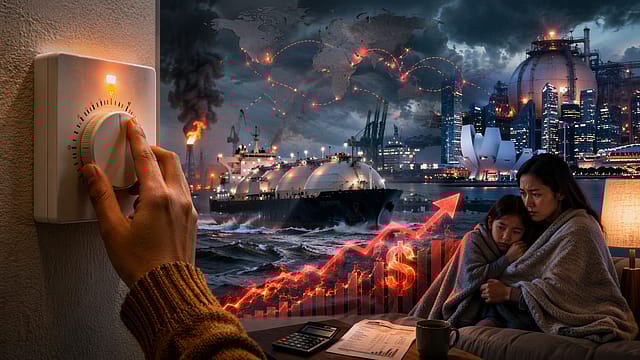
In a city that runs on imported energy and sweats a lot, the Singapore energy crisis has hit an unlikely pressure point: the air conditioner.
As the Middle East conflict chokes oil and liquefied natural gas (LNG) flows through the Strait of Hormuz, the government is now asking everyone to turn the thermostat up.
Why Is Singapore's Energy Crisis an AC Problem?
About 95% of Singapore's electricity comes from natural gas, priced to global markets. When LNG prices doubled after the Strait of Hormuz disruption, electricity costs followed.
Work From Home Again? South Korea Cuts Shower Time, Asian Nations Struggle to Save Energy

Zeroing In on ECI
09 Oct 2026 - Vol 05 | Issue 41
Constitutional legitimacy versus political opportunism
Air conditioning accounts for a significant share of national power consumption, making it the most visible lever available during the energy crisis in Singapore.
What Is the "Go 25" Mandate?
On April 8, 2026, the Ministry of Sustainability (MSE) and the National Environment Agency (NEA) directed all government ministries and statutory boards to set air-conditioning to 25°C or higher amid the Singapore energy crisis.
Every degree raised cuts energy use by around 10%. Go 25, active since May 2025, is now a national directive.
How Exposed Is Singapore to the APAC Fuel Crisis?
Singapore imports over 95% of its energy with almost no domestic production, and a March 2026 Energy World Mag report ranked it the world's most vulnerable country in an energy market collapse.
Price shocks from the APAC fuel crisis pass through almost immediately, with the energy crisis in Singapore deepening as a result.
What Relief Has the Government Announced?
A S$1 billion ($778 million) package tabled in Parliament on April 7, as reported by Bloomberg, includes S$500 Community Development Council (CDC) vouchers moved forward to June 2026, a corporate income tax rebate raised to 50%, and up to S$400 in Climate Vouchers for households switching to energy-efficient appliances.
Are Electricity Bills Getting Worse?
Deputy Prime Minister Gan Kim Yong warned Parliament that a "much sharper" tariff rise is coming in the next quarterly adjustment.
The recent 2.1% increase was just the opening move, with higher costs expected across electricity, transport, and daily necessities as the APAC fuel crisis bites deeper.
What Should Households Do Right Now?
The NEA recommends using fans over air-conditioning where possible, switching appliances off at the socket rather than leaving them on standby, and choosing higher-tick-rated appliances when replacing old ones.
What Comes Next for Singapore's Energy Crisis?
The government has confirmed pre-prepared contingency plans are ready to deploy if the crisis deepens.
A supplementary budget will be tabled later in 2026 to fund additional measures, signalling that the energy crisis in Singapore is far from resolved.
(With inputs from yMedia)