Trump’s ‘Christmas Gift’: Economic Victory Lap, Military Payouts and a $10 Billion Taiwan Arms Push
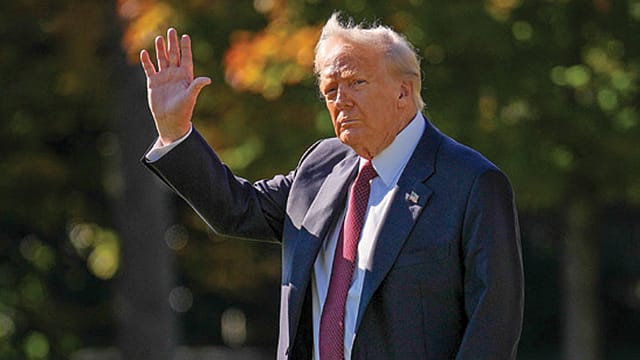
Over the last 24 hours, US President Donald Trump rolled out a series of headline-grabbing announcements that blended economic claims, military largesse and geopolitical signalling. The moves included a $1,776 payment to more than 1.45 million US military service members and the approval of a $10 billion-plus arms sales package for Taiwan, even as public confidence in his economic stewardship remains fragile.
Speaking in a nationally televised economic address, Trump laid out what he described as record-breaking achievements—on investment, tariffs and job creation—casting himself as both Santa Claus and chief dealmaker. The address came against the backdrop of NPR reporting his economic approval rating at 36%, underscoring a widening gap between White House messaging and voter sentiment.
What Trump Claimed on the Economy
Trump said his administration had secured $18 trillion in investment commitments, calling it an unprecedented inflow that would drive jobs and wage growth. However, CNN noted that the White House’s own website lists a significantly lower figure of $9.6 billion, prompting renewed scrutiny from fact-checkers over the scale and sourcing of the claims.
Tariffs featured prominently. Trump again described them as his ‘favourite word,’ arguing that import duties are forcing companies to build factories in the US. Firms that manufacture domestically, he said, face no tariffs—an incentive he credited with reviving American industry.

Iran After the Imam
06 Mar 2026 - Vol 04 | Issue 61
Dispatches from a Middle East on fire
What the Polls Say
Polling data paints a more cautious picture. A CBS News survey released December 17 found that three-quarters of Americans believe their incomes are not keeping pace with inflation, while only 32% rate overall economic conditions as good.
According to NPR, 45% of Americans cite the cost of living as their top economic concern, followed by housing affordability at 18%. Federal Reserve Chair Jerome Powell has also warned that inflation pressures are emerging “entirely in sectors where there are tariffs,” adding fuel to the policy debate.
‘Military Warrior Dividend’ & Fresh Swipe at Biden
Trump announced a $1,776 payment—a symbolic nod to America’s founding year—to more than 1.45 million service members, amounting to roughly $2.5 billion in total. The President said the funds, drawn from tariff revenues, were “already on the way,” adding that the scale of tariff income had exceeded expectations.
The announcement comes at a time when economic approval ratings are under strain, lending the payout both symbolic and political weight.
Trump repeatedly targeted the Biden administration, claiming he had “inherited a mess” and blaming his predecessor for inflation levels “never seen before.” He cited falling food prices—turkey down 33% and eggs down 82% since March—as evidence of turnaround, figures drawn from agricultural price data.
While Trump projected an “economic boom” ahead of 2026, polling suggests caution. NPR reported that two-thirds of Americans are concerned about the impact of tariffs on their personal finances. CBS data shows that among households whose financial situation changed over the year, more said it worsened than improved—particularly among lower-income groups.
The Taiwan Arms Package: What’s in It
Alongside domestic messaging, Trump approved a major arms sales package for Taiwan valued at over $10 billion. According to the US State Department and Focus Taiwan, the proposal includes HIMARS rocket systems, M109A7 howitzers, anti-tank missiles and drones, spread across up to eight arms packages with an estimated total value of $11.1 billion.
Five of these packages fall under Taiwan’s proposed NT$1.25 trillion (US$39.85 billion) special defence budget, pending legislative approval. Taiwan’s Foreign Minister Lin Chia-lung welcomed the move, calling it a reaffirmation of Washington’s commitment to Taiwan’s self-defence under the US National Security Strategy.
Taiwan President Lai Ching-te has already announced a $40 billion supplementary defence budget running from 2026 to 2033, signalling long-term military planning amid rising regional tensions.
(yMedia and ANI are content partners for this story)