Trump Widens Pressure on Iran as Tehran Demands an End to the War
The United States has set up a task force to target weapons shipments and illicit money flows across Iran’s land borders and the Caspian Sea, extending its campaign beyond the Iranian ports it has blockaded since July. President Donald Trump said on Sunday, November 8, that Task Force Iron Gate was in “full force and effect” and claimed the combined measures had left Iran with little trade moving in either direction.
The pressure on Iran’s land routes is already testing Baghdad. Iraqi Foreign Minister Fuad Hussein said the US Treasury had asked Iraq to close most of its commercial crossings with Iran and funnel trade and passenger traffic through just two points. Iraq, which depends heavily on oil exports, says disruptions in the Strait of Hormuz have already cost it $60 billion.

The Era of Forever Wars
30 Oct 2026 - Vol 05 | Issue 44
Coping with an explosive Middle East
Even as Washington tightened pressure, Trump told CNN that renewed attacks were “highly unlikely” if talks progressed on Iran’s nuclear programme and the reopening of Hormuz. Iranian Foreign Minister Abbas Araghchi said Tehran’s two-day proposal remained on the table and warned that Iran would retaliate if Washington chose to resume fighting.
Iron Gate Takes the Campaign Beyond Iran’s Ports
US Central Command said it established Task Force Iron Gate on Saturday under the direction of its commander, Admiral Brad Cooper. The unit will comprise about 20 civilian and military personnel based in Tampa, Florida. It will work with other US government agencies to monitor and disrupt shipments of advanced weapons, technology with both civilian and military uses, and materials subject to sanctions. It will also target illicit financial flows.
Iron Gate’s remit covers Iran’s land borders and the Caspian Sea. The naval blockade, announced in July, covers ships entering and leaving Iranian ports along the Gulf and the Gulf of Oman. CENTCOM says the blockade is intended to stop imports and exports through those ports, with an exception for humanitarian aid.
The command said enforcement at sea had prevented Iran from exporting more than $25 billion in crude oil in recent months. Trump made a broader claim on Truth Social, saying that with the naval blockade and Iron Gate in place, “very little gets into, or out of, Iran!”
Baghdad Faces Pressure at the Border and at Sea
Hussein told Al Jazeera that the US Treasury wanted Baghdad to channel overland trade and passenger movements through two crossings, including one in Iraq’s autonomous Kurdistan region. He described the closures as a request from Washington. The crossings handle people as well as goods, so the proposal would affect passenger traffic alongside commerce.
At sea, Hussein said Iraq had previously reached understandings with both Washington and Tehran that let it move crude through a designated southern corridor in the Strait of Hormuz. That arrangement gave Iraq a route for its oil even as military tensions disrupted shipping through the waterway.
Hussein put the financial cost to Iraq from the continuing disruptions and blockades at $60 billion. Baghdad is therefore dealing with two separate pressures: the loss of oil revenue as shipping through Hormuz is disrupted and a US request to restrict movement across its land border with Iran.
Iran Says It Can Build and Export Its Own Weapons
Iran’s Islamic Revolutionary Guard Corps used a commemorative event to make the case that its aerospace force can meet its military needs through domestic production. Brigadier General Hossein Mohebbi, a spokesperson for the force, said Iran had built up local scientific expertise and the industrial capacity to produce military equipment at scale.
Mohebbi cited the Arman missile, the 358 loitering drone and the Khordad-3 surface-to-air missile defence system as examples of equipment developed in Iran. He said those advances had turned Iran from an importer of military equipment into an aerospace exporter, according to Iran’s Mehr News Agency. He also claimed Iran could supply overseas markets while meeting its own military requirements.
Araghchi Says the US Midterms Stalled Diplomacy
Araghchi said Tehran was still offering its two-day proposal, which includes an end to hostilities on all fronts. In a post on X on Sunday, he told the Trump administration that the decision lay with Washington. “American voters have made their choice. Time for the White House to make its own,” he wrote.
He urged the US to meet Iran’s requirements and warned that if Washington chose war, Iranian forces would “rain down hell”. Speaking to reporters in Tehran, he said the US midterm results had brought diplomatic efforts to a standstill, Al Jazeera reported.
Araghchi said the election outcome had come as a shock and that mediators would need to wait for the political situation in Washington to settle before resuming their visits. His account put a brake on expectations of a quick breakthrough even as Tehran kept its proposal open.
Trump Leaves the Strike Option Open
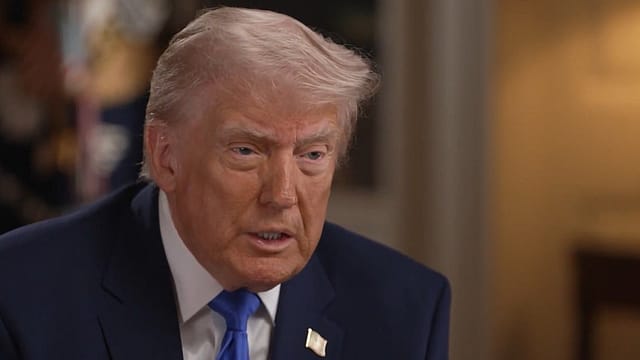
In a 20-minute telephone interview with CNN, Trump repeatedly said it was “highly unlikely” he would have to order US forces back into combat if negotiations made progress. The decision, he said, depended on whether Iran would sign “a very strong agreement”. He identified Iran’s nuclear programme and the reopening of Hormuz as key issues.
Trump argued that previous strikes and economic sanctions had weakened Iran’s military and economy. He cited an inflation figure of 301% without specifying in the quoted remarks what period or measure it covered. He said he remained willing to order further strikes if he deemed them necessary.
Trump also said the US had identified 38 bridges it could destroy within an hour. He said he was reluctant to order those attacks because rebuilding the bridges could take a decade. “I don’t like ripping down bridges,” he told CNN.
With inputs from ANI