Trump Wants Iran to Pay. Tehran Is Preparing for War
The language of diplomacy is getting harsher.
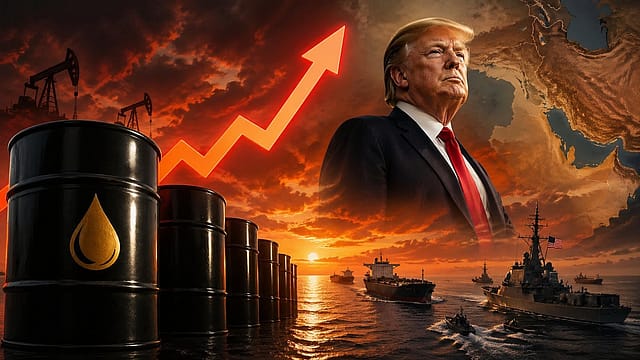
US President Donald Trump wants Iran to pay compensation for deaths and injuries linked to Iranian attacks. Tehran, meanwhile, wants Washington to pay for the destruction caused by the five-month conflict, lift its sanctions and end its naval blockade before it will consider reopening the Strait of Hormuz.
And while the two sides continue to communicate indirectly, Iran appears to be doing something else at home: reshaping the machinery that will fight the war.
In a post on Truth Social on Monday, Trump rejected Iran's demand for financial compensation for damage caused during the conflict, calling the idea "interesting" but insisting that Tehran should instead face its own compensation claims.
Look Who's Talking Regime Change
23 Oct 2026 - Vol 05 | Issue 43
"I am likewise demanding compensation from Iran, for all of the people that they have killed and gravely wounded," Trump wrote.
He said he had instructed US negotiators to put the demand into all future negotiations with Tehran. Trump also cited casualties from attacks he attributes to Iran and referred to the 2020 killing of Iranian military commander Qassem Soleimani.
The counter-demand comes as compensation has become one of the biggest obstacles to any broader settlement.
Iran has linked the reopening of the Strait of Hormuz to a package of conditions that includes an end to the US naval blockade, the lifting of sanctions and compensation for wartime damage. The Islamic Revolutionary Guard Corps has warned that the waterway will remain closed until Tehran's demands are met. The result is a diplomatic deadlock in which even the price of peace is now being contested.
Hormuz is still the pressure point
The Strait remains at the heart of the confrontation. Iran's ability to disrupt commercial shipping through the narrow waterway has constrained Washington's options and rattled global trade, according to a Wall Street Journal report cited by ANI.
Trump has repeatedly said the waterway is open, but commercial shipping remains heavily disrupted. Tehran has insisted that Hormuz will not return to normal until the US changes course.
The IRGC has gone further, describing the Strait as a "theatre of war" until Washington accepts Iran's conditions. That makes Hormuz more than an energy chokepoint. It has become Iran's biggest bargaining chip.
And then Tehran reshuffled its inner circle. While the diplomatic battle continued, Iran's political and military establishment underwent a striking reshuffle. President Masoud Pezeshkian said on Monday that Supreme Leader Mojtaba Khamenei is "completely healthy", dismissing reports about his condition.
"Someone who can sit and discuss for seven to eight hours cannot have any health problems," Pezeshkian said, describing his meeting with Khamenei as "very good", according to ISNA.
The reassurance came after days of speculation over the Supreme Leader's health. Iran's semi-official Mehr News Agency had earlier released an undated video showing Khamenei appearing healthy after Israeli media reported that he was in critical condition.
But the more consequential development may have been happening behind the scenes. Khamenei moved Mohammad Bagher Zolghadr, a former senior IRGC commander and recently appointed Supreme National Security Council secretary, into the role of political adviser. He simultaneously appointed veteran IRGC commander Mohsen Rezaei as his representative on the powerful security council. The moves effectively put two highly experienced military figures at the centre of Iran's political and security decision-making.
Then came an even bigger signal. Khamenei appointed six senior commanders to key positions across Iran's armed forces, the IRGC and the Basij. Ali Abdollahi was named Chief of Staff of the Armed Forces, with Kioumars Heydari as his deputy. Ahmad Vahidi was appointed commander-in-chief of the IRGC, while Mostafa Izadi became his deputy. Ali Azmaei was named commander of the IRGC Navy and Hossein Taeb was appointed head of the Basij Resistance Force.
The appointments come at an unusually sensitive moment. Iran is simultaneously facing intense economic pressure, a continuing maritime confrontation, stalled direct negotiations with Washington and uncertainty over the future of the conflict. And now its top leadership is being reorganised around figures with deep military and IRGC backgrounds.
That is what makes the latest developments significant. Trump is demanding compensation from Iran. Iran is demanding compensation from the US. Washington wants pressure to force Tehran into concessions. Tehran is using Hormuz to force Washington to negotiate. And Iran is strengthening the people around its Supreme Leader while placing experienced military commanders in key positions.
The two sides may still find a route back to negotiations. But the latest moves suggest neither is preparing to simply blink. The battlefield may be quieter than it was. The bargaining is getting tougher. And inside Iran, the people being put in charge suggest Tehran is preparing for whatever comes next.
(With inputs from ANI)