EXPLAINED | Why Measles Is Back in America and What India Can Learn
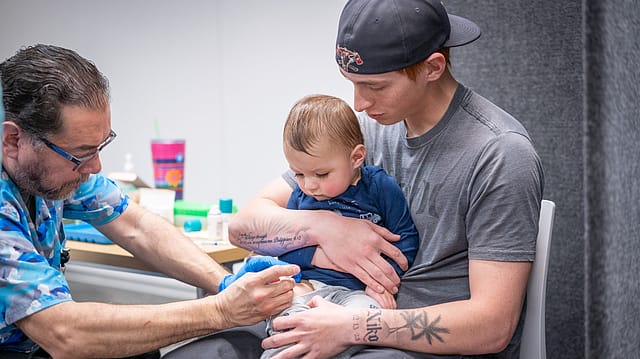
On November 20, Virginia reported that a child under five who had tested positive for measles had died. It was the state’s first measles-associated death of 2026. Three days earlier, the United States had lost a distinction it had held since 2000, when it declared measles eliminated.
What did “eliminated” mean if Americans were still catching measles? The answer lies in 2019. The US recorded 1,274 cases that year. Two outbreaks in New York lasted for months, but health teams brought both to an end before either reached a year. America kept its elimination status.
This time, investigators traced a chain of infections back to January 20, 2025. A year later, that chain was still unbroken. That finding prompted the Pan American Health Organization to announce on November 17 that measles transmission was once again established in the United States. By November 20, Pennsylvania alone had recorded 1,631 cases, more than the whole country saw in 2019.

The Wealth Issue 2026
06 Nov 2026 - Vol 05 | Issue 45
Portraits of Dreamers and Doers under 35
How had so many children been left unprotected in a country that already knew how to stop measles?
How can measles return to a country that eliminated it?
When the US declared measles eliminated in 2000, Americans could still catch it abroad, bring it home and pass it on. Elimination meant that the virus was no longer circulating continuously within the country. To establish that transmission had resumed, investigators needed evidence that the same viral lineage had circulated without interruption for at least 12 months. A thousand cases across unrelated, short-lived outbreaks would not, on their own, meet that test. One chain lasting a year would. That is what investigators documented.
How serious is the US outbreak, and why are there two death counts?
The US Centers for Disease Control and Prevention (CDC) recorded 5,838 confirmed cases through November 19. Most were in children and teenagers. Roughly one in six children under five with reported measles had been hospitalised. Measles often begins with fever, cough and a runny nose before the rash appears. Complications can include pneumonia and inflammation of the brain. There is no specific antiviral treatment for the disease.

As of November 20, state health departments had reported 12 measles-associated deaths, according to a tally by ABC News. The CDC’s national dashboard listed six. Pennsylvania had previously disclosed that federal officials were reviewing additional information about deaths the state had reported.
How did New York stop measles in 2019?
On September 30, 2018, a US traveller returned to New York City with measles acquired abroad. The resulting outbreak lasted nine and a half months and included 702 cases. A second prolonged outbreak affected counties elsewhere in New York State. Both reached close-knit Orthodox Jewish communities where some groups of children had missed vaccinations. Further cases arrived from abroad while health teams were still trying to contain the earlier ones.
Health providers administered about 60,000 doses of the measles, mumps and rubella (MMR) vaccine in the affected communities. Local doctors and health centres worked with religious leaders and community advocates to reach families. Officials also used their public-health powers. In the city, the last identified patient developed a rash on July 15, 2019. In the outbreak elsewhere in the state, the corresponding date was August 19. Both chains ended before the year was up.
What changed between New York then and Pennsylvania now?
Fewer children were fully vaccinated when they entered school. US kindergarten MMR coverage fell from 95.2% in 2019–20 to 92.4% in 2025–26. The CDC estimates that about 280,000 kindergarteners were at risk in the latter school year. Where these children live matters. Vaccinated pupils in one county cannot protect an infant sharing a waiting room with an infectious patient in another.
Pennsylvania did organise a substantial response. By mid-September, state teams had given more than 4,400 MMR vaccinations at 140 pop-up clinics. By November 2, however, cases had been confirmed in 44 counties. Each new location meant more families to contact and more vaccination records to check. The evidence identifies two burdens: gaps in protection before the outbreak and the sheer reach of the response once it was under way. It does not establish that a single policy or official caused the resurgence.
Did vaccine refusal cause the comeback?
The often-cited 96% does not answer that question. It is the share of reported US cases in people who were unvaccinated or whose vaccination status was unknown. The CDC combines those groups in its weekly updates. A missing record tells investigators nothing about what a parent believes. Even a documented missed dose does not establish whether a family declined vaccination, missed an appointment or could not reach a clinic. Each calls for a different response.
The vaccine itself remains highly effective. The CDC puts protection against measles at about 93% after one MMR dose and 97% after two. The routine US schedule begins at 12 to 15 months, with a second dose at ages four to six. An infant too young for a routine shot depends partly on how well protected the people nearby are.
How has India dealt with the children its vaccination programme misses?
In the first three months of 2025, Andhra Pradesh recorded seven measles outbreaks. Six were in one district, Alluri Sitarama Raju. Investigators found children who had missed a first dose, others who had not returned for a second, and gaps in how vaccination sessions were planned for tribal settlements, border areas and the edges of cities. Health teams went house to house to establish who had been missed. Those visits helped determine where the state should send vaccinators.
Between May and July, Andhra Pradesh ran three week-long drives. More than 22,000 children received their first measles-rubella dose, and more than 18,700 received their second. The distinction is worth keeping: for one family, the visit brought a child into the programme; for another, it completed protection that had begun months earlier. India’s Intensified Mission Indradhanush had also extended catch-up efforts to children aged two to five who had missed a measles-rubella dose.
India still reported 18,774 measles cases in 2025. A national coverage figure can improve while children in a particular settlement remain unprotected. Nor can India’s figures be ranked directly against the US kindergarten rate: the two measures cover different populations. The useful comparison is between a vaccination register and a household visit. The register can identify a child overdue for a second dose. A visit can find the child whose name never made it onto the list.
Is America an outlier?
No. Mexico and Bolivia also lost elimination status in the November review. Canada’s sustained transmission had already cost the Americas its regional designation in November 2025. Britain lost its status following a review of its 2024 data; UK health authorities reported that two-dose MMR coverage among five-year-olds had fallen to 83.7% after a decade of decline.
The heavier toll lies beyond the countries making headlines for losing elimination. WHO estimated 11 million infections and 95,000 measles deaths worldwide in 2024. Most deaths were among unvaccinated or undervaccinated children under five. Those are global estimates, distinct from the confirmed cases in the US tally. They put the American reversal in perspective: in much of the world, families have never had a generation in which measles could be considered a disease of the past.
Can America earn elimination back?
Brazil did. Endemic transmission was re-established there in 2018. Brazil subsequently interrupted it, and in November 2024 an independent commission reviewed the evidence and re-verified the country’s elimination status. For America, fewer cases would be welcome. To regain the designation, it must also document that sustained transmission has ended, with surveillance good enough for independent reviewers to trust the finding.
On November 17, the day America lost its status, Virginia issued a notice to people who might have been exposed in two regions of the state. It asked them to monitor for symptoms for 21 days. If they fell ill and needed medical care, officials wanted them to phone before entering the clinic, so staff could protect the people already there.
That waiting room is where the American and Indian stories meet. In Virginia, a phone call gives staff a chance to protect the next patient. In Andhra Pradesh, a visit to a child’s home gives a health worker a chance to act months earlier. Both are necessary. Only one can reach the child before there is an exposure to report.