Trump Says ‘No Regret’ on Iran War as US Aircraft Take Hits, Canada Keeps Talks Open
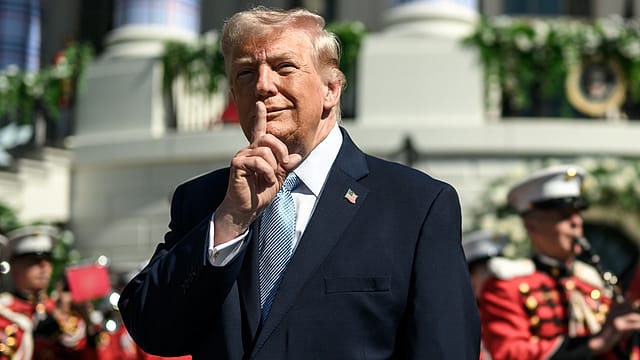
US President Donald Trump doubled down on the war with Iran, saying he would take the same decisions again, as fresh reports of damage to American military aircraft in Jordan underscored the continuing military stakes. Across another strained relationship, Canadian Prime Minister Mark Carney said he was keeping discussions with Trump open on both Iran and Ukraine despite an escalating trade confrontation.
The developments brought together three pressures on Washington: a conflict Trump insists it is winning, Iranian retaliation against American military assets, and the need to coordinate with an ally facing new US trade restrictions.
In an interview with Fox News on Thursday, Trump rejected suggestions that he regretted starting the war.

Losing Memory
16 Oct 2026 - Vol 05 | Issue 42
The making of a medical and social emergency
“I don’t believe in the word regret. You can always question yourself a little bit. And a few people have asked me that. If I had it to do again, I’d do exactly as I did. I took out their nuclear capability,” he said.
Trump links the war’s end to US midterms
Trump claimed Iran was trying to remove him from office because its leaders believed Democrats would allow Tehran to acquire a nuclear weapon.
“They’re trying to do anything possible to get me out because they think the Democrats will let them essentially have a nuclear weapon. They’re not going to have a nuclear weapon,” he told Fox News.
He also claimed a nuclear-armed Iran would attack Israel, other parts of the Middle East and American cities. The remarks reflected his justification for the military campaign; he offered no supporting evidence in the quoted comments for his assertions about Tehran’s intentions towards US elections.
A day earlier, Trump had predicted the war would end “immediately” after the upcoming midterm elections. Speaking before leaving for a Republican midterm convention in Dallas, he accused Iran of prolonging the conflict in the hope of a more accommodating political balance in Washington.
“I think the war will end immediately after the election,” he said, alleging that Tehran wanted American voters to elect politicians who would leave it free to pursue nuclear weapons.
Asked about negotiations and further military action, Trump indicated that Washington was in no hurry to negotiate, arguing that recent operations had severely weakened Iran.
He also pointed to what he described as record stock-market levels during the conflict. At the Dallas convention, he claimed the US was winning and said Iran’s leadership would be “thrilled” by renaming the Strait of Hormuz the “Trump Strait”. His remarks did not establish any formal change to the waterway’s name.
US aircraft reportedly damaged in Jordan
The president’s claims of military success came alongside reports that Iranian strikes had damaged several American aircraft at Jordan’s Muwaffaq Salti Air Base.
CBS News, citing people familiar with the matter, reported that an A-10 Thunderbolt attack aircraft was directly hit and lost a wing. Approximately eight F-15 fighter jets sustained minor damage but were subsequently repaired and returned to service, the report said.
No American casualties were reported.
Iran’s Revolutionary Guards said they had struck the American Al-Azraq base in Jordan with heavy missiles as part of a “punitive operation”, according to the state-backed IRNA news agency.
Jordan’s military gave a different account of the missiles’ impact. It said its air defences detected 20 incoming ballistic missiles, intercepted 18 and that the remaining two fell on unpopulated terrain.
That statement did not explain the aircraft damage described by CBS News. The accounts leave the precise circumstances of the reported damage unresolved.
Tanker strikes preceded Iran’s retaliation
The Iranian barrage followed US attacks on five Iranian tankers that Washington linked to the Islamic Revolutionary Guard Corps.
US Central Command said American forces targeted the vessels on Tuesday, September 8, after repeated missile attacks on a US Navy warship over the preceding 48 hours.
Four crude oil carriers were struck in the Gulf of Oman and a fifth near Kharg Island in the Persian Gulf, CENTCOM said.
According to the command, the American warship avoided the incoming attacks and continued its regional patrol without US casualties. It also said crews aboard the tankers had been instructed to evacuate before the vessels were struck.
The exchange places the maritime confrontation alongside the wider air and missile campaign, with energy infrastructure and shipping routes remaining central to the conflict.
Carney keeps Trump dialogue open despite tariff fight
As the military confrontation continued, Carney said Canada and the United States were maintaining contact over major international crises despite their worsening trade dispute.
Speaking in Calgary on Thursday during Ukrainian President Volodymyr Zelenskyy’s visit, Carney said he had spoken with Trump a couple of times in recent days about Ukraine, Iran and other global developments.
“We can compartmentalise,” Carney said, according to CBC News, emphasising the responsibility to cooperate on issues affecting international energy and grain supplies.
His remarks came as Canada announced defence and economic support arrangements for Ukraine worth more than $2 billion, according to the statements cited by ANI.
Zelenskyy said these included a government defence package exceeding $1 billion, with support for Patriot missiles, F-16 ammunition and joint drone production. He also said 21 Ukrainian pilots were undergoing training in Canada.
The arrangements included a $40 million contribution to a new Veterans Fund and support for Ukraine’s energy sector.
Cooperation abroad, confrontation on trade
The diplomatic contact has continued even as Washington and Ottawa impose fresh economic measures against each other.
Trump issued five presidential directives affecting Canadian imports through changes to exclusions and tariff structures. The White House said the actions followed a breakdown in negotiations and accused Canada of failing to honour commitments to remove discriminatory trade measures.
Canada’s retaliatory tariffs on US merchandise took effect shortly after midnight on Tuesday, following the collapse of bilateral negotiations last month.
Carney’s message was that this confrontation would not end cooperation on wars with consequences beyond their borders. For Trump, that leaves simultaneous demands: sustaining a military campaign against Iran, defending its course before American voters and working with an ally his administration is also confronting over trade.
With inputs from ANI