Trump Reveals He Rejected Military Plan to Seize Iran’s Nuclear Stockpile
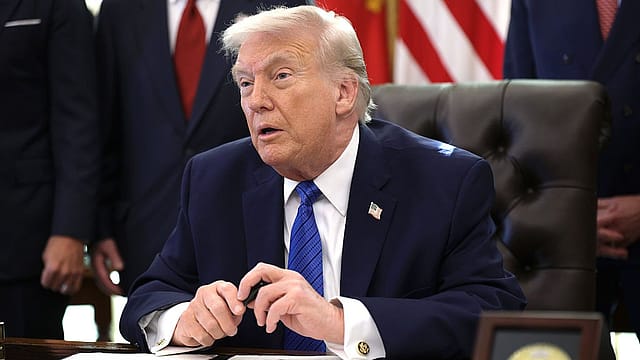
US President Donald Trump has disclosed that his administration considered a military operation to enter Iran and extract its enriched uranium stockpile amid renewed tensions in West Asia.
According to Trump, Pentagon planners evaluated multiple options to recover what he described as “nuclear dust.” However, after reviewing the proposal, he concluded that the mission was too dangerous and complex to pursue.
The revelation comes as Washington and Tehran remain engaged in sensitive negotiations aimed at ending hostilities and addressing concerns surrounding Iran’s nuclear programme.
What Would the Proposed Operation Have Involved?
Trump said the military blueprint would have required a major deployment of American forces and equipment inside Iranian territory.
According to the US President, the operation would have taken at least two weeks to complete and involved the movement of significant military assets into Iran.
Explaining why the plan was abandoned, Trump said it was considered “too risky,” despite military assessments that the United States had the capability to carry it out.
Why Does Trump Believe Immediate Action Is Unnecessary?
Although he claimed the United States could still seize the material if it chose to do so, Trump argued that there was no urgent need for intervention.
“We could get it right now,” Trump said.
“I don't think they could stop us if we wanted, but there's no reason to. It's entombed.”

Global By Design
29 May 2026 - Vol 04 | Issue 73
Is the future of fashion Indian?
His remarks suggest that the administration believes the enriched uranium is currently secured and does not pose an immediate threat requiring military action.
Trump also asserted that Washington would not necessarily need a formal diplomatic agreement with Tehran in order to take possession of the material.
What Did Trump Say About Meeting Iran’s Supreme Leader?
Trump indicated that he has little interest in holding a direct meeting with Iran’s Supreme Leader Mojtaba Khamenei.
However, he left open the possibility of such a meeting if broader negotiations produce a diplomatic breakthrough.
“If it happened ... I'd be respectful,” Trump said.
Mojtaba Khamenei became Iran’s supreme leader after the death of his father in a joint US-Israeli military strike.
How Did Trump Describe His Relationship With Khamenei?
Trump acknowledged the difficult history between himself and Iran’s current supreme leader.
“We killed his father, his wife and his son, so I'm probably not his favourite person... But in some circles, he has a very good reputation, actually,” Trump remarked.
The comments underscore the deep tensions that continue to shape relations between Washington and Tehran, even as diplomatic discussions continue.
What Role Are US Negotiators Playing Behind the Scenes?
While Trump was discussing military options publicly, senior US officials were reportedly advancing diplomatic efforts.
According to Axios, senior envoys Steve Witkoff and Jared Kushner travelled to Oak Ridge, Tennessee, to consult technical experts expected to play a significant role in future nuclear negotiations with Iran.
The consultations are viewed as part of broader efforts by the White House to secure a memorandum of understanding (MOU) that could halt current hostilities and establish a framework for comprehensive nuclear talks.
Why Are Nuclear Talks Facing Difficulties?
Despite indications that negotiations have entered a serious phase, major disagreements remain unresolved.
One key dispute concerns the timeline for reducing Iran’s stockpile of enriched uranium. The Trump administration is reportedly pushing for a strict 60-day deadline for down-blending the material, while Iran is seeking a 90-day period.
The two sides also remain divided over approximately USD 24 billion in frozen Iranian assets.
Highlighting the deadlock, an adviser to Iran’s supreme leader told CNN that discussions had reached a major obstacle over the assets and stated that “the ball is in Trump's court”.
What Happens Next?
Both Washington and Tehran appear interested in exploring a diplomatic path forward, but officials involved in the talks caution that significant obstacles remain.
The White House’s engagement with nuclear experts and ongoing negotiations suggest that discussions are becoming more substantive. However, disagreements over uranium timelines and frozen assets continue to threaten any potential agreement.
For now, Trump has ruled out a risky military operation to seize Iran’s enriched uranium, preferring to pursue diplomacy while maintaining that the United States retains the capability to act if circumstances change.
(With input from ANI)