Trump Renews Greenland Claim, Hints at Action in Colombia
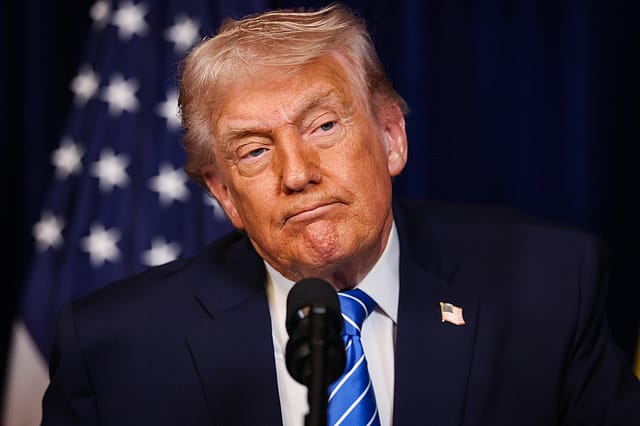
Donald Trump is once again reshaping America’s foreign-policy conversation—this time with blunt remarks that have unsettled allies across continents.
In a series of off-the-cuff but consequential statements over the weekend, the US president signalled possible action against Colombia, dismissed the need for intervention in Cuba, doubled down on military pressure in Venezuela, and renewed his controversial push to take control of Greenland, each move amplifying diplomatic unease from Latin America to Europe.
Speaking briefly to reporters, Trump sparked alarm by claiming Colombia was ‘run by a sick man’ and suggesting its leadership ‘won’t be doing it for very long.’ When asked whether that implied a potential US operation, Trump responded tersely: Sounds good to me. The remark immediately triggered speculation over Washington’s intentions toward one of its closest regional partners.
Colombia’s President Gustavo Petro responded with an impassioned call for Latin American unity, warning that US aggression would only deepen historical wounds. Drawing parallels with past bombings in the region, Petro said ‘friends do not bomb friends’ and urged the region to reject subservience to foreign powers in favour of collective sovereignty.
Trump’s rhetoric did not stop there. Turning to Cuba, he suggested that an operation similar to Venezuela was unnecessary, arguing that Havana was already ‘on the verge of collapse’ due to its economic dependence on Venezuelan oil. The comments came just days after a dramatic US military operation in Caracas resulted in the capture of former Venezuelan president Nicolás Maduro and his wife.

Iran After the Imam
06 Mar 2026 - Vol 04 | Issue 61
Dispatches from a Middle East on fire
Almost simultaneously, Trump reignited a long-simmering dispute with Europe by reiterating that the United States ‘needs Greenland’ for national security. Speaking aboard Air Force One, he cited the growing presence of Russian and Chinese vessels in the Arctic and claimed Denmark was incapable of securing the strategically vital island on its own.
‘We need Greenland from the standpoint of national security,’ Trump said, adding that Europe understood and supported the idea, an assertion swiftly rejected by Danish officials.
Denmark’s Prime Minister Mette Frederiksen responded sharply, calling on Washington to stop making threats against a close NATO ally. “Greenland is not for sale,” she said, stressing that the US had no right to annex territory within the Danish kingdom.
Tensions escalated further after a social media post by the wife of Trump’s deputy chief of staff depicted Greenland painted in US colours with the caption “SOON,” prompting swift backlash from Copenhagen and Nuuk. Greenland’s Prime Minister Jens-Frederik Nielsen labelled the post disrespectful, reiterating that the island’s future was rooted in international law, not online provocation.
Together, Trump’s remarks reflect a broader, unapologetic assertion of American power, one that blends security arguments with coercive language and leaves allies questioning where rhetoric ends and action begins.
(ANI and yMedia are the content partners for this story)