Trump Predicts Iran War Will End Soon; Tehran Claims It Withstood the Conflict
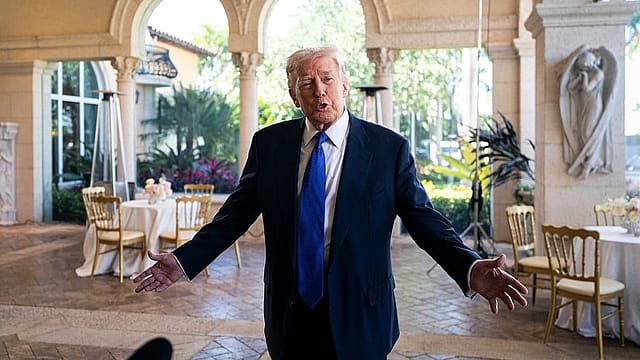
The United States and Iran offered sharply contrasting assessments of the conflict on Thursday, with US President Donald Trump expressing confidence that the war would end "pretty soon" while Iran's leadership projected resilience, insisting ordinary citizens had barely felt its impact despite attacks on key infrastructure.
Speaking at the White House, Trump said he believed the conflict had reached a point where it could not continue much longer, while reiterating that preventing Iran from acquiring a nuclear weapon remained Washington's overriding objective.
"I think the war's got to end pretty soon. I don't think they can go much longer," Trump told reporters.
He also struck an optimistic note on efforts to restore normal shipping through the Strait of Hormuz, one of the world's most strategically important maritime routes for global oil trade.
Rise of the Pivotal Power
18 Sep 2026 - Vol 05 | Issue 38
The BRICS declaration is a strategic victory for Modi
Trump acknowledged that the waterway remained vulnerable to threats such as naval mines but said negotiations were progressing.
"I think we're doing very well. I am involved in the negotiations. It could be soon," he said.
His remarks come amid renewed uncertainty over US-Iran diplomacy following the collapse of the June ceasefire framework and days after US Vice President JD Vance described negotiations with Tehran as likely to be "messy" and time-consuming.
Tehran, however, painted a very different picture.
In a televised address, Iranian President Masoud Pezeshkian said coordinated governance, crisis management and regional cooperation had enabled the country to absorb the impact of the conflict without causing widespread disruption to daily life.
"The people didn't feel the war at all. They only realised something had happened when they saw images on television or when attacks occurred somewhere," Pezeshkian said.
He claimed that even after strikes on critical infrastructure, including power facilities, essential services continued without major disruption.
"Many of our power plant sites were struck, but the people didn't feel there was any problem," he said.
Pezeshkian also credited neighbouring countries with helping prevent instability along Iran's borders, saying regional cooperation had strengthened significantly during the conflict.
"One of the enemy's plans was to create unrest along our borders, but our neighbours did not allow that to happen," he said.
The competing narratives come as diplomatic tensions remain high.
While Trump suggested negotiations over the Strait of Hormuz were making progress, senior Iranian officials have continued to reject suggestions that substantive talks are underway. Iran's Parliament Speaker Mohammad Bagher Ghalibaf recently accused Washington of pursuing "theater diplomacy", while Acting Defence Minister Brigadier General Majid Ebn-e-Reza warned that Iran's armed forces remained fully prepared to deliver what he described as a "crushing and decisive response" to any future threats.
For now, both capitals are projecting confidence.
Washington says the conflict is nearing a resolution and diplomacy is gaining ground. Tehran insists it has withstood military pressure without breaking. Between those competing claims lies a region still waiting to see whether the next chapter is negotiation or another escalation.
(With inputs from ANI)