Trump again claims 'almost total control' of Hormuz as Iran reports deaths and Houthis warn US allies
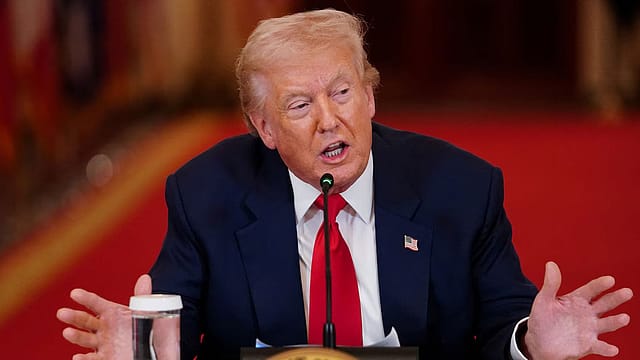
A missile strike in Iran's Khuzestan province. A warning from Yemen's Houthis. A claim by Donald Trump that the United States has "almost total control" of the Strait of Hormuz.
Taken separately, each is a headline. Taken together, they tell a bigger story: the fight over the Strait of Hormuz is no longer just about ships and oil. It is now shaping military calculations across the Middle East.
As Washington and Tehran exchanged fresh accusations and military blows, the world's most important energy chokepoint once again became the centre of a rapidly expanding confrontation. Reuters reported that the latest US-Iran exchange of attacks ended a relative lull in hostilities and raised fears of another escalation across the region.

Zeroing In on ECI
09 Oct 2026 - Vol 05 | Issue 41
Constitutional legitimacy versus political opportunism
So what exactly happened, and why does it matter?
Why is everyone suddenly talking about the Strait of Hormuz again?
Because Hormuz is where the military story and the economic story meet.
The narrow waterway between Iran and the Arabian Peninsula carries a significant share of the world's seaborne oil and LNG shipments. Any disruption there quickly affects energy markets, shipping routes and geopolitical calculations.
Recent tensions have centred on alleged Iranian attempts to threaten shipping and deploy sea mines in the area, claims that Washington has cited while justifying military action. The latest US strikes were reportedly presented by the Trump administration as retaliation for Iranian actions near Hormuz and attacks on US personnel.
What happened in Iran's Khuzestan province?
Iranian state media reported that US missile strikes hit multiple locations in Khuzestan, an oil-rich province in southwestern Iran.
According to Iran's state-run IRNA news agency, seven people were killed and eight injured in the strikes. Iranian officials also reported attacks near Ahvaz and Aghajari. These casualty figures have been reported by Iranian authorities and have not been independently verified.
The United States Central Command (CENTCOM) said it had completed strikes against Iranian military targets, including air-defence systems, communications infrastructure and mine-laying capabilities. Reuters separately reported that CENTCOM confirmed attacks on IRGC-linked military assets.
What exactly did Trump say about Hormuz?
Trump's comments were among the strongest he has made in recent weeks.
In a Truth Social post, he dismissed suggestions that he was trying to bring Iran back to negotiations and instead highlighted what he described as a position of strength.
"I'm not trying to force Iran to the bargaining table, as ABC Fake News reported. I couldn't care less if they sign a worthless, to them, agreement. I like our position now much better, with almost total control of the Hormuz Strait, and their economy totally collapsing. They are just playing out the inevitable."
Trump also asked: "When are the Iranian people going to rise up and fight?"
His remarks came amid renewed military operations around Hormuz and follow earlier claims that the United States had effectively secured shipping lanes through the strait.
Why are the Houthis now entering the conversation?
Because the conflict may no longer be confined to the US and Iran.
The Houthi-run Foreign Ministry in Sanaa issued a statement backing Tehran and warning countries hosting US forces that they could face "repercussions."
According to statements carried by Houthi-linked media and reported by Al Jazeera, the group said countries that allow their territories to be used as platforms for strikes against Iran "must pay the price." The Houthis also argued that US military action would not weaken Iran's resolve.
That warning is significant because several Gulf states host American military facilities, making them potential flashpoints if the conflict widens.
Did Iran strike back?
Iranian state media says it did.
IRNA reported that the IRGC Aerospace Force launched ballistic missiles against the US Prince Hassan Air Base in Jordan, targeting facilities allegedly used by American drones.
Iranian media claimed drones were destroyed and US personnel were killed. However, these claims have not been independently verified, and Reuters reported that US officials disputed Iranian accounts of casualties at American facilities.
Jordan and Bahrain have also reported intercepting missiles and drones during the latest escalation, according to Reuters.
Why does this matter beyond the Middle East?
Because energy markets are already reacting.
Oil prices reportedly jumped sharply as traders assessed the possibility of further disruptions in and around Hormuz. Shipping traffic through the strait has also fallen below recent averages as security concerns intensify.
Even when tankers continue to move, uncertainty alone can push up energy costs worldwide, affecting fuel prices, freight rates and inflation far beyond the Gulf.
What should the world watch next?
Three things:
First, whether Iran carries out further retaliation after the latest US strikes.
Second, whether Houthi threats translate into action against US interests or allied states.
And third, whether shipping through the Strait of Hormuz stabilises or faces fresh disruption.
For now, the most important development is not a single strike or a single statement. It is the growing sense that the struggle over Hormuz has become the central front in the latest US-Iran confrontation — and the consequences could stretch far beyond the Gulf.
(With inputs from ANI)