Damascus Between Redemption and Relapse
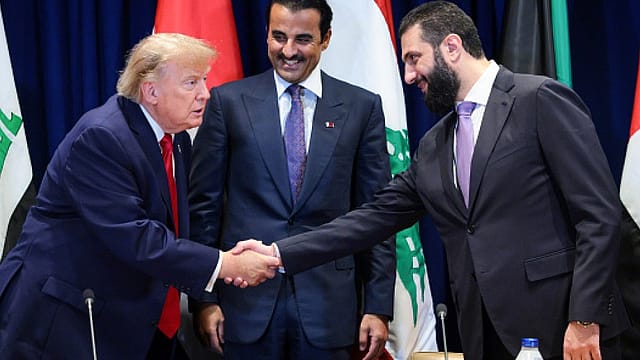
The Pragmatist Nobody Ordered
Few observers expected Ahmed al-Sharaa to govern like a statesman. A man who rose through al-Qaeda’s ranks, ran its Syrian franchise and then repackaged his insurgency for polite company seemed bound to rule Syria as his old comrades once ruled Raqqa. Yet the record of the past two years has, in several respects, embarrassed the pessimists. Washington has lifted sanctions and struck Syria off its list of state sponsors of terrorism, citing, in Secretary of State Marco Rubio’s words, commitments “to fully distance Syria from acts of international terrorism” (‘US removes Syria from terrorism sponsor list, lifting major investment obstacle’, Al-Monitor, August 24). Whether those words will age gracefully is another matter, but it is not naïve to note that a country which was a charnel-house under Assad has not, so far, become a caliphate.
The Iranian Divorce
The clearest dividend is geopolitical. For half-a-century Damascus served Tehran as a corridor to Hezbollah and a doormat to the ayatollahs; that arrangement died with Assad’s flight, and nothing in the region has been quite the same since. It’s been reported now that al-Sharaa’s government is weighing the dispatch of troops to Saudi Arabia against the Houthis, Iran’s most (and only) capable proxy today. What they would actually do is unclear. But a government that merely denounces Tehran is common enough; one that contemplates bleeding men for the same argument is rarer—and perhaps a good deal more interesting. Whatever this is, it doesn’t look like the conduct of a movement (in fact, government) still bent on exporting revolution. It looks rather like a regime shopping for patrons, legitimacy and a seat at someone’s higher table.

The Wealth Issue 2026
06 Nov 2026 - Vol 05 | Issue 45
Portraits of Dreamers and Doers under 35
The Schoolroom Ledger
And here the applause should falter. A review (Report: Syria's New Textbooks Take the Next Generation to Extremist Islamism, October 19, 2026) of 130 Syrian textbooks by the monitoring body IMPACT-se finds martyrdom presented from the earliest grades as having “a spiritually exalted status”, jihad as a duty to be pursued, by implication, until victory or death, and Jews as creatures of treachery (a Grade 6 text speaks of “treason and backstabbing”). While one may concede that much of this was inherited from the Ba’athist curriculum, which was never a model of tolerance, the indictment nevertheless is that a government fond of the vocabulary of renewal has kept the old militancy and added a pious varnish. Add the thousands of foreign fighters who carried HTS to Damascus and now sit inside the national army, and the picture is of a state that is moderating its diplomacy while leaving its nursery and barracks to look after themselves.
History supplies an uncomfortable gloss. The “stab in the back” was the central myth with which interwar Germany explained its defeat and prepared its genocide; to find the same grammar in a children’s primer, in a country whose previous regime sheltered the Nazi fugitive Alois Brunner, is not a coincidence one can wave away as cultural colour. Enthusiasts in Western capitals, intoxicated by the novelty of a jihadist who wears a suit, would do well to remember that a state’s intentions are better read in its classrooms than in its communiqués.
The Mecca Pact and the Arsonist’s Fire Brigade
Syria, we are told, is a promising candidate for the Saudi-Turkish-Pakistani defence arrangement known as the Mecca Pact. The irony here writes itself. Pakistan, whose generals nursed the Taliban for decades, let Osama bin Laden live for years in a garrison town near their military headquarters in Rawalpindi and still collected US aid for fighting terror, is the least credible guarantor of any country’s security: a fire brigade staffed by serial arsonists. Any Syrian who joins an alliance with Islamabad should expect to be sold, in due course, to the highest bidder, since reliability has never been a Pakistani export.
A Verdict, or Not a Verdict?
Somewhere between the optimists and the pessimists lies the real Syria of today. Of its own two faces, one faces outward: transactional, anti-Iranian, hungry for investment. The other faces inward, towards its children, and is the one that will matter longer. Optimism is warranted, but it should be what a banker extends: conditional, staged and reversible. Sanctions relief ought to track textbook reform and the dispersal of foreign jihadists, not the other way round. Al-Sharaa has shown that he can change his foreign policy. The test is whether he is willing to change the minds of the 10-year-olds who will inherit it.