Tropical Storm Lala is Leaving Hawaii. Why its Blackouts and Flood Threat Are Not
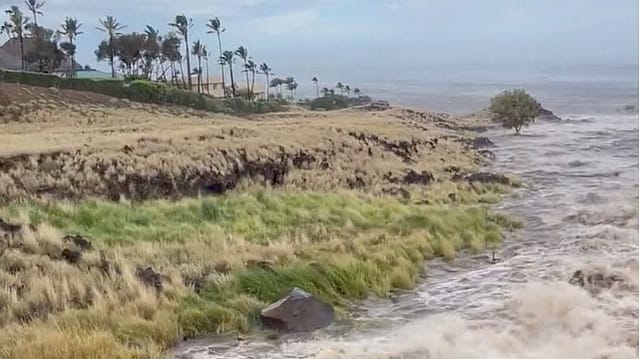
Tropical Storm Lala is moving away from Hawaii. Its destruction is staying behind.
The system skirted the islands without making landfall, yet its rainbands flooded roads, swept away homes and toppled trees and power lines. More than 200,000 electricity customers, representing homes and businesses rather than individual people, lost power as the storm raked the archipelago.
At least 100 homes have been damaged, according to Governor Josh Green. Some of the hardest-hit rural communities could remain without electricity for weeks or even months. Lala has weakened from a Category 1 hurricane to a tropical storm and its centre is pulling away from Kauai. Heavy rain, dangerous surf and electrical hazards, however, mean the all-clear has not arrived. Here is how a storm that missed land still managed to batter Hawaii, why the blackout became so extensive and what happens next.

Look Who's Talking Regime Change
23 Oct 2026 - Vol 05 | Issue 43
Did Tropical Storm Lala make landfall in Hawaii?
No. Lala passed south of the islands, with its centre remaining offshore. The storm’s northern eyewall brushed the Big Island before the system moved west-northwest along the island chain. That was enough to unleash powerful gusts, torrential rain and dangerous surf across Hawaii. A tropical cyclone does not need to make landfall to cause severe destruction. Its rainbands and strongest winds can stretch far beyond the eye, particularly when the centre passes close to the coast. Lala had strengthened into a Category 1 hurricane as it approached Hawaii before weakening back into a tropical storm.
How many people lost electricity?
More than 200,000 electricity customers were without power during the storm, but describing them as 200,000 “people” understates the true impact. A customer account can represent an entire household, apartment building or business. The actual number of people affected is therefore likely to be substantially higher. Hawaiian Electric reported that approximately 250,900 customer accounts were without power in its Sunday noon update. Earlier that morning, the utility had placed the figure at around 197,400, showing how quickly outages shifted as damaging winds moved across the islands. On Hawaii Island, around 58,000 customers were without electricity in the morning, including large parts of the eastern and southern regions. Maui County had approximately 28,700 outages, while Oahu accounted for about 110,700. The utility’s latest updates are available through the Hawaiian Electric newsroom.
Why did the blackout become so widespread?
Lala struck an island power network vulnerable to falling trees, damaged transmission lines and limited access to isolated infrastructure. Hurricane-force gusts were reported in Hawaii, Honolulu and Maui counties. Trees and debris crashed into electrical equipment, while flooding and blocked roads prevented repair crews from immediately reaching damaged areas. On the Hamakua Coast, fallen trees reportedly damaged transmission infrastructure across a stretch of approximately 42 miles. Some hospitals switched to backup generators. Hawaiian Electric also asked customers in parts of Oahu to reduce consumption while crews worked to stabilise the grid.
Why could restoring power take weeks or months?
Crews must first reach damaged equipment, remove debris and determine whether lines, poles and substations can be repaired or need replacement. That process becomes much harder in remote areas where roads are flooded, bridges are damaged and communications have failed. Replacement equipment and specialised crews may also need to be brought in from the US mainland. Hawaiian Electric warned residents in the hardest-hit rural areas of Hawaii Island to prepare for outages lasting weeks or possibly months. Assistance from mainland utilities was expected to begin arriving on Tuesday. Power can return relatively quickly in urban areas with accessible infrastructure. Rebuilding an isolated transmission corridor is a very different operation.
How badly were homes damaged?
Governor Josh Green said at least 100 homes had been damaged or destroyed. Two homes were swept away, while others were torn from their foundations or lost roofs, according to Reuters. The worst destruction was reported on the Big Island, where flash floods surged through southern communities. Naalehu and Waiohinu were among the areas hit by flooding, fallen trees and structural damage. The full toll may rise as crews reach communities that were cut off during the storm.
How much rain did Lala bring?
Some high-elevation areas received several feet of rain, with totals reportedly approaching 35 inches. Hawaii’s volcanic terrain amplified the rainfall. Moist air carried by the storm was forced upwards along mountain slopes, where it cooled and released heavier rain. The same terrain also accelerated winds over ridges and down slopes. The result was a dangerous combination: extreme rain in some areas and destructive wind gusts in others. The downpour triggered flash floods, swelled rivers and submerged roads. It also raised the risk of landslides and contaminated runoff entering coastal waters.
How could Lala cause so much damage after being downgraded?
A downgrade describes the storm’s maximum sustained wind speed. It does not mean every threat has disappeared. When Lala weakened from a hurricane to a tropical storm, it still carried sustained winds of about 65 mph. Stronger gusts continued across the islands, especially at higher elevations and in locations where the terrain funnelled the wind. The storm also retained enormous amounts of moisture. Flooding, landslides, surf and falling trees can continue long after a cyclone drops below hurricane strength. For residents under a rainband or beside a swollen river, the category printed beside the storm’s name offers little protection.
Has anyone died?
One person died in a vehicle crash near South Point, but officials had not conclusively determined whether the death was caused by Lala. Governor Green said there were no other confirmed storm deaths at the time of his update. Officials have therefore avoided formally adding the vehicle death to Lala’s toll until the circumstances are established. About 117 people had entered emergency shelters, according to figures cited by Reuters.
Is Hawaii now out of danger?
The most destructive phase is easing, but several hazards remain. Tropical storm warnings continued for Kauai, Oahu and parts of Maui County as Lala moved westward. Outer rainbands were still capable of producing heavy downpours, dangerous gusts and local flooding. Hawaii’s Emergency Management Agency warned residents against unnecessary travel and urged them to watch for downed power lines, unstable debris, polluted water and damaged structures. “People should use extreme caution in damaged areas,” the agency said in its storm update. Dangerous surf and rip currents could also continue after the centre of the storm has moved away.
Are airports and transport services operating?
Hilo International Airport and Ellison Onizuka Kona International Airport reopened after precautionary closures. Travellers were still advised to confirm flight schedules before leaving for the airport. Flooded roads, fallen trees and debris continued to disrupt local travel. Authorities warned that airport facilities should not be treated as emergency shelters. Commercial ports and other transport infrastructure were also being assessed before normal operations could fully resume.
Could Lala strengthen again?
Yes, although it would do so after moving away from Hawaii. The National Hurricane Center said Lala could regain hurricane strength as it travels over warm Pacific waters. That would not necessarily bring the storm back towards the islands. The immediate concern for Hawaii is the damage already inflicted and the hazards trailing behind the storm.
What happens next?
Hawaii is moving from emergency response to a difficult recovery. Crews must restore electricity, clear roads, inspect bridges, assess homes and check drinking water for contamination. Officials must also determine whether isolated communities need extended shelter, food, fuel and medical support. The state declared an emergency before Lala arrived, allowing authorities to mobilise resources and accelerate disaster assistance. Damage assessments will help determine whether Hawaii seeks additional federal support. Lala missed land. It did not miss Hawaii. The eye is leaving. For thousands of families facing damaged homes, flooded roads and an uncertain wait for electricity, the storm is far from over.
(With inputs from ANI)