‘Top priority is…’: MEA Clarifies India’s Oil Policy After US Claims on Trade Deal
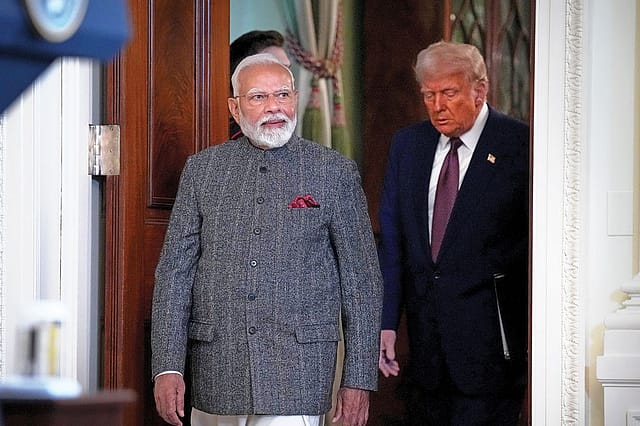
India has firmly rejected claims that it has agreed to stop importing Russian oil, reiterating that ensuring affordable and reliable energy supplies for its 1.4 billion citizens remains its “supreme priority,” the Ministry of External Affairs (MEA) said on Thursday.
Responding to remarks by US President Donald Trump, who suggested that India would shift away from Russian crude towards American and Venezuelan supplies following a new India-US trade deal, the MEA clarified that New Delhi’s energy decisions are driven solely by national interest and market realities.
MEA spokesperson Randhir Jaiswal stressed that India follows a diversified and pragmatic sourcing strategy. He said the government continuously evaluates global energy markets to secure stable and affordable supplies amid shifting geopolitical and economic conditions.
“Ensuring the energy security of 1.4 billion Indians is our supreme priority,” Jaiswal said, adding that all decisions are guided by commercial viability and evolving international dynamics.
Focus on global market stability
While Prime Minister Narendra Modi confirmed the India-US trade agreement, officials noted that no commitment was made regarding halting Russian oil purchases. Russian authorities also dismissed speculation of any change in bilateral energy cooperation, stating that trade with India remains mutually beneficial and contributes to global market stability.
On Venezuela, the MEA said India remains open to resuming crude imports if commercial conditions permit. Jaiswal highlighted Venezuela’s long-standing partnership with India, noting that Indian firms have maintained energy investments in the country for over a decade.

India's Action Hero
27 Mar 2026 - Vol 04 | Issue 64
Riding the Dhurandhar Wave
The numbers so far
India had imported Venezuelan crude until 2019-20, resumed purchases in 2023-24, and later suspended them following renewed sanctions. Officials said New Delhi continues to assess supply options across multiple regions to ensure flexibility and resilience.
Union Commerce Minister Piyush Goyal echoed the government’s position, urging stakeholders to view energy policy in the broader context of national interest and long-term security.
Meanwhile, External Affairs Minister S Jaishankar, currently in the United States, discussed global and regional issues with American leaders, including energy cooperation, critical minerals, and geopolitical developments in Ukraine, West Asia, and the Indo-Pacific.
India also reaffirmed its support for the FORGE initiative on resource and geostrategic engagement, underlining its commitment to strengthening global energy and mineral supply chains.
Taken together, the government’s statements signal that India will continue pursuing a balanced, market-driven, and diversified energy strategy, resisting external pressure while prioritising domestic needs and economic stability.
(With inputs from ANI)