The Threat to Minority Lives in India's Neighbourhood
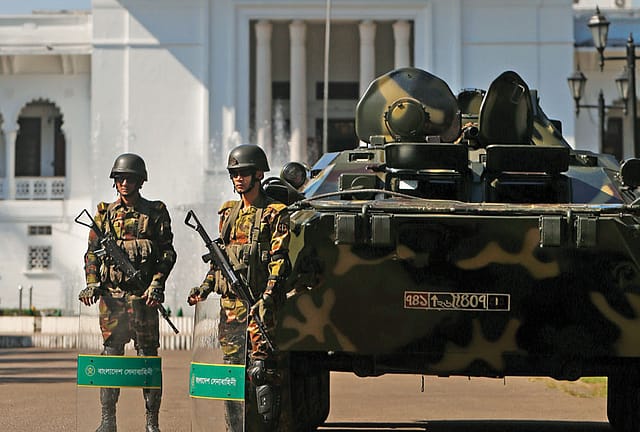
The brutal lynching of a Hindu man in Bangladesh in December has reignited serious concerns over the safety of religious minorities in South Asia. The victim was reportedly attacked by a mob following unverified allegations linked to his religious identity, highlighting once again how minorities remain vulnerable when law enforcement fails to act swiftly and decisively.
The incident triggered protests both within Bangladesh and across India, where civil society groups and minority organisations demanded justice and accountability. Demonstrators argued that such acts cannot be dismissed as isolated crimes but must be seen in the broader context of recurring violence against minorities and a climate of impunity that allows mob justice to flourish.

Losing Memory
16 Oct 2026 - Vol 05 | Issue 42
The making of a medical and social emergency
A Wider Pattern in the Neighbourhood
While the Bangladesh incident has drawn international attention, similar concerns persist in neighbouring Pakistan, where religious minorities particularly Hindus, Christians, and Ahmadis have long reported systemic discrimination, social exclusion, and sporadic violence. Hindus do not have anywhere to go.
Human rights organisations have consistently documented cases of physical attacks, forced displacement, and intimidation of minority communities in Pakistan. Of particular concern is the frequent misuse of blasphemy laws, where allegations often unproven—have led to mob violence, prolonged detention, or social boycotts of minority families. Even when courts eventually intervene, the damage to life, liberty, and dignity is often irreversible.
International observers and parliamentary bodies in several democracies have criticised Pakistan for failing to provide effective protection to its minorities, pointing to structural weaknesses in policing, prosecution, and political will. While Pakistani authorities periodically reaffirm their constitutional commitment to minority rights, ground realities continue to suggest a gap between promise and practice.
Diplomatic and Moral Implications
The killing in Bangladesh has also had diplomatic repercussions, with protests in India calling for stronger regional accountability on minority protection. Indian civil society voices have stressed that constitutional guarantees mean little if neighbouring states fail to uphold the most basic human right the right to life.
At the same time, governments in the region have often responded defensively, framing criticism as exaggerated or politically motivated. Such responses, however, do little to address the underlying issue - when minorities are targeted because of faith, language, or identity, it reflects a failure of governance, not merely law and order.
India’s Constitutional Contrast
India’s constitutional framework presents a sharp contrast. The Indian Constitution explicitly guarantees equality before the law, freedom of religion, and special protections for minorities to preserve their culture and educational institutions. These safeguards reflect a deliberate choice to embed pluralism within the democratic structure.
Yet, India’s commitment to minority protection also places a moral responsibility on it to remain vigilant at home and principled in its engagement with regional human rights concerns. True secularism does not demand silence in the face of injustice; it requires consistency and courage.
Beyond Rhetoric
Lynching whether of a Hindu in Bangladesh, a Christian or Ahmadi in Pakistan, or any minority anywhere represents the collapse of the rule of law. It signals the dangerous substitution of mob sentiment for legal process.
Minority rights cannot remain rhetorical ideals invoked selectively. They must translate into real security, impartial policing, and uncompromising accountability. In a region bound by shared history and porous borders, the protection of minorities is not merely a domestic issue it is a test of South Asia’s collective commitment to human dignity.