The Evolution of Fitness: How 19th-Century Strongmen Shaped Modern Workouts
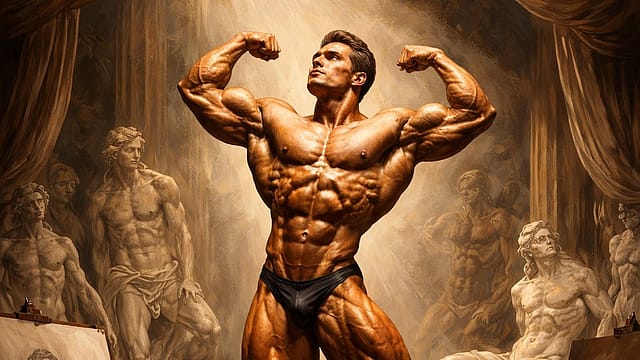
Weight training today powers a global fitness industry projected to be worth $24.93 billion by 2030, according to Grand View Research. Yet its roots trace back to one Prussian showman who turned raw muscle into an art form. Long before protein shakes and gym memberships, a handful of 19th-century strongmen were already engineering the human body with a rigour that modern science would later validate.
Here’s a deeper insight.
Did the Ancient World Discover Weight Training First?
The impulse to lift for strength predates recorded history. Ancient Greek athletes reportedly trained by carrying calves, growing stronger as the animals grew heavier. Halteres, hand-held stone weights, were used in competitions as early as the 5th century BCE - a deliberate, systematic attempt to build physical capacity.

Look Who's Talking Regime Change
23 Oct 2026 - Vol 05 | Issue 43
Who Was the Man Who Invented Bodybuilding?
Eugen Sandow (1867–1925), a Prussian-born strongman, is widely recognised as the father of modern bodybuilding. Sandow staged the first organised bodybuilding competition in 1901, judging participants on muscular symmetry rather than strength alone. His approach transformed lifting from a circus act into a structured pursuit of physical aesthetics.
Which Other Pioneers Shaped the Evolution of Weight Training?
Sandow was not alone. George Hackenschmidt reportedly developed foundational exercises including the bench press and hack squat. Louis Attila designed early adjustable barbells, enabling incremental resistance increases. Bernarr Macfadden founded Physical Culture magazine in 1899, bringing fitness into mainstream homes for the first time.
What Happens to Muscles When You Lift Weights?
Lifting heavy loads causes microscopic tears in muscle fibres. The body repairs these tears, rebuilding fibres thicker and denser - a process called hypertrophy. It requires not just effort but rest and nutrition, insights that sports science has since quantified in granular detail.
Why Is Progressive Overload the Golden Rule of Fitness?
According to USA Weightlifting, muscles adapt rapidly to a given stimulus; without escalating demands, growth plateaus. Progressive overload, consistently increasing weight, reps, or intensity, is the cornerstone of effective weight training and underpins every elite strength programme today.
Does Weight Training Do More Than Build Muscle?
Progressive resistance loading improves bone mineral density and drives metabolic adaptation, increasing resting calorie burn and improving insulin sensitivity. These effects now form a core part of preventive medicine and rehabilitation science.
How Did Sandow's Legacy Reshape the Modern Fitness World?
The International Federation of Bodybuilding and Fitness, founded in 1946, awards winners a trophy in Sandow's likeness to this day. What began as a Prussian showman flexing under stage lights is now one of the most widely practised physical disciplines on the planet.
(With inputs from yMedia)