At UNSC, India Slams Pakistan Over Cross-Border Terrorism and Radicalism
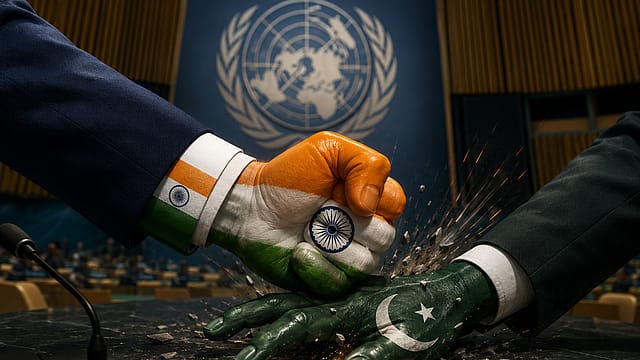
India launched a strong diplomatic attack against Pakistan at the United Nations Security Council, accusing Islamabad of continuing to sponsor cross-border terrorism and violent extremism against India while violating the principles of the UN Charter.
Speaking during the UNSC Open Debate on “Upholding the Purposes and Principles of the UN and Charter and Strengthening the UN-centred International System,” India’s Permanent Representative to the United Nations, Parvathaneni Harish, said Pakistan would have to bear the consequences of supporting terrorism.
“Pakistan will have to accept that there are consequences to its sponsorship of cross-border terrorism. Pakistan's harnessing of the malevolent forces of terrorism, religious extremism, violent radicalism, and anti-India rhetoric has continued unabated since its creation.”
India Targets Pakistan’s ‘Bleeding India’ Doctrine
The Indian envoy accused Pakistan of repeatedly violating India’s sovereignty and territorial integrity through wars, aggression and cross-border terrorism.

The Health and Wellness Issue
25 Sep 2026 - Vol 05 | Issue 39
“Pakistan, by waging several wars and inflicting unprovoked aggression against India and through its continued sponsorship of cross-border terrorism, has violated the principles of sovereignty and territorial integrity and peaceful coexistence. The use of cross-border terrorism by Pakistan and its doctrine of "bleeding India by a thousand cuts" exposes its hollow rhetoric of commitment to the UN Charter.”
Harish also underlined India’s position that it has every right to defend itself against terrorism emanating from across the border and reiterated the demand for Pakistan to permanently end support for all forms of terrorism.
India Rejects China-Pakistan Remarks on Jammu and Kashmir
The strong remarks at the UN came shortly after India rejected references to Jammu and Kashmir in a joint statement issued by China and Pakistan.
Responding to the development, Ministry of External Affairs spokesperson Randhir Jaiswal said India’s position on Jammu and Kashmir remains unchanged.
“India categorically rejects unwarranted references to the Union Territory of Jammu and Kashmir in the Joint Statement between China and Pakistan. India's position is consistent and well known to the concerned parties. The Union Territories of Jammu & Kashmir and Ladakh have been, are and will always remain integral and inalienable parts of India. No other country has the locus standi to comment on the same.”
India Reiterates Opposition to CPEC in Disputed Territories
India also renewed its objections to the China-Pakistan Economic Corridor projects that pass through territories claimed by India.
“As regards the so-called China-Pakistan Economic Corridor (CPEC) projects, some of which are in India's sovereign territory, we resolutely oppose and reject any moves by other countries to reinforce or legitimise Pakistan's illegal and forcible occupation of these territories, impinging on India's sovereignty and territorial integrity,” Jaiswal said.
“This has been clearly conveyed to Pakistani and Chinese authorities several times,” he added.
Why the Issue Matters
India has consistently maintained that Jammu and Kashmir and Ladakh are integral parts of the country and has objected to third-party comments on the matter. New Delhi has also repeatedly opposed CPEC projects running through Pakistan-occupied territories, arguing that they violate India’s sovereignty.
The latest exchange at the UN reflects continuing tensions between India and Pakistan over terrorism, Kashmir and regional geopolitics, while also highlighting India’s growing willingness to directly challenge Pakistan’s position in multilateral forums.
(With inputs from ANI)