Nepal Floods: over 180 Dead, more than 800 Missing as Gandak Surge Puts Bihar, UP on Alert
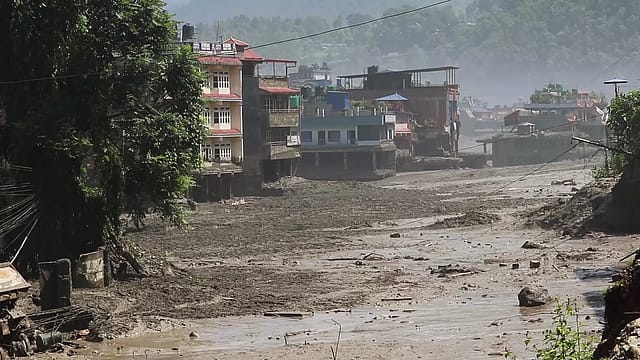
A wall of water and mud has ripped through northern Nepal, killing over 70 people, severing contact with over 380 travellers and reducing entire settlements along the Bhotekoshi River to rubble.
The disaster struck Rasuwa near Nepal’s border with Tibet and spread into neighbouring districts, sweeping away roads, concrete bridges, security posts and communication networks. Workers remain trapped inside a hydropower tunnel, customs officials and security personnel are missing, and bad weather has repeatedly forced rescue helicopters to turn back.
BBC reported that the toll had crossed 165, a steep rise from the 70 deaths confirmed earlier. With rescuers still struggling to reach isolated areas, both the toll and the number of people reported missing could change.
Over 300 Indian nationals are among the travellers whose whereabouts are being verified. Many were travelling towards the Rasuwagadhi checkpoint for the Kailash Mansarovar Yatra.

Zeroing In on ECI
09 Oct 2026 - Vol 05 | Issue 41
Constitutional legitimacy versus political opportunism
India has dispatched 10 tonnes of relief material and essential medicines to Nepal. It has also placed aircraft and disaster-response teams on alert as the flood wave moves through Nepal’s river system towards the Gandak, threatening vulnerable districts in Bihar and Uttar Pradesh.
Settlements Buried, Bridges Swept Away
The flood surged through the Bhotekoshi River near Rasuwagadhi, tearing into riverside communities across Rasuwa and Nuwakot.
The Kathmandu Post reported that entire settlements had been devastated and several concrete bridges washed away. Roads leading to the worst-hit areas have disappeared, leaving rescue teams heavily dependent on helicopters.
Critical government and infrastructure sites have also been hit. Over a dozen employees of the Rasuwa Customs Office at Timure are missing, while several security personnel deployed close to the Nepal-China border remain out of contact.
The Nepali Army, Nepal Police and Armed Police Force have been mobilised, but poor visibility, relentless rain and unstable weather have disrupted aerial operations.
Over 80 people had been rescued by the Nepali Army, with injured survivors taken to Tribhuvan University Teaching Hospital in Kathmandu, Trishuli Camp and other medical facilities.
Around a dozen helicopters were deployed during the day, although several sorties reportedly had to return without reaching Rasuwa.
Over 50 Hydropower Workers Trapped or Missing
The flood has also struck the 20 MW Langtang Khola Hydropower Project, where over 50 workers and staff remain out of contact.
Among them are 35 workers believed to be trapped inside a tunnel. The project was reportedly only two days away from scheduled testing when the flood hit.
The workers’ location inside the tunnel may have shielded them from the initial torrent, but blocked access, damaged communications and the possibility of water entering the structure have made their rescue particularly urgent.
The hydropower emergency captures the scale of the disaster. The flood did not merely inundate villages along the river. It struck construction sites, government offices, border facilities and transport routes almost simultaneously, scattering those affected across terrain that rescuers can barely reach.
Over 800 Travellers Out of Contact
Preliminary records collected from tourism and travel companies identify over 800 travellers who are reported missing or out of contact.
Many of the travellers were expected to cross the Rasuwagadhi checkpoint while heading towards Kailash Mansarovar.
Nepal’s Tourism Board, Tourist Police, travel agencies, guides and local authorities are now cross-checking passenger records and attempting to establish contact with the groups.
Authorities have cautioned that the list is preliminary. In a disaster that has destroyed roads, electricity supplies and mobile connectivity, “reported missing” can include people who are stranded but safe.
The task is therefore to distinguish those cut off by communication failures from those directly caught in the flood.
Was It a Glacial Lake Outburst Flood?
The precise cause of the disaster has not yet been officially established.
Nepalese officials initially received information that a landslide may have blocked a river in Tibet before the accumulated water burst through and raced downstream. Indian disaster-response officials have described the event as a suspected glacial lake outburst flood, or GLOF, near the Tibet-Nepal border.
A GLOF occurs when water held inside or behind a glacial lake is suddenly released, often after an ice or moraine barrier fails. The resulting flood can gather debris, rock and mud as it descends, turning into a fast-moving destructive wave.
The sudden rise was detected in the Trishuli River near Furke Khola, around 160 km from the Indian border. That water is expected to move downstream through the Gandak system.
The suspected GLOF explanation remains preliminary. A detailed assessment will be required to determine whether the flood began with a glacial lake breach, a landslide dam failure or a combination of events.
Nepal Declares Crisis Zones for Three Months
Nepal has declared the affected areas crisis-hit zones for three months under its disaster-management law.
The decision allows authorities to accelerate emergency rescue operations, mobilise resources and deliver immediate assistance to affected families.
The government has announced free medical treatment for the injured and financial relief for families that have lost members in the disaster.
Prime Minister Balendra Shah convened an emergency meeting to review the response as officials ordered people living close to the Trishuli River to leave exposed riverbanks and move towards safer ground.
Alerts have been issued across Rasuwa, Nuwakot, Dhading, Gorkha and Chitwan. Although the flood’s force may weaken as it moves downstream, damaged bridges, unstable slopes and swollen rivers continue to threaten communities along its path.
India Sends 10 Tonnes of Relief Material
India dispatched 10 tonnes of humanitarian assistance and essential medicines aboard an Indian Air Force C-130J aircraft.
The consignment includes temporary shelters, blankets, hygiene kits, solar lamps and medicines intended to support Nepal’s rescue and relief effort.
External Affairs Minister S Jaishankar said India stood with Nepal and its people as they confronted the disaster.
Prime Minister Narendra Modi also spoke to Shah, conveyed his condolences and offered all possible humanitarian assistance.
“The people of India stand in solidarity with their sisters and brothers in Nepal at this difficult time,” Modi said, adding that teams from both countries were coordinating on rescue and relief operations.
The Indian Air Force had placed its C-17, C-130J and C-295 transport aircraft on standby as the scale of the emergency became clearer.
The Indian embassies in Kathmandu and Beijing are coordinating with authorities in Nepal and Tibet to locate and assist Indian nationals stranded around the border region.
The Beijing and Kathmandu embassy numbers can also be reached through WhatsApp. The United States has separately activated emergency coordination channels for its nationals and advised them to contact its Kathmandu embassy or Nepal’s disaster hotline.
Bihar and Uttar Pradesh Brace for the Flood Wave
The flood is now threatening to become an Indian emergency.
Union Home Minister Amit Shah spoke to the chief ministers of Bihar and Uttar Pradesh as authorities tracked the surge moving downstream through the Trishuli and Gandak rivers.
The National Disaster Response Force has been placed on high alert, along with local administrations and rescue agencies in potentially vulnerable border areas.
Nine NDRF teams are deployed across Bihar and 11 across Uttar Pradesh for flood response. Two teams have been positioned specifically in West Champaran and Muzaffarpur in the Gandak basin, while personnel have also been deployed in Kushinagar in Uttar Pradesh.
Additional teams are ready to move if state governments seek reinforcement.
The Union Home Ministry, Central Water Commission and state authorities are monitoring river levels and the progress of the flood wave.
Bihar has ordered heightened vigilance in West Champaran, East Champaran, Gopalganj, Saran, Muzaffarpur and Vaishali. Officials have been told to inspect embankments, intensify night patrols and warn communities in sensitive areas.
There was no report of major flooding in India linked to the Nepal disaster at the time of the alert. The deployments are precautionary, intended to give authorities time to evacuate exposed communities if the Gandak rises sharply.
A Disaster That Refuses to Respect Borders
The full scale of Nepal’s loss is still emerging.
Rescuers must reach settlements cut off by collapsed roads, free workers trapped inside a tunnel and trace over 380 travellers scattered across a shattered border region. Families are waiting for phone calls that damaged networks cannot yet deliver.
India’s challenge runs in two directions: send help northwards to Nepal while preparing for the water moving southwards towards Bihar and Uttar Pradesh.
The flood began high in the Himalayan borderlands. Within hours, it had buried Nepalese settlements, stranded international pilgrims and placed Indian river districts on alert.
The borders remain visible on maps. The water does not see them.
(With inputs from ANI)