The 2026 science Nobels went to decades-old discoveries
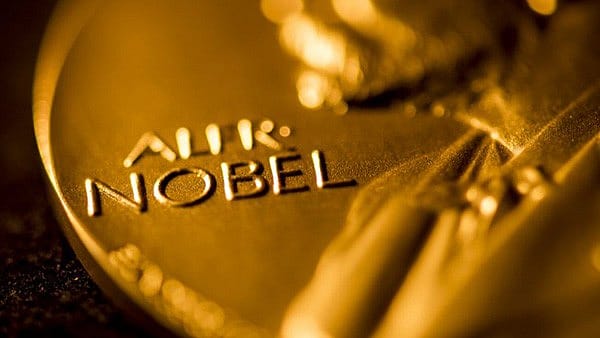
The Nobel Prizes for science were announced in Stockholm this week. The Prize for Physiology or Medicine went to Karl Deisseroth, Peter Hegemann and Georg Nagel for the discoveries behind optogenetics, a method of switching individual nerve cells on and off with light. The Prize for Physics went to Francis Halzen for the IceCube Neutrino Observatory at the South Pole and its detection of high-energy neutrinos from beyond the solar system. The Chemistry Prize went to Henri Kagan and Kenso Soai, for chemical reactions where some molecules win over others.
Of these, optogenetics is probably the most well-known outside of scientific circles. The brain works through electrical signals. A nerve cell, or neuron, holds a small negative voltage across its outer membrane. When channels in the membrane open and positively charged ions such as sodium flow in, the voltage rises. If it crosses a threshold, the neuron fires a brief electrical pulse, lasting about a thousandth of a second, which passes a signal to other neurons. Until the early 2000s, neuroscientists could record this activity but had no precise way to cause it. Electrodes and drugs weren’t always enough. British scientist and Nobel laureate Francis Crick wrote in 1979 that the field needed a way to activate or silence one type of neuron while leaving others unaltered. He later suggested light as the signal, while calling the idea “rather far-fetched”. Lasers had been used to stimulate neurons since the 1970s, but they affected whichever cells the beam struck. The answer, it turned out, would come from a man who studied algae.

The Modi Years
02 Oct 2026 - Vol 05 | Issue 40
A Nation Rebuilt
Peter Hegemann, born in 1954 and now at Humboldt University of Berlin, began studying the green alga Chlamydomonas reinhardtii in the 1980s, first at the Max Planck Institute of Biochemistry near Munich. This single-celled organism swims towards light, which it detects with a pigmented patch called the eyespot. Hegemann found that the alga’s electrical response to a flash of light began almost instantly. In animal eyes, light-sensitive proteins act through a chain of intermediate molecules before any ion channel opens, which takes time. The alga’s response was too fast for that. Hegemann proposed that a single protein both detected the light and formed the channel.
He could not isolate the protein to test the idea. Around 2001, gene sequences from the alga became available, and Hegemann identified two candidates. He brought them to Georg Nagel, born in 1953 and now at the University of Würzburg, who had spent years with Ernst Bamberg at the Max Planck Institute of Biophysics in Frankfurt studying light-driven proteins from microbes. Nagel’s method was to insert a gene into the eggs of the African clawed frog, which then produce the protein in their membranes, and to measure the electrical current across the membrane. When he did this with the algal genes and shone light on the eggs, current flowed. In 2002 the team reported in Science the first protein, channelrhodopsin-1, which conducted protons. In 2003 they reported in the Proceedings of the National Academy of Sciences that channelrhodopsin-2 allowed sodium and other positive ions through, the same ions that make neurons fire, and that it worked in human cells grown in a dish. The paper suggested the protein could be used to depolarise other cells with light. A single gene was enough to make a cell respond to light.
Karl Deisseroth, born in 1971, a psychiatrist and bioengineer then setting up his laboratory at Stanford University, obtained the channelrhodopsin-2 gene from Nagel in 2004. Feng Zhang, a first-year graduate student, built a modified virus to deliver the gene into rat neurons grown in culture, and Edward Boyden, a graduate student at Stanford, recorded their activity. When the neurons were illuminated with brief pulses of blue light, each pulse produced one electrical spike, and trains of pulses drove the neurons at frequencies set by the experimenter. The results were published in Nature Neuroscience in August 2005, with Boyden as first author and Zhang, Bamberg, Nagel and Deisseroth as co-authors.
From 2007, Deisseroth’s laboratory adapted the method for living animals. It developed ways to restrict the gene to a single type of neuron, implanted thin optical fibres to carry light into the brain of a freely moving mouse, and added a second protein, halorhodopsin, which silences neurons under yellow light. One of the first applications showed that activating a small group of neurons in the hypothalamus that produce the signalling molecule hypocretin made sleeping mice more likely to wake. In 2012, researchers in Susumu Tonegawa’s group at MIT identified the neurons active while a mouse learned to associate a cage with an electric shock, then reactivated only those neurons with light while the mouse was in a different cage. The mouse froze, as it does in fear. Deisseroth’s laboratory also distributed its genes and protocols to thousands of laboratories.
The Nobel Assembly recognised the work because it allowed neuroscientists to test whether particular neurons cause particular behaviours. Optogenetics is now used to study memory, reward, fear, sleep and movement, and the brain circuits involved in Parkinson’s disease, depression and addiction. Deisseroth put it this way to reporters: “We’re not using light to collect information, we’re using light to cause things to happen.”
The Nobel committee chair, Per Svenningsson, declined to comment on why only three researchers were selected for the work. Boyden was first author of the 2005 paper and went on at MIT to develop several of the field’s most widely used proteins for silencing and multicolour control. Bamberg co-authored the channelrhodopsin papers and the 2005 paper. Gero Miesenböck, now at Oxford, had in 2002 made genetically chosen neurons respond to light, using a slower system of three fruit-fly genes. Zhuo-Hua Pan, a vision scientist at Wayne State University in Detroit, studies retinitis pigmentosa, an inherited disease in which the light-sensing cells of the retina die while the neurons behind them survive. Around 2000 he proposed making those surviving neurons sensitive to light. When channelrhodopsin-2 was published in 2003, Pan and his colleague Alexander Dizhoor used a virus to deliver it into retinal neurons. By Pan’s account, the cells fired in response to blue light in February 2004, several months before the Stanford experiments. Pan submitted the work to Nature in November 2004. It was redirected to Nature Neuroscience and rejected, and then rejected by The Journal of Neuroscience. In May 2005 Pan presented the results at a vision research conference in Florida. Three months later Nature Neuroscience published the Stanford paper. When Pan asked why, an editor replied that his paper concerned restoring vision, while the Stanford paper presented channelrhodopsin as a general tool for neuroscience. Pan’s study, which showed long-term expression in living mice and restored light responses that reached the visual cortex, appeared in Neuron in April 2006.
Pan may have lost out on the Prize but his patents were licensed to RetroSense Therapeutics, which in 2016 gave the first optogenetic gene therapy to a patient with retinitis pigmentosa in Texas. In 2021, a team led by José-Alain Sahel reported in Nature Medicine that a blind man had partly recovered his sight after a related light-sensitive protein was introduced into his retina. Just last month, in September, the US Food and Drug Administration accepted an application from Nanoscope Therapeutics of Dallas to approve MOGENRY, which delivers an engineered light-sensitive protein to surviving retinal cells by a single injection into the eye. In a trial of 27 patients with retinitis pigmentosa, treated patients gained about three lines on an eye chart at 52 weeks, compared with untreated controls. Ray Therapeutics, another company developing such treatments, credited Pan’s research in its statement congratulating the laureates. Applications in the brain face greater obstacles because light does not penetrate far into tissue, and because introducing a foreign gene into human neurons raises unresolved questions of safety.
The physics prize concerns the origin of cosmic rays. In 1912 the Austrian physicist Victor Hess carried radiation detectors in a balloon and found that radiation increased with altitude, which meant that it came from space. Cosmic rays are mostly protons and atomic nuclei. The most energetic carry far more energy than any particle accelerator on Earth can produce. Where and how they are accelerated has remained unknown, because they carry an electric charge and magnetic fields in space bend their paths. By the time they reach Earth, their direction no longer points to their source.
Neutrinos offer a way around this. The processes that accelerate cosmic rays are expected to produce neutrinos too. Neutrinos have no electric charge and almost no mass, so magnetic fields do not deflect them, and they travel in a straight line from their source. The difficulty is that they rarely interact with matter. Trillions pass through us every second without any effect. Detecting the few that come from distant cosmic accelerators requires an enormous detector.
The method was proposed independently in 1960 by Moisey Markov in the Soviet Union and by Frederick Reines and Kenneth Greisen in the United States. Very occasionally, a neutrino collides with an atomic nucleus in water or ice and produces a charged particle that travels faster than light can travel through that medium. The particle emits a faint cone of blue light, called Cherenkov radiation. Light sensors spread through a large, dark, transparent volume can record this light, and its timing and pattern reveal the neutrino’s direction and energy. Calculations showed that a volume of about a cubic kilometre would be needed. From 1975, Reines and John Learned of the University of Hawaii led efforts to build such a detector in the Pacific Ocean, at a depth of 4,800 metres off Hawaii. The project, called DUMAND, deployed one string of sensors in 1993, which failed soon after, and was cancelled in 1995. A detector in Lake Baikal in Siberia and another in the Mediterranean followed.
The idea of using ice came from Francis Halzen, a theoretical physicist born in Tienen, Belgium, in 1944, who has worked at the University of Wisconsin–Madison since 1972. According to the physics committee’s scientific background, in the autumn of 1987 a glaciologist, Edward Zeller, told Halzen during a talk at the University of Kansas about Soviet plans to detect radio signals produced by neutrinos in Antarctic ice. Halzen, with Todor Stanev and Enrique Zas, calculated that the radio method would miss the neutrinos of most interest. In June 1988, Halzen and Learned proposed instead using the ice itself as both target and light-transmitting medium, with light sensors lowered into boreholes. The ice sheet at the South Pole is nearly three kilometres thick, dark, free of the bioluminescent organisms and radioactive potassium that had troubled ocean detectors, and holds sensors in fixed positions once they are frozen in.
In 1991, a team led by Douglas Lowder lowered light sensors into boreholes in the Greenland ice sheet and detected the Cherenkov light of cosmic-ray particles, showing that the ice was transparent enough. A prototype at the South Pole, AMANDA, was built between 1993 and 2000 using a hot-water drill developed by glaciologists. Its first sensors, at depths of 800 to 1,000 metres, found that air bubbles trapped in the ice scattered the light. Deeper down, pressure had removed the bubbles, and later strings were placed at 1,500 to 2,000 metres. AMANDA detected neutrinos produced in Earth’s atmosphere, demonstrating the technique, but was too small to find neutrinos from space. Halzen has called the original proposal a “cute idea”.
IceCube was a gamble, then. “No one knew whether it would succeed,” he said. IceCube was proposed to the US National Science Foundation in 1999, with Halzen as principal investigator, and approved in 2002. It was built between 2004 and 2010 at a cost of $279 million, most of it paid by the foundation, with contributions from Belgium, Germany, Sweden and other countries. A hot-water drill melted 86 holes into the ice. A cable carrying 60 sensors was lowered into each, and the water refroze around them. The 5,160 sensors sit between 1,450 and 2,450 metres below the surface and monitor a cubic kilometre of ice.
The detector records about 100,000 neutrinos a year that are produced when cosmic rays strike Earth’s atmosphere. Neutrinos from space are expected to number roughly 100 a year, and they stand out only at the highest energies. The first two were found by chance in data from 2010 to 2012, during a search for a different kind of neutrino. Each carried about a thousand trillion electron volts of energy. In 2013 IceCube reported 28 such events, the first evidence of high-energy neutrinos from beyond the solar system, and by 2014 the probability that they were all produced in the atmosphere had been excluded beyond the usual threshold of statistical certainty in physics.
On 22 September 2017, IceCube detected a single neutrino and issued an automatic alert within a minute. Its direction lay within 0.06 degrees of a galaxy called TXS 0506+056, about four billion light years away, whose central black hole fires a jet of matter towards Earth. Gamma-ray telescopes found that the galaxy’s brightness had risen sevenfold. IceCube’s archives then showed a burst of neutrinos from the same direction between 2014 and 2015. It was the first identification of a likely source of high-energy cosmic rays. In 2022 IceCube reported 79 neutrinos from the direction of a nearer galaxy, NGC 1068, and in 2023 evidence of neutrinos from the Milky Way, which reached five-sigma certainty in 2026.
The Royal Swedish Academy of Sciences cited Halzen “for decisive contributions to the IceCube Neutrino Observatory and the discovery of high-energy neutrinos of astrophysical origin.” The document on the scientific background credits Learned, Reines, Stanev, Zas and Zeller for parts of the research. That said, Halzen is the first person to receive the physics prize alone since Georges Charpak in 1992. Even Halzen, it appears, did not expect to be the only one to be awarded.
The chemistry prize concerns a property called chirality, or handedness. Many molecules exist in two forms that are mirror images of each other. The two forms contain the same atoms joined in the same way, but, like a left and a right hand, they cannot be superimposed. Chemists call them enantiomers. They behave identically in most respects, but differently when they meet other handed molecules, including those in living organisms. The two forms of the molecule carvone smell different, one of spearmint and the other of caraway. Two forms of a drug can have different effects in the body.
Living organisms use only one form of their building blocks. The amino acids in proteins are left-handed, and the sugars in DNA and RNA are right-handed. This is called homochirality. An ordinary chemical reaction produces both forms in equal amounts, a 50:50 mixture called a racemate. How life came to use one form exclusively, starting from chemistry that favours neither, has been an open question since Louis Pasteur separated mirror-image crystals in 1848. In 1953 the British physicist Charles Frank proposed on paper how it could happen. A reaction would need three properties: its product would have to act as a catalyst for its own formation; each hand of the product would have to make more of its own hand; and the two hands would have to suppress each other. Under those conditions, a tiny initial imbalance would grow until one form dominated. Frank wrote that “a laboratory demonstration may not be impossible.”
Chemists already knew how to favour one form deliberately, by using a catalyst that is itself handed. A catalyst speeds up a reaction without being consumed, and a handed catalyst can steer a reaction towards one enantiomer. Henri Kagan, born in 1930 and an emeritus professor at Université Paris-Sud in Orsay, designed one of the first effective handed catalysts, called DIOP, in 1971. This field, asymmetric catalysis, was recognised by the Nobel Prize in Chemistry in 2001, awarded to William Knowles, Ryoji Noyori and Barry Sharpless. Kagan was widely regarded as a fourth pioneer of the field but was not included.
The discovery for which Kagan has now been recognised was first published in the Journal of the American Chemical Society in 1986, with five co-authors. Chemists had assumed that the purity of a product could be no greater than the purity of the handed catalyst that made it. If the catalyst was 70 per cent one form and 30 per cent the other, the product would show a correspondingly limited preference. Kagan’s group tested three reactions using catalysts of varying purity and found that the relationship was not a straight line. In one, a widely used reaction for making epoxides, the product was purer than the catalyst. In two others it was less pure. They called these non-linear effects, positive and negative.
Kagan proposed a model to explain them. In these reactions, the active catalyst contains two handed molecules. In a mixture of left and right forms, some catalyst units contain two left-handed molecules, some two right-handed, and some one of each. If the mixed units are less active, the minority form is largely bound up in them, each taking a molecule of the majority form with it, and the catalyst that remains active is mostly of the majority form. The product then shows a stronger preference than the catalyst as a whole. If the mixed units are more active, the opposite happens. The Nobel committee’s background gives an industrial example: in one synthesis at Merck, a reagent made from a natural compound that was only 70 per cent pure produced a product that was 95 per cent one form. Non-linear effects are also used as a diagnostic. By measuring how product purity varies with catalyst purity, chemists can infer how many handed molecules a catalyst contains.
Kenso Soai, born in 1950 and an emeritus professor at Tokyo University of Science, found the reaction Frank had described. In 1995 his group reported in Nature that adding an organic zinc compound to a molecule called pyrimidine-5-carbaldehyde produced an alcohol that catalysed its own formation, and that each hand of the alcohol made more of its own hand. Starting with a small amount of the alcohol in which one form exceeded the other by 5 per cent, the reaction produced alcohol with an excess of 55 per cent. Using each batch to seed the next, the excess rose over five rounds to about 90 per cent. Because the two hands suppress each other, as in Kagan’s model, the majority form takes over. In 2003, using a modified version of the molecule, Soai’s group started from an excess of 0.00005 per cent and obtained a product more than 99.5 per cent pure after three rounds, an amplification of about 630,000 times.
Two further findings bear directly on the origin question. The reaction can be tipped one way or the other by very weak handed influences: crystals of quartz, circularly polarised light, and molecules whose two forms differ only in which isotope of carbon they contain. And when it is run with no handed influence at all, it still produces a strongly one-handed product, with the hand chosen at random. Daniel Singleton and Linda Vo at Texas A&M University reported in 2002 and 2003 that in 37 such experiments, 18 produced the right-handed form and 19 the left-handed form. Soai’s group reported similar results. This is known as spontaneous symmetry breaking.
How the reaction works at the molecular level is still debated. Donna Blackmond and John Brown showed in the early 2000s that the active catalyst involves clusters of zinc compounds, and later work proposed a specific four-unit structure. Scott Denmark’s group at the University of Illinois and Oliver Trapp’s group in Munich published competing detailed mechanisms in 2020 and 2025. The committee’s background lists several open questions, including why the reaction works with so few molecules.
The Royal Swedish Academy of Sciences cited the laureates “for the discovery of non-linear effects and autocatalysis in asymmetric organic synthesis.” Heiner Linke, chair of the Nobel Committee for Chemistry, said they had “provided a solution to a chemical mystery that is over a century old.” Soai told reporters that “chirality is essential, it is a prerequisite to the origin of life, so we are very glad to find some organic reaction that explains homochirality.” The committee’s own scientific background describes Frank’s model as “one possible solution, of which there are several,” and calls the Soai reaction an important proof of concept that is “not relevant for the emergence of biological homochirality in aqueous systems”. The zinc compound it requires is destroyed by water. Research on the origin of life’s handedness has moved to reactions that can run in water, including work by Blackmond’s group at the Scripps Research Institute.
None of the three fields is new to the Nobel committees. The physics prize is the fifth to recognise neutrino research. Leon Lederman, Melvin Schwartz and Jack Steinberger won in 1988 for producing beams of neutrinos. Frederick Reines won in 1995 for first detecting the particle. Raymond Davis and Masatoshi Koshiba won in 2002 for capturing neutrinos from the Sun and from a supernova. Takaaki Kajita and Arthur McDonald won in 2015 for showing that neutrinos change type as they travel, which means they have mass. Victor Hess, who discovered the cosmic rays IceCube set out to trace, won in 1936. In chemistry, molecular handedness has been rewarded three times. Vladimir Prelog won in 1975 for his work on the three-dimensional shapes of molecules. William Knowles, Ryoji Noyori and Barry Sharpless won in 2001 for handed catalysts. Benjamin List and David MacMillan won in 2021 for handed catalysts built from small organic molecules. The medicine prize builds on a long line of awards for how nerve cells signal. Alan Hodgkin, Andrew Huxley and John Eccles won in 1963 for explaining the nerve impulse. Erwin Neher and Bert Sakmann won in 1991 for recording the current through a single ion channel. David Julius and Ardem Patapoutian won in 2021 for finding the channels that sense heat and touch. The nearest precedent for a protein borrowed from nature and turned into a tool, the 2008 chemistry prize, went to Osamu Shimomura, Martin Chalfie and Roger Tsien for green fluorescent protein, taken from a jellyfish and now used in laboratories everywhere to make cells glow.
The gap between discovery and award, however, has widened over the years. A 2014 analysis in Nature by Santo Fortunato and colleagues found the change across all three science prizes. Before 1940, about 11 per cent of physics prizes, 15 per cent of chemistry prizes and 24 per cent of medicine prizes went to work more than 20 years old. After 1985, those shares had risen to 60, 52 and 45 per cent. This year's prizes fit the pattern, with gaps of 20 to 40 years. Each discovery has had to prove itself in a different way. Optogenetics had to become a standard laboratory method. IceCube had to show that its neutrinos came from space and then trace some of them to a source. Kagan’s and Soai’s effects had to be reproduced, explained and used by others. Recent exceptions show the committees can move faster when the effect is unmistakable. The 2020 chemistry prize for CRISPR gene editing came eight years after the key paper. The 2023 medicine prize for mRNA vaccines came three years after those vaccines were given to hundreds of millions of people.
Several people credited with parts of this year’s work, including John Learned and Ernst Bamberg, were not chosen. In the statutes of the Nobel Foundation, that a prize may not be shared by more than three people. In medicine, the Nobel committee chose three out of six scientists who had contributed to the field of optogenetics. In physics, the committee chose one person for a discovery made with an instrument built and run by several hundred, since the science prizes have never been given to an organisation. In chemistry, Kagan, who was excluded in 2001 when three others were recognised for asymmetric catalysis, was included this year.
Each prize recognises a method that made an old question testable, even if the question itself remains open. Incidentally, India has a direct connection to the physics prize. On 15 August 1965, a team from the Tata Institute of Fundamental Research in Bombay, working with physicists from Osaka in Japan and Durham University in Britain, published the detection of neutrinos produced by cosmic rays in Earth’s atmosphere. The experiment was 2,300 metres underground in the Kolar Gold Fields in Karnataka. Homi Bhabha had set up the Indian team. A group including Reines, working in a mine in South Africa, reported the same result days later, and the two share credit for the first detection of atmospheric neutrinos. Underground experiments at Kolar wound down in the early 1990s and the mines closed in 2001. Their intended successor, the India-based Neutrino Observatory, was approved by the Union Cabinet in 2015 at an estimated cost of Rs 1,500 crore, for a cavern under the Bodi Hills in Theni district, Tamil Nadu. The Tamil Nadu government told the Supreme Court in 2022 that it opposed the project because of its likely effect on the Western Ghats, and the project’s funding was ended in March 2023. Halzen received the Homi Bhabha Medal, awarded by the Tata Institute and the International Union of Pure and Applied Physics, in 2021.