Government Says Satcom Rules Are "Non-Discriminatory" After Musk Claims "Oligarchs" Are Blocking Starlink
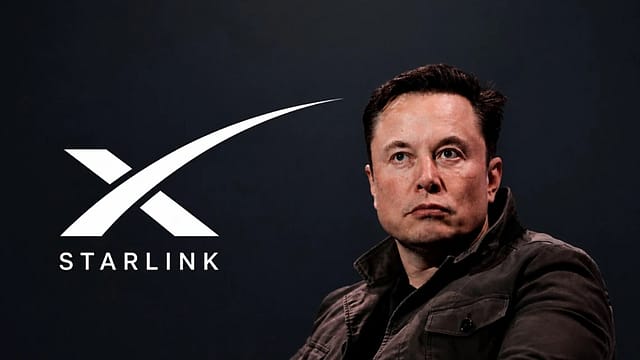
India's Ministry of Communications on Thursday said its framework for satellite communication services is fair and non-discriminatory, a day after SpaceX chief Elon Musk claimed Starlink was being blocked in the country by "certain oligarchs."
The ministry's statement, issued through the Press Information Bureau, did not name Musk or Starlink. It referred to "a post being circulated in social media" that suggested the framework was being applied in a discriminatory manner.
WHAT THE MINISTRY SAID
"The Government has put in place a fair and non-discriminatory authorisation framework for all telecommunication services, including satellite communication services," the statement said. Telecom licences have been granted to three Global Mobile Personal Communication by Satellite (GMPCS) services based on non-geosynchronous satellite orbits, as part of the government's commitment to enabling satellite communications in India.

The Modi Years
02 Oct 2026 - Vol 05 | Issue 40
A Nation Rebuilt
Every licensee must show compliance with security conditions, the ministry said, to ensure the safety of all users and their data. Security assessment is under way for all three. Once it is completed for a licensed entity, that entity can proceed to the next step of seeking assignment of spectrum.
"At present, all the three entities are at broadly the same regulatory stage," the statement said.
"As such, the suggestion that the framework or its application is unfair or discriminatory is baseless and misconceived."
WHAT MUSK SAID
Replying to a post by the X account DogeDesigner arguing that India needs Starlink, Musk wrote: "Unfortunately, we (Starlink) are being blocked by certain oligarchs in order to maintain their monopolistic chokehold on the Indian people. You can guess who they are … This is a crime against the people of India."
He did not name anyone or offer evidence. The post he replied to argued that satellite internet could reach remote villages and called on India to complete remaining clearances and spectrum allocation so that Starlink can begin commercial service.
STARLINK'S POSITION
On Wednesday, Lauren Dreyer, SpaceX's Vice President of Starlink Business Operations, told India Mobile Congress 2026 that the company has built 20 gateway sites in India, with hundreds of antennas, and developed India-specific security controls to keep Indian user data in the country. "We've established the operations to be ready to serve India," she said.
She said that Starlink is waiting for the government to complete its work. In June, she had denied reports that India had frozen the approval process over geopolitical and security concerns, saying the company remained in active talks with the government.
THE LICENSING STAGES
The ministry's statement lays out a sequence: a telecom licence, a security assessment and then spectrum assignment. Starlink received its GMPCS licence in June 2025 and space regulator IN-SPACe approval for its first-generation constellation in July 2025.
A parliamentary reply in January 2026 named Starlink, OneWeb India and Jio Satellite as the licensed operators. None of the three has started commercial service.
How satellite spectrum should be allocated has been contested. Reliance Jio argued for an auction, while Starlink wanted administrative assignment, and the government sided with the latter in 2025. The ministry's statement does not address the spectrum price, which has not been finalised.
With inputs from ANI