Tariffs, Trade and Tantrums: One Year of Trump’s Second Act
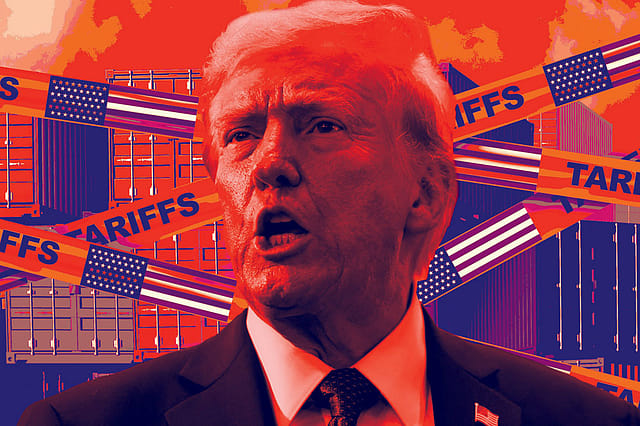
One year into his second term, Donald Trump’s presidency has settled into a familiar rhythm—fast, forceful, and relentlessly transactional. If the first term was disruption by instinct, the second has been disruption by design.
Trump has governed at speed, privileging pressure over persuasion and deals over doctrine. Tariffs have become his instrument of choice—not just for trade correction, but for diplomacy, domestic politics, and even peace-making. Immigration enforcement has been staged with theatrical aggression. Foreign policy has been reduced to leverage, loyalty, and immediate returns.
Experts describe this phase as Trump unbound.
Foreign affairs analyst Robinder Sachdev calls it a presidency defined by “high impact, high speed, and high disruption,” enabled by a loyalist cabinet and an unprecedented use of executive authority. Process has been sidelined. Institutions have been bent. Outcomes, not optics, have been prioritised.
Tariffs as Statecraft
Tariffs have emerged as the signature tool of Trump’s second term. Rolled out rapidly—and often arbitrarily—they have been positioned as a cure-all for trade deficits, revenue shortfalls, and geopolitical stalemates.
According to Sachdev, the strategy serves four purposes: correcting perceived historical unfairness, generating revenue, shoring up domestic political constituencies, and coercing foreign investment into the US. On paper, the results look impressive. The White House claims investment commitments running into trillions of dollars from Europe, Japan, South Korea and the Gulf.
But the costs are becoming clearer. Allies feel strong-armed. Trade partners feel cornered. Even Trump has conceded that tariffs pushed India closer to China and Russia—an admission that underscores the limits of coercive economics.

Iran After the Imam
06 Mar 2026 - Vol 04 | Issue 61
Dispatches from a Middle East on fire
West Asia strategist Waiel Awwad describes the approach bluntly: “bullying diplomacy.” Tariffs, he argues, have blurred the line between strategic partner and trade adversary, leaving resentment in their wake.
Immigration as Theatre
At home, immigration enforcement has defined Trump’s domestic agenda. Highly visible raids, mass arrests, daily deportation targets and choreographed ICE operations have been designed to project control—and fear.
Sachdev characterises this as enforcement mixed with performance. Jackets emblazoned with ICE logos, convoys with sirens, and viral videos were not accidental. They were signals—to supporters and detractors alike.
The ambition is staggering: one million deportations in the first year, backed by targets of 3,000 arrests a day. Legal challenges have followed, pushing immigration policy into courtrooms nationwide and deepening social polarisation.
Awwad warns that the fallout may outlast the politics. Public anxiety over healthcare, crime and economic priorities is growing, even as enforcement intensifies.
Peace President, Uneasy Peace
Trump has styled himself as a “peace president,” arguing that pressure—tariffs, sanctions, threats—can force ceasefires where diplomacy fails. Sometimes, it has worked. Often, it hasn’t lasted.
Attempts to claim credit for easing conflicts—from West Asia to South Asia—have been contested. The Russia-Ukraine war, which Trump vowed to end swiftly, remains unresolved. A failed Alaska summit with Vladimir Putin and a rejected peace framework have exposed the limits of dealmaking without historical grounding.
Awwad is unsparing: “You cannot impose peace by force. History does not disappear because you want a deal.”
Military strikes on Iran and alleged cartel vessels have further punctured the peace narrative, reinforcing perceptions of inconsistency—if not hypocrisy.
India, and a Multipolar Drift
Relations with India have oscillated between warmth and strain. Despite early bonhomie with Prime Minister Narendra Modi, punitive tariffs, claims of mediation with Pakistan, and a visible tilt towards transactional diplomacy have unsettled New Delhi.
Experts agree India is recalibrating—hedging US engagement while strengthening multipolar partnerships. Trump himself has acknowledged “losing India,” a reflection of how pressure-first diplomacy can backfire with strategically autonomous nations.
One year in, Trump’s second term has altered global behaviour. Countries are no longer waiting for American leadership; they are learning to work around it. Trust has thinned. Predictability has eroded. Multilateral platforms like BRICS and the G20 have gained weight as buffers against unilateralism.
America remains powerful—and indispensable. But its leadership now carries friction.
Trump has delivered disruption at scale. Whether that disruption hardens into durable outcomes—or accelerates isolation—will define not just his presidency, but America’s place in a rapidly multipolar world.
(yMedia snd ANI are content partners for this story)