Taiwan Says 458 Nationals Missing, Detained or Restricted in China This Year
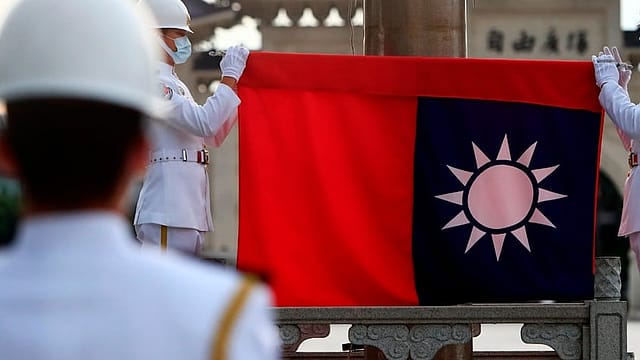
The number of Taiwanese nationals reported missing, detained for questioning or suspected of having their movement restricted in China has risen to 458 this year, according to figures from Taiwan’s Mainland Affairs Council (MAC), cited by the Taipei Times. The statistics, released on Saturday, cover cases through Friday and are four higher than the previous week’s count, which ran through October 8.
The 458 breaks down into three groups. A total of 175 people have been reported missing, up from 173 a week earlier. Another 41 have been detained for questioning, up from 39. A further 242 are being held by Chinese authorities, a figure that has not changed.
RELIGIOUS GROUP IN THE FRAME
Separately, Luo Wen-jia, secretary-general of the Straits Exchange Foundation, said on Friday that Taiwanese members of the I-Kuan Tao religious group who had lived in China for years were detained in separate cases between April and July, and that none has been released, the Taipei Times reported.

Zeroing In on ECI
09 Oct 2026 - Vol 05 | Issue 41
Constitutional legitimacy versus political opportunism
Luo described four cases. In April, a person living in Fujian Province who held a Chinese residence permit was detained. In May, a Taiwanese teacher working in Dongguan, Guangdong Province, was held. The June case involved a businessperson based in Shenzhen, and the July case a retired Taiwanese resident who had moved to Zhangzhou, Fujian Province. The common thread, Luo said, was that all four were followers of I-Kuan Tao.
A CHANGE IN PATTERN
Earlier cases involving the group’s followers had generally happened during short visits or cross-strait cultural exchanges, Luo noted. The latest ones involve people who had lived and worked in China for long periods and were reportedly detained for religious reasons.
He warned that circumstances once considered safe could change, and urged followers to return to Taiwan for their own protection. He also called for the travel risk level for the group’s members visiting China to be raised to “red alert,” telling them to come home at once.
THE 2024 CASES
Luo said three Taiwanese followers of I-Kuan Tao were detained in China in October 2024 and prosecuted under Article 300 of China’s Criminal Law. They received prison sentences of two to three years.
One remains in prison, another has completed the sentence and returned to Taiwan, and the third has finished the sentence but has not yet been able to return, he said.
The cases have deepened concerns over the safety of Taiwanese people who live in or travel to mainland China.
With inputs from ANI