Strait of Hormuz: Why Are Oil Tankers Still Sailing Into Danger?
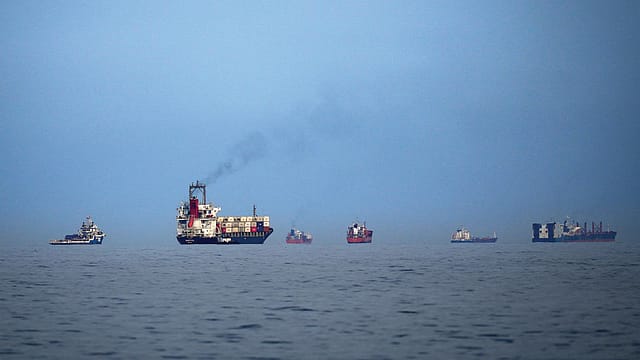
An oil tanker carrying 27 Indian seafarers was attacked in the Strait of Hormuz, a critical route out of the Persian Gulf. On October 30, Union Ports, Shipping and Waterways Minister Sarbananda Sonowal said the Indians aboard MT Louise 1, registered in Panama, were safe and uninjured.
Reuters reported that maritime security sources assessed that a small boat had attached two limpet mines, explosives fixed to a ship’s outer body. The explosions caused an engine-room fire and temporarily disabled the vessel. Its crew extinguished the fire and the tanker continued towards its next port. Responsibility for the attack had not been established.
Why would commercial ships continue using such a dangerous passage? The answer involves geography, scarce shipping capacity and the price buyers will pay to keep oil moving.
What is the Strait of Hormuz?
It is a narrow sea passage between Iran and the Arabian Peninsula, connecting the Persian Gulf with the Gulf of Oman and the Arabian Sea.

Look Who's Talking Regime Change
23 Oct 2026 - Vol 05 | Issue 43
Think of it as the exit through which tankers carry oil from several major Gulf producers to overseas customers. The International Energy Agency, or IEA, says about 20 million barrels of crude oil and oil products passed through it each day in 2025. That is a historical benchmark, before the current conflict disrupted trade.
Why don’t tanker operators simply stop sailing?
Because producers still need to export, buyers still need deliveries and some operators see a commercial opportunity in meeting that demand.
Freight is the payment for transporting cargo. When fewer ships are available or willing to perform a difficult voyage, buyers may have to pay more to secure one.
In its October 30 outlook, shipbroker Affinity said earnings for very large crude carriers, or VLCCs, peaked at $791,000 a day in early October. It linked the surge to reduced vessel availability and inefficient transport routes.
The incentives are powerful. They do not remove the shipowner’s responsibility to assess whether a voyage can be undertaken safely.
How can oil keep moving while attacks continue?
Shipping companies can change how cargoes move.
In an October 1 analysis, ship-tracking and commodities-data company Kpler described a recovery supported by measures including escorted voyages and ship-to-ship transfers. A ship-to-ship transfer means moving oil from one tanker to another, rather than taking the same vessel all the way to its final destination.
Such arrangements can divide a journey between different ships. They also add coordination, handling and cost.
Kpler’s assessment was that flows could recover unevenly while conflict continued, with security risks keeping freight expensive.
Why can’t tankers take a detour?
A tanker loading inside the Persian Gulf cannot reach the open ocean by sailing around the problem. Hormuz is the maritime exit.
Some oil can bypass it overland. Saudi Arabia can move crude through pipelines to its Red Sea coast; the UAE has an export route to its eastern coast outside the strait. These alternatives have helped offset disrupted Gulf shipments, according to the IEA.
But a pipeline serves particular production and export systems. It cannot collect every cargo from every Gulf port. Buying oil from another region is another option, requiring different supplies, voyages and commercial arrangements.
Who decides whether a ship sails?
The shipowner or operator and the ship’s master, meaning its captain, have safety responsibilities. The charterer is the party hiring the vessel.
The contract between them helps determine their rights and who pays additional costs. Shipping association BIMCO’s 2025 model war-risk clause allows owners to refuse a dangerous area on the reasonable judgement of the master or owners. If the vessel proceeds, the clause provides for reimbursement by the charterer of specified additional insurance costs and crew payments.
That clause must be part of the relevant contract to govern it.
Insurer Gard also explains that the international safety convention protects the master’s ability to make decisions necessary for safety. Commercial instructions do not extinguish that responsibility.
Does insurance make the voyage acceptable?
Insurance addresses specified financial losses. It cannot prevent an attack.
Gard’s March 3 guidance explained that ships entering affected Gulf waters needed new arrangements for additional war-risk insurance after cancellation notices. The terms and availability of cover matter, alongside the voyage’s physical risks.
For the business, extra insurance is part of the cost of moving cargo. For the crew, the immediate danger remains a fire, injury, detention or a vessel that cannot continue.
Can seafarers refuse to go?
Some have an explicit contractual right.
Under the warlike-area designation announced on March 5 by the International Transport Workers’ Federation and the Joint Negotiating Group, seafarers on vessels covered by International Bargaining Forum agreements gained the right to refuse entry and request company-funded travel home. The agreement also provided additional compensation.
Those protections have a defined scope. A crew member’s applicable agreement and the latest area designation must be checked; they should not be assumed to cover every ship. ITF Seafarers
The wider human cost is documented. The International Maritime Organization’s regional incident page listed 24 confirmed seafarer fatalities across the Middle East crisis as of October 30.
Why does India have a direct stake?
Indian seafarers are already caught in these incidents. Sonowal also reported that two Indians aboard MT Arzanah, registered in Liberia, were safe after a separate attack.
India is also among the major Asian destinations for oil shipped through Hormuz, according to the IEA. More expensive transport can raise the delivered cost of supplies even when cargoes continue to arrive.
What happens next?
For Louise 1, the immediate questions concern the damage assessment, its onward voyage and the investigation into who attacked it.
For the wider market, watch whether more ships can complete voyages consistently, whether freight and insurance costs ease, and whether crews receive the protections due under their agreements.
A sustained improvement would mean reliable deliveries at lower risk and cost. Counting the tankers that get through captures only part of that story.