Can AI Deliver 100 Years of Medical Progress in 10? Anthropic CEO Thinks So, But Warns of Human Risks
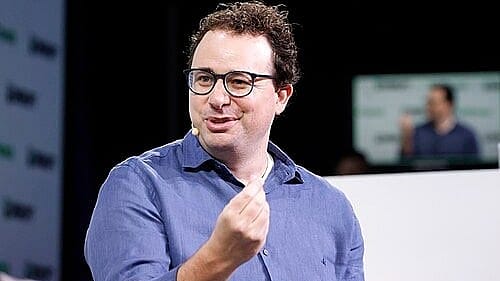
Can artificial intelligence accelerate the search for new treatments and reshape medical research? Anthropic CEO and co-founder Dario Amodei believes it could. He says sufficiently powerful AI, working alongside humans, could compress a century of scientific and medical progress into a decade. But he also warns that the technology's growing capabilities bring risks that cannot be ignored.
Speaking in remarks shared by the company following its Nasdaq debut, Amodei said Anthropic would not allow business or political pressure to determine the pace of AI development. The company, he said, would take as much time as necessary to establish confidence that its systems were safe and would remain under human control.

The Wealth Issue 2026
06 Nov 2026 - Vol 05 | Issue 45
Portraits of Dreamers and Doers under 35
"We will pace the training and deployment of AI systems, taking as long as is necessary to have confidence that they are safe and will remain under human control. We will not bend to either business or political pressure," he said.
The comments bring together two competing possibilities in the development of AI: its potential to accelerate scientific discovery and the risks of deploying increasingly powerful systems without adequate safeguards.
Can AI accelerate drug discovery and medical research?
Amodei's medical argument is rooted in the time it takes to turn scientific discoveries into treatments. He said researchers working in areas such as protein folding, drug design, cancer genetics and clinical trial administration were finding that Claude could help them conduct research in a fraction of the time it would have taken a few years ago.
The distinction is important. Amodei is not claiming that AI has already delivered a century's worth of medical advances. He is arguing that sufficiently capable AI, working with scientists, could speed up parts of the research process.
He also acknowledged the limits of the technology's current contribution.
"At this point, all we have are early results. Experiments and clinical trials will still take time," he said, adding that these processes could nevertheless be substantially accelerated by AI.
For patients and their families, the potential significance is clear. Developing a treatment can take years, sometimes decades. If AI helps researchers understand diseases, identify possible drug candidates or manage clinical research more efficiently, it could shorten parts of that journey. But faster research does not automatically translate into an approved treatment or a cure.
Amodei linked his interest in medical research to a personal experience. He said he and his sister, Anthropic co-founder Daniela Amodei, lost their father to a disease for which a treatment became available just a few years later. He described this as an example of how slowly medical progress can reach people who need it.
He said he hoped that, in the future, fewer families would miss out on a cure by a few years.
What risks does Anthropic see in the development of AI?
Amodei's optimism about medicine came with a warning. He identified three broad risks associated with increasingly powerful AI systems: misuse by individuals or nation-states, economic disruption and the possibility of losing control over AI systems.
The concerns extend beyond the reliability of AI-generated information. More capable systems could be misused in areas such as biology and cybersecurity, while their growing role in the economy could disrupt existing industries and jobs.
Anthropic says it has developed safeguards against biological and cyber risks, alongside methods for AI alignment training and testing. The company also says it has developed ways to examine the behaviour of its models and improve its ability to steer them.
"There is a gigantic difference between how AI will go if we pay little attention to safety, versus how it will go if we are obsessed with safety," Amodei said.
He added that the most difficult safety work was still ahead. His position is that these risks are not inevitable, and that the decisions made by companies developing AI will influence how the technology affects society.
Will Anthropic prioritise safety over commercial pressure?
Amodei's comments also address a challenge facing the AI industry: companies are under pressure to build more capable systems, attract customers and compete with rivals, while also ensuring that their products are safe to deploy.
He said Anthropic would take as long as necessary to establish confidence in the safety of its systems, regardless of business or political pressure.
The CEO described this approach as a "race to the top", arguing that the goal should be to encourage the entire AI industry to develop powerful systems while maintaining strong safety standards.
"If we can show it's possible to make the right choices on safety and still build an incredibly successful company, others in our industry will be inspired to do the same," he said.
Amodei added that Anthropic's stronger financial position following its IPO would reinforce its commitment to responsible AI development. The company, he said, wanted to improve the industry regardless of whether it was ahead of or behind its competitors.
What does Anthropic's Nasdaq debut mean for the AI industry?
Anthropic made its Nasdaq debut on Thursday, November 19, after pricing its IPO at $83 a share. The offering raised $81.34 billion, valuing the company at approximately $1.5 trillion at the IPO price.
Its shares opened at $111.50, around 34.34 per cent above the offer price, before closing at $97.17, a gain of approximately 17.07 per cent.
The listing puts a publicly traded AI developer's business ambitions and safety commitments under greater scrutiny. Amodei's argument is that financial strength and responsible AI development need not be competing priorities.
For now, his vision rests on two propositions: that AI can help accelerate scientific and medical discovery, and that the risks of increasingly powerful systems can be managed through deliberate choices by the companies building them.
Whether AI can deliver the medical progress he anticipates will take time to establish. So will the test of whether Anthropic can maintain its safety commitments as its business grows.
(With inputs from ANI)