Is Iran the New Iraq? Tehran Rejects US Chemical Weapons Claims, Invokes 2003 WMD Controversy
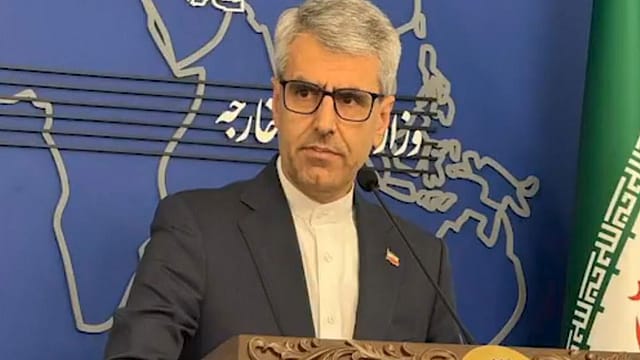
Iran has accused the United States of recycling the narrative that preceded the 2003 invasion of Iraq after Washington raised fresh allegations that Tehran could be developing biological or chemical weapons. Iranian Foreign Ministry spokesperson Esmail Baghaei rejected the claims, invoking the controversial intelligence presented by former US Secretary of State Colin Powell at the United Nations Security Council ahead of the Iraq war. The remarks come amid continuing tensions between Washington and Tehran, even as US President Donald Trump has indicated that he is not rushing into a decision on Iran.
What has Iran said about US biological and chemical weapons allegations?
In a post on X, Baghaei rejected suggestions that Iran was developing biological or chemical weapons. He argued that Washington had shifted its allegations from an Iranian nuclear threat to claims involving other categories of weapons, while retaining what he described as the same underlying narrative.
He questioned whether the international community was expected to forget the events leading up to the Iraq war and accused the US of using unsubstantiated intelligence claims to build support for military intervention.

The Wealth Issue 2026
06 Nov 2026 - Vol 05 | Issue 45
Portraits of Dreamers and Doers under 35
Why has Iran brought up Colin Powell's 2003 UN presentation?
Baghaei specifically recalled Colin Powell's February 2003 presentation before the United Nations Security Council, in which the then US Secretary of State displayed a small vial while making the case that Iraq possessed weapons of mass destruction (WMDs).
The presentation became one of the most recognisable moments in the run-up to the US-led invasion of Iraq. The intelligence claims used to justify the war were subsequently discredited, and stockpiles of the alleged WMDs were not found.
Baghaei described the episode as an example of how intelligence claims could be used to manufacture public support for military intervention. He warned against allowing what he sees as a similar narrative to take shape around Iran.
What has Donald Trump said about the conflict with Iran?
Trump has indicated that he is not rushing into a decision on Iran and suggested that developments would be assessed after the beginning of the new year.
In a conversation with US media outlet Axios aboard Air Force One while returning from China, Trump said, "We will see what happens after the beginning of the year."
He also said he had discussed the conflict with Chinese President Xi Jinping and Russian President Vladimir Putin during their trilateral meeting on the sidelines of the Asia-Pacific Economic Cooperation (APEC) summit.
What roles are China and Russia playing in the Iran conflict?
Trump said that China and Russia wanted the conflict to end and were communicating that position to Iran.
"They'd like it to end … and they're letting Iran know that," he told NBC.
However, Trump also told Fox News that Washington did not need assistance from Beijing or Moscow to end the war with Iran.
The discussions between the three leaders also covered the war in Ukraine, which, alongside the West Asia conflict, featured prominently in their talks.