SINGAPORE SIA-AIR INDIA ROW EXPLAINED | How a $1.5-billion Investment Debate Turned Anti-Indian
The argument began with an airline asking for money. It ended with snakes, curry and black magic.
Air India reportedly wants approximately $1.5 billion in fresh equity from its two shareholders, Tata Sons and Singapore Airlines, as it attempts to finance one of aviation’s most difficult turnarounds.
That request produced an entirely legitimate question in Singapore.
Should Singapore Airlines put more money into an airline that, together with Air India Express, lost $2.33 billion in the financial year ended March 2026?
Then the debate left the balance sheet.
Online comments began attacking Indians. Temasek chief executive Dilhan Pillay Sandrasegara was targeted because of his ethnicity and accused of favouring Air India. Racist remarks also appeared beneath reports about Singaporeans missing after the catastrophic floods in Nepal.

Losing Memory
16 Oct 2026 - Vol 05 | Issue 42
The making of a medical and social emergency
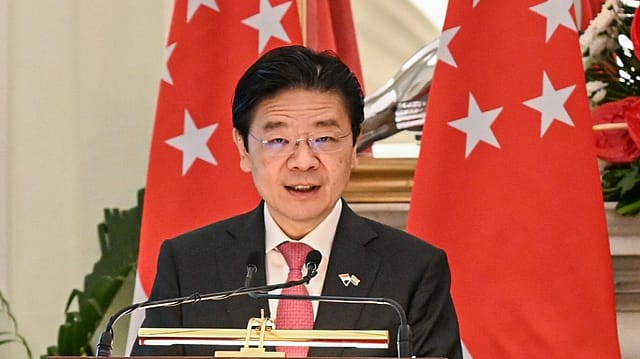
Singapore Prime Minister Lawrence Wong has now intervened.
“We can and should have robust debates,” he said. “But we should never use seemingly legitimate arguments as a cover to fuel prejudice against any community or hostility towards foreigners.”
Senior Minister and Home Affairs Minister K Shanmugam went further. Police are examining the comments, while Singapore’s Ministry of Digital Development and Information will ask social-media platforms to remove posts that breach their standards.
The financial argument has not disappeared. It has simply been joined by a more dangerous question: when does criticism of an investment become an attack on an identity?
What exactly is the SIA-Air India deal?
Singapore Airlines owns 25.1 per cent of Air India. Tata Sons controls the remaining 74.9 per cent. SIA did not originally buy that stake through a conventional standalone investment. It acquired it when Vistara, the airline it jointly owned with Tata, merged into Air India in November 2024. Under the merger agreement, SIA contributed its 49 per cent holding in Vistara and invested approximately 20.6 billion rupees in the enlarged Air India. It had also agreed to provide up to another 50.2 billion rupees after completion if additional funding was required.
The deal gave SIA access to one of the world’s fastest-growing aviation markets and a substantial position in a much larger airline. It also transferred part of Air India’s enormous turnaround risk onto SIA’s accounts.
That risk is no longer theoretical. SIA’s net profit fell 57.4 per cent to S$1.2 billion in the year ended March 2026. Its annual report attributed the decline partly to its share of Air India’s full-year losses, although the comparison was also affected by a large one-off accounting gain booked the previous year when Air India and Vistara merged. Singapore Airlines’ FY2025-26 annual report makes clear that the Indian investment is already exerting material pressure on group earnings.
SIA has, therefore, bought much more than a quarter of an airline. It has bought a quarter of a rescue operation.
Why does Air India need another $1.5 billion?
Tata regained control of Air India from the Indian government in 2022 and began rebuilding a carrier burdened by ageing aircraft, inconsistent service, legacy systems and years of underinvestment.
The transformation requires new planes, cabin refurbishment, engineering capacity, technology upgrades, training and operational reform. It has also been disrupted by aircraft-delivery delays, airspace closures, geopolitical conflict and the consequences of the Ahmedabad crash. Air India and Air India Express recorded combined losses of $2.33 billion in the year ended March 2026, more than twice their loss in the previous financial year.
Air India has consequently sought approximately $1.5 billion from Tata Sons and SIA, with the proposed funding likely to arrive in instalments, according to Reuters. That does not make Air India a uniquely irrational investment. Airline turnarounds are expensive, slow and frequently battered by events outside management’s control. India’s aviation market, population and international traffic offer SIA a strategic opportunity that would be difficult to reproduce organically.
But market potential is not profit. SIA’s board must decide whether Air India’s eventual value justifies the immediate capital, continued losses and risk to its own balance sheet.
Must Singapore Airlines pay its share?
Not automatically. Air India can request capital. Tata Sons can support it. Neither action, by itself, obliges SIA’s board to approve every funding call. SIA has said it will carefully assess any request against Air India’s strategy and the wider capital requirements of the Singapore Airlines Group. The decision has not been publicly confirmed.
If the entire $1.5 billion were supplied strictly in proportion to ownership, SIA’s theoretical share would be approximately $376 million. That is simple arithmetic, not a confirmed demand or commitment. The final structure could involve equity, loans, instalments or different contributions from the two shareholders.
The distinction matters because some online commentary has treated the reported request as though hundreds of millions of Singapore dollars have already been transferred. They have not. There is an investment proposal, a struggling airline and a board decision still to be made.
Is questioning the investment anti-Indian?
No. Singaporeans are entitled to ask whether SIA should continue funding Air India. They can question the original merger, demand clearer performance milestones and examine whether the investment strengthens SIA or drains capital from it.
Workers’ Party MP Kenneth Tiong has argued that the matter deserves public scrutiny because Temasek is SIA’s majority shareholder. He later stressed that his objections were commercial and condemned racist commentary. That is a defensible democratic position.
A question becomes racist when the investment is judged through the ethnicity of the people involved rather than its costs, strategy and probable return. Accusing Temasek’s Indian-origin chief executive of secretly favouring India because of his ancestry is not financial analysis. References to curry, snakes, skin colour or black magic do not interrogate Air India’s restructuring plan. Attacking missing Singaporeans because they appear Indian does not protect public money. Those are ethnic attacks wearing an accountant’s tie. Wong’s argument is not that SIA must be protected from criticism. It is that Indians must not be placed on trial because SIA made an investment in India.
Is Temasek using Singaporeans’ money to rescue Air India?
The answer requires more precision than either side of the online argument has often allowed. Temasek is owned by the Singapore government and is SIA’s majority shareholder. That makes the performance of its portfolio a legitimate matter of public concern.
But Temasek does not normally direct every investment made by each company in which it owns shares. SIA is a separately governed, publicly listed business. Decisions about Air India sit with SIA’s management and board. Shanmugam said government ministers do not decide whether SIA should make an individual investment. Temasek is accountable to the government for its overall portfolio and long-term performance, while portfolio companies retain commercial control over their own decisions.
This arrangement is designed to prevent every corporate investment from becoming a political instruction. It does not place SIA beyond scrutiny. It establishes where that scrutiny should land: on the valuation, strategy, governance and expected returns, not on the race of an executive.
Why was Temasek CEO Dilhan Pillay targeted?
Because the online argument began replacing evidence with ancestry. Pillay is a Singaporean of Indian ethnicity. Some commenters used that fact to allege that he or Temasek’s senior leadership had pushed SIA towards Air India for racial or national reasons.
No evidence supporting that allegation has been produced. The charge also misunderstands the corporate chain. Temasek owns a majority stake in SIA, but SIA’s board assesses its own investments. Air India itself is controlled by Tata Sons, not Temasek or the Singapore government.
Shanmugam called the attacks on Pillay “nasty” and potentially libellous, insisting that he was as Singaporean as anyone else. That response reaches the centre of the controversy. If an Indian-origin Singaporean can be treated as secretly foreign whenever a company invests in India, citizenship becomes conditional. Belonging lasts only until an unpopular commercial decision provides an excuse to revoke it.
What did the Nepal floods have to do with Air India?
Nothing. That is precisely why the two episodes alarmed Singapore’s leadership.
Nine Singaporeans were reported missing after destructive floods in the Nepal-Tibet region. Beneath reports about the search, commenters questioned whether some of those missing were truly “our own” because they appeared to be of Indian ethnicity. Some even suggested withholding rescue efforts.
The remarks appeared around the same period as the SIA-Air India debate. Together, they revealed that the hostility was not confined to one corporate transaction. The Singapore Red Cross raised more than S$3 million for disaster relief, reflecting the response of a much larger section of society. Shanmugam warned that a hostile minority must not be allowed to “poison the entire well”, Channel NewsAsia reported. Air India supplied the financial grievance. Nepal exposed the racial test beneath it.
Why does CECA keep returning to this debate?
The India-Singapore Comprehensive Economic Cooperation Agreement, or CECA, entered into force in 2005. It expanded trade, investment and business mobility between the two countries.
In Singapore’s political discourse, however, CECA became shorthand for anxieties over foreign professionals, employment competition and immigration, particularly involving Indians. Those issues can be debated. Governments should be questioned about labour-market pressure, wage competition and the enforcement of employment rules.
But CECA does not give Indian professionals an unrestricted right to enter or work in Singapore. Lawrence Wong, then finance minister, told Parliament in 2021 that the agreement did not permit a “free flow” of Indian professionals. Singapore’s manpower ministry made the same point: foreigners must still satisfy the country’s immigration and employment-pass requirements. Singapore’s Ministry of Finance documented that parliamentary rebuttal.
Yet CECA became a convenient container into which unrelated grievances could be poured. Wong has now connected the Air India abuse with the anti-Indian sentiment seen during the pandemic, the CECA dispute and attempts to inject race and religion into Singapore’s 2025 general election. The trigger keeps changing. The target remains recognisable.
Why does Singapore react so strongly to online racial abuse?
Because Singapore does not regard racial harmony as a decorative national slogan. It treats it as structural security. The country is small, densely populated and deliberately organised as a multiracial society. Its Chinese, Malay, Indian and other communities share schools, housing estates, workplaces and national institutions. The National Pledge’s promise of unity “regardless of race, language or religion” describes the political bargain holding that system together.
Wong’s concern is not that every offensive comment will cause immediate unrest. It is that repetition alters what society considers permissible. A slur becomes a joke. The joke becomes a stereotype. The stereotype becomes an assumption about loyalty. That assumption eventually determines who is regarded as fully Singaporean and who must repeatedly prove that they belong.
“These views do not represent Singapore,” Wong said. “But neither can we dismiss them as harmless online chatter.” Senior Minister Lee Hsien Loong also described the comments as deeply troubling and warned against twisting legitimate concern over SIA’s investment into anti-Indian resentment, Channel NewsAsia reported. For Singapore’s leaders, the danger is normalisation before mobilisation.
What happens to the people who posted the comments?
Police are examining the material. That does not mean every offensive commenter will be charged. Investigators will have to determine who posted the remarks, whether Singapore law applies and whether particular comments crossed the threshold from repugnant speech into a criminal offence.
Separately, the digital-development ministry is expected to ask platforms to remove material that violates their community standards. Channel NewsAsia said it had blocked accounts, removed comments and, in some instances, disabled commenting on Nepal-related reports because of the volume and severity of the abuse. Anonymity may make people feel unreachable. It does not necessarily make them unidentifiable.
What is the real argument Singapore now has to settle?
There are two arguments, and collapsing them serves nobody.
The first is commercial. Did SIA pay the right price for its Air India stake? How long should shareholders tolerate losses? What milestones must Air India meet before receiving more money? What happens if the turnaround continues consuming capital without producing reliable returns? SIA’s board should answer those questions.
The second argument is national. Can Singapore debate immigration, foreign investment and corporate failure without converting Indian ethnicity into evidence of disloyalty? Singapore’s political leadership has answered that question already. Criticise Air India’s losses. Examine SIA’s judgement. Challenge Temasek’s performance. Oppose another capital contribution if the numbers do not support it.
But a Singaporean missing in Nepal does not become less Singaporean because of his face. A chief executive does not become an agent of India because of his ancestry. An airline investment does not make every Indian responsible for its losses. The Air India transaction may yet prove inspired, disappointing or disastrously expensive. That verdict belongs to the balance sheet. Race does not.
With inputs from ANI & agencies