US, China Agree on Tariff Recommendations for $60 Billion in Goods, Launch AI Dialogue
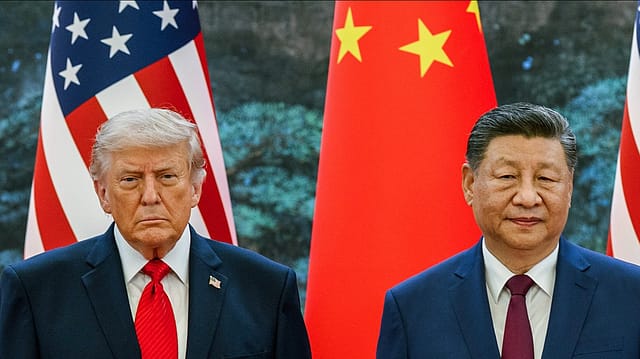
The United States and China have agreed on recommendations for more favourable tariff treatment covering $30 billion of non-sensitive goods in each direction and launched a dialogue on advanced artificial intelligence, according to a White House fact sheet.
The announcements followed Chinese President Xi Jinping’s three-day summit with US President Donald Trump in Washington, which concluded on Friday.
The tariff recommendations cover a combined $60 billion in two-way trade. The details provided did not specify revised tariff rates or an implementation date.
What Goods Are Covered?
US exports covered by the arrangement include agricultural products, fish and seafood, logs and wood, cosmetics and medical devices. Imports into the United States include small appliances, toys, holiday decorations and children’s car seats.

Zeroing In on ECI
09 Oct 2026 - Vol 05 | Issue 41
Constitutional legitimacy versus political opportunism
The recommendations emerged through the US-China Board of Trade, which became operational during the summit alongside the US-China Board of Investment. Both bodies were established during the leaders’ May 2026 meeting in Beijing.
The trade board also launched a working group to address agricultural market access barriers. According to the White House, China will import at least 10 million metric tonnes of US coal in 2027 and 2028.
The investment board will provide a structured channel to discuss opportunities, obstacles and commercially significant investment issues.
Critical Minerals Remain on the Agenda
Washington and Beijing will continue efforts to address supply shortages involving rare earths and other critical minerals, with the aim of restoring shipments to appropriate levels, the fact sheet said.
The leaders also agreed to pursue a “constructive relationship of strategic stability” based on “respect, fairness, and reciprocity” and support each other as hosts of the G20 and APEC.
The two countries agreed to use the term “super intelligence” for applicable emerging technologies and established the US-China Super Intelligence Dialogue to discuss their risks and benefits.
The next exchange is scheduled by November 2026. A separate bilateral communication channel will be established for incidents involving such technology.
The initiative gives the two governments a dedicated mechanism to discuss advanced AI alongside their trade and investment engagements.
Iran, Waterways and Arms Control
Trump and Xi discussed Russia, North Korea and Iran during the summit.
According to the White House, they agreed that Iran must never acquire a nuclear weapon and that “no country or institution can impose tolls on international waterways”.
Trump also advocated trilateral arms control negotiations involving the United States, Russia and China. The fact sheet’s account did not indicate that such negotiations had been agreed.
The leaders additionally recalled the US-China alliance during World War II.
Next Meetings in November and December
Xi returned to Beijing on Saturday after completing his visit, his second meeting with Trump in less than six months.
Trump said the leaders would meet again in China in November and at the G20 summit in Miami in December.
“The meeting was one of Friendship, Strength, and Success, for both China and the U.S.A.,” Trump wrote on Truth Social. “Much has been, and will be, accomplished. I look forward to our next meeting!”
With inputs from ANI