Shamonda virus in France: First human case reported, patient dies; should the world be worried?
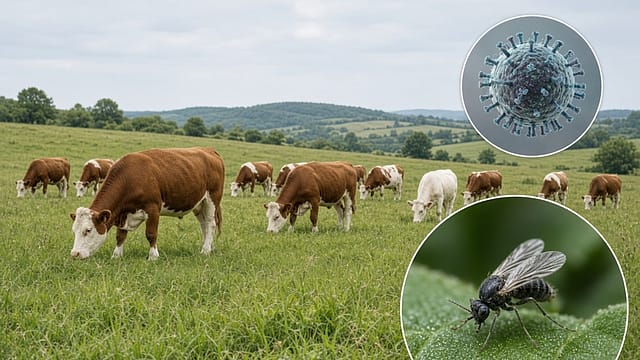
A virus known primarily for infecting livestock has crossed an important scientific threshold: it has now been detected in a human for the first time. French health authorities reported the Shamonda virus infection on October 22, after the patient died earlier this month. But the case comes with an important caveat. Investigators are still examining whether the virus caused or contributed to the death, and authorities have not identified a wider public-health risk.
According to Reuters, the patient was being treated for a serious illness that had left them severely immunocompromised. The European Centre for Disease Prevention and Control (ECDC) is in contact with French authorities and European partners to assess the implications.
What is the Shamonda virus, and where did it come from?
Shamonda is an orthobunyavirus identified in Nigeria in the mid-1960s. It has historically been reported sporadically in parts of Africa and Japan and is most commonly associated with cattle. The World Organisation for Animal Health (WOAH) says it has also been detected in other animals, including horses, sheep, goats and alpacas.

Losing Memory
16 Oct 2026 - Vol 05 | Issue 42
The making of a medical and social emergency
The virus is primarily transmitted by biting midges of the Culicoides genus. France’s agriculture ministry says it was detected in European livestock for the first time in Germany, Switzerland and France in 2026. Researchers have been investigating its spread among animals since the summer.
How did the Shamonda virus infect a human?
That remains one of the central unanswered questions. French authorities’ leading hypothesis is that the patient became infected in eastern France, where the virus had circulated among animals during the spring and summer, Reuters reported.
However, the precise route of infection has not been established publicly. Investigators are examining how the patient acquired the virus and whether it contributed to the death.
The case is particularly notable because the patient was severely immunocompromised. France’s agriculture ministry describes it as the first documented detection of Shamonda virus in a human internationally. One case, however, is not enough to establish how readily the virus can infect people or whether human-to-human transmission is possible.
Is the Shamonda virus dangerous to the general public?
French authorities say no health risk to the general population has been identified based on current knowledge. The ECDC is monitoring the situation while investigations continue.
That assessment is important, but it is not the same as saying every aspect of the virus is fully understood. Scientists are still gathering evidence about the human case and the virus’s behaviour. There is currently no commercially available vaccine against Shamonda virus, according to Reuters, although the absence of a vaccine does not by itself indicate a high risk to people.
What is the difference between the human case and the new livestock outbreak?
The distinction matters because researchers had previously identified a newly emerging Shamonda-like orthobunyavirus in European livestock. In an August update, France’s National Research Institute for Agriculture, Food and Environment (INRAE) said there was then no evidence that this newly identified virus could infect humans.
The October announcement concerns a documented human detection of Shamonda virus. Scientists will need to clarify the relationship between the human infection and the viruses circulating in European animals.
For now, the case is a reason for continued investigation, not evidence of a widespread human outbreak. The next answers will depend on laboratory findings, the investigation into the patient’s infection and any further human detections.
(With inputs from ANI)