Scientists uncover how exercise reverses muscle ageing by switching off key gene
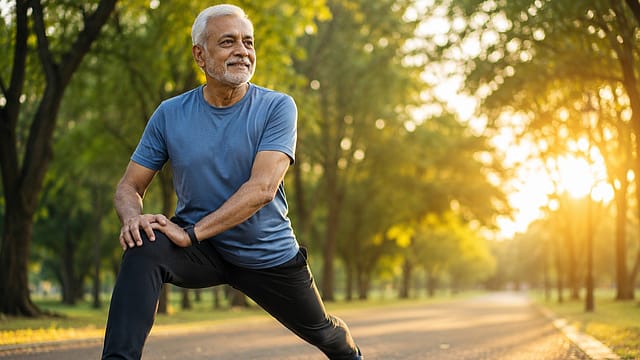
Researchers have identified a molecular mechanism that explains why exercise helps ageing muscles stay healthy. A new study has found that physical activity lowers levels of a gene called DEAF1, restoring muscles' ability to remove damaged proteins, repair themselves and maintain strength. The findings could open new avenues for therapies targeting age-related muscle loss and impaired recovery.
DEAF1 identified as key driver of muscle ageing
The study, led by researchers at Duke-NUS Medical School in collaboration with Singapore General Hospital and Cardiff University, found that ageing muscles accumulate damage because of an imbalance in the way they produce and remove proteins. The findings were published in the Proceedings of the National Academy of Sciences (PNAS).

Look Who's Talking Regime Change
23 Oct 2026 - Vol 05 | Issue 43
Muscles play a crucial role in movement, metabolism, blood sugar regulation and overall health. However, muscle strength naturally declines with age, increasing the risk of falls, fractures and slower recovery from illness or injury.
Researchers found that a growth pathway known as mTORC1 becomes overactive in ageing muscles, causing cells to prioritise protein production over the removal of damaged proteins. As these damaged proteins accumulate, muscle cells become stressed and gradually lose strength.
The study identified the gene DEAF1 as a major contributor to this process. Normally regulated by proteins known as FOXOs, DEAF1 levels rise as FOXO activity declines with age. This, in turn, drives excessive mTORC1 activity and accelerates muscle deterioration.
Exercise restores muscles' natural repair system
The researchers found that exercise can reverse this imbalance by lowering DEAF1 levels, allowing ageing muscles to resume their natural repair process.
Assistant Professor Tang Hong-Wen, from the Cancer and Stem Cell Biology Program at Duke-NUS and the study's lead author, said: "Exercise can reverse this process, correcting the imbalance. Physical activity activates certain proteins which lower DEAF1 levels, bringing the growth pathway back into balance. This allows aging muscles to clear out damaged proteins, rebuild themselves properly, and help them stay stronger and more resilient."
The study also found that exercise may not fully restore muscle repair in cases where DEAF1 levels become extremely high or FOXO activity declines significantly. This may explain why some older adults benefit more from exercise than others.
Experiments in fruit flies and older mice produced similar results. Increasing DEAF1 accelerated muscle weakness, while reducing the gene restored healthier protein balance and improved muscle strength, suggesting the mechanism is conserved across species.
Findings could lead to future therapies for muscle loss
Beyond normal ageing, researchers believe the findings may have implications for people recovering from surgery, chronic illness and diseases such as cancer. DEAF1 also affects muscle stem cells, which are essential for muscle repair and become less effective with age.
The team suggested that future therapies targeting DEAF1 could potentially mimic some of exercise's benefits for individuals unable to remain physically active.
Priscillia Choy Sze Mun, research assistant with the Cancer and Stem Cell Biology Program at Duke-NUS and the study's first author, said: "Exercise tells muscles to 'clean up and reset.' Lowering DEAF1 helps older muscles regain strength and balance, almost like hitting the rewind button. With millions of older adults at risk of muscle decline, understanding DEAF1 could lead to new ways to protect muscles and improve quality of life."
Professor Patrick Tan, Senior Vice-Dean for Research at Duke-NUS, added: "This study helps explain, at a molecular level, why ageing muscles lose their ability to repair themselves and why exercise can restore that balance in some individuals. By identifying DEAF1 as a key regulator in this process, these findings may lead to new ways in which the benefits of exercise can be brought to societies with rapidly ageing populations."
(With inputs from ANI)