‘QuitGPT’: Public Trust Fractures as OpenAI Faces Backlash Over Pentagon Contract
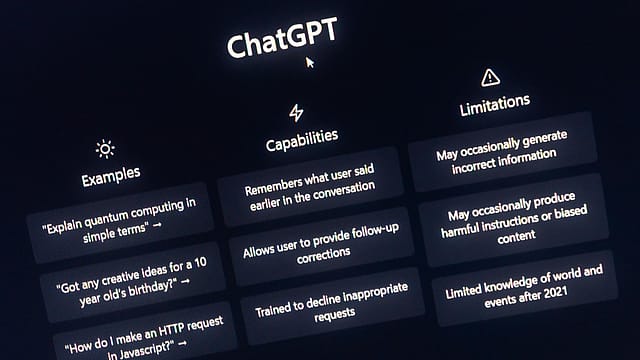
When OpenAI entered into a formal agreement with the U.S. Department of Defense on 28 February 2026, the executive team seemingly failed to anticipate the velocity and scale of the public resistance that followed.
In the span of just a few days, the company’s Mission Bay headquarters became a focal point for physical demonstrations characterized by chalk-covered sidewalks and picket lines, while a digital boycott movement rapidly surged past 2.5 million supporters.
This sudden wave of animosity suggests a significant shift in how the public views the intersection of commercial artificial intelligence and military power.

Zeroing In on ECI
09 Oct 2026 - Vol 05 | Issue 41
Constitutional legitimacy versus political opportunism
The Catalyst of the QuitGPT Movement
The primary trigger for this unrest was the 28 February announcement that OpenAI would provide specialized AI services for government use under a new contract with the Department of Defense.
This development immediately ignited a firestorm among activists and ethics watchdogs who have long warned about the potential for military-grade artificial intelligence to be used in ways that infringe on civil liberties.
In an internal memo later circulated to staff, Sam Altman conceded that the initial rollout of the partnership appeared both sloppy and opportunistic to the outside world.
Demands for Transparency and Restraint
Protesters who gathered outside the San Francisco offices on 3 March 2026 carried placards warning that Sam Altman is watching you and left messages on the pavement urging the company not to facilitate government surveillance of American citizens.
The core of their platform is a demand for a public, legally binding commitment from OpenAI to refuse any involvement in the development of mass domestic surveillance tools or fully autonomous weapons systems.
These demonstrators argue that without strict ethical guardrails, the technology could be weaponized against the very public it was originally intended to serve.
Quantifying the Digital Boycott
While the physical protests remained relatively small, the digital momentum behind the QuitGPT boycott has been substantial with organizers reporting over 2.5 million online participants.
Data provided by the market intelligence firm Sensor Tower confirms this trend, showing a sharp spike in uninstalls of the ChatGPT mobile app alongside a surge of one-star reviews beginning on the day the contract was signed.
It appears that the most significant impact of the movement is being felt through user attrition rather than large-scale civil disobedience in the streets.
A Diverse Crowd at Mission Bay
The rally on 3 March drew a crowd of approximately 40 to 50 individuals who represented a cross-section of the local technology economy.
According to reports from the San Francisco Standard, the group consisted of software engineers, designers, and tech workers who expressed a deep sense of unease regarding the ethical trajectory of their industry.
One 26-year-old worker from Oakland told reporters that the prospect of a private company building large-scale surveillance infrastructure for the government was fundamentally irrational and dangerous.
OpenAI Attempts Damage Control
In an effort to quell the rising tide of criticism, Sam Altman released a revised memo on 3 March stating that the Pentagon contract would be amended to explicitly prohibit the surveillance of U.S. persons.
The new terms also reportedly bar intelligence agencies from using the technology without further contract modifications.
While Altman acknowledged that the company made mistakes during the initial rollout, OpenAI continues to maintain that its technology is not being used to direct fully autonomous lethal weapons systems.
Anthropic Gains Ground Amid the Chaos
The fallout from the OpenAI deal has provided an unexpected competitive advantage to Anthropic as users seek alternatives.
Figures from the analytics firm Appfigures indicate that Anthropic’s Claude surpassed ChatGPT in daily U.S. downloads for the first time on 28 February.
Furthermore, Claude rose to the position of the number one free application on the Apple App Store, suggesting that many former OpenAI users are migrating to rival platforms in a display of ethical consumerism.
Intersection of Environmental and Creative Concerns
The grievances voiced at the Mission Bay rally often extended beyond the specific details of the military contract to include broader systemic issues.
Protesters like graphic designer Jennifer Keith highlighted the environmental footprint of AI and the perceived theft of creative intellectual property for model training.
Some speakers also linked the tech industry's elite to broader political frustrations, accusing company leadership of supporting budget measures that negatively impact the financial stability of average Americans.
Looking Toward a City-Wide March
The momentum is expected to culminate in a major AI accountability march scheduled for 21 March 2026, which is being organized by the same coalition that demonstrated against Google DeepMind in 2025.
The planned route will take protesters from the Anthropic offices on Howard Street to the headquarters of both OpenAI and xAI.
The organizers are calling for a unified commitment from industry leaders Sam Altman, Dario Amodei, and Elon Musk to enact a formal pause in the current AI development race.
A Crisis of Accountability
Ultimately, the QuitGPT protests serve as a clear indication that public trust in AI corporations is deteriorating even as the capabilities of their products continue to expand.
This dissent is no longer confined to external activists, as evidenced by an open letter signed by over 900 employees from OpenAI and Google demanding that their employers reject all Pentagon surveillance contracts.
The movement suggests that the battle for the future of AI will be fought as much in the realm of public ethics as in the laboratory.
(With inputs from yMedia)