Astrotourism Is the New Travel Trend Gen Z Can’t Stop Talking About
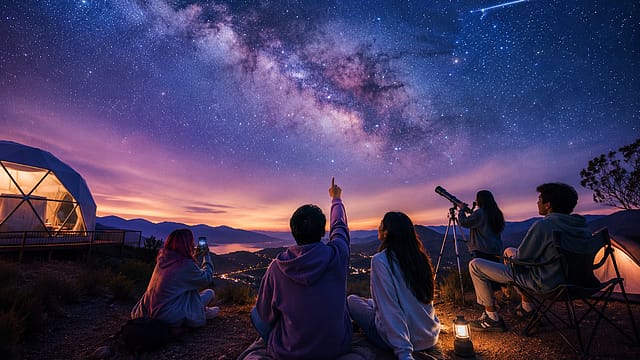
Astrotourism is rewriting what a holiday looks like.
Younger travellers, increasingly fatigued by crowded itineraries and endless screen time, are now booking trips with one singular purpose: to see the stars. What began as a niche pursuit for astronomy enthusiasts has quietly evolved into one of the most significant travel trends of the decade.
What Is Astrotourism?
Astrotourism, also known as astronomy tourism, involves travelling to destinations with minimal light pollution to experience the night sky. Think meteor showers, Milky Way sightings, observatory visits, and nights spent under skies untouched by city glare. It is slow travel stripped to its most elemental form.
Why Are Gen Z Travellers Burnt Out on Ordinary Holidays?
Burnout is the quiet engine behind this shift. Modern life runs on notifications, and younger generations are actively seeking experiences that feel grounding and genuinely offline. Stargazing offers exactly that: no itinerary, no crowd, no performance. Just sky.

Zeroing In on ECI
09 Oct 2026 - Vol 05 | Issue 41
Constitutional legitimacy versus political opportunism
Is Social Media Turning Dark Skies Into a Travel Aesthetic?
Milky Way photography and meteor time-lapses have made night sky imagery deeply aspirational online. Dark skies have become a travel aesthetic of their own, drawing urban stargazers who first encountered the experience through a screen and then decided to seek it out in person.
Where Are Indian Urban Stargazers Heading?
Hanle in Ladakh, home to the Indian Astronomical Observatory, remains the gold standard for stargazing within India. Spiti Valley's Kaza and Langza offer spectacular Milky Way visibility owing to sparse populations and high altitude. The Rann of Kutch transforms into a surreal celestial canvas during winter months. Coorg and Mount Abu are emerging as accessible options, with several eco-resorts and observatories now offering guided telescope sessions.
Is Astrotourism the Wellness Retreat Nobody Saw Coming?
Many travellers describe the experience as therapeutic, a feeling of scale and stillness that urban life rarely permits. Travel operators are now packaging astrotourism alongside meditation retreats and digital detox camps, specifically targeting a generation dealing with chronic screen fatigue.
Why Is This Travel Trend Built to Outlast the Others?
Unlike most travel trends, astrotourism does not depend on luxury infrastructure or elaborate planning. Its appeal is fundamentally about simplicity and scarcity: skies are growing brighter in cities, and genuinely dark ones are becoming harder to find. That scarcity, combined with the wellness dimension, makes this a travel trend with real staying power.
As light pollution spreads and quiet skies grow rarer, the demand among urban stargazers will only deepen.
(With inputs from yMedia)