US-Iran Peace Deal Reached: Strait of Hormuz Reopens as World Leaders Hail Diplomatic Breakthrough
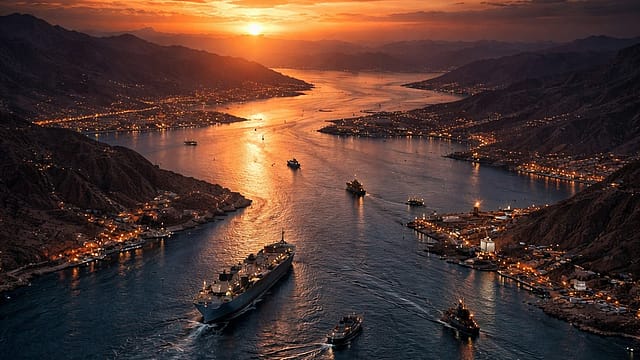
In a development that could reshape the geopolitical landscape of West Asia and ease pressure on global energy markets, US President Donald Trump has announced the completion of a peace agreement between the United States and Iran. The deal, which is set to be formally signed in Switzerland on June 19, includes the reopening of the strategically vital Strait of Hormuz, the removal of the US naval blockade, and the termination of military operations across multiple fronts. The breakthrough has been widely welcomed by world leaders, who view it as a significant step toward regional stability and economic recovery.
What does the US-Iran peace deal include?
Announcing the agreement on Truth Social, Trump declared the reopening of one of the world's most critical energy corridors and the immediate end of US naval restrictions in the region.
"The Deal with the Islamic Republic of Iran is now complete. Congratulations to all! I hereby fully authorise the toll-free opening of the Strait of Hormuz, and, simultaneously herewith, authorise the immediate removal of the United States Naval blockade. Ships of the World, start your engines. Let the oil flow!"

Losing Memory
16 Oct 2026 - Vol 05 | Issue 42
The making of a medical and social emergency
The announcement follows days of intense diplomatic engagement involving multiple regional stakeholders, particularly Pakistan, which played a key mediating role in the negotiations.
Pakistan Prime Minister Shehbaz Sharif confirmed that a peace agreement had been reached after extensive talks and stated that both sides had agreed to permanently end military operations, including in Lebanon.
"Following intensive talks, we are pleased to announce that the Peace Deal between the United States of America and the Islamic Republic of Iran has been REACHED. Both sides have declared the immediate and permanent termination of military operations on all fronts, including in Lebanon."
Sharif added, "The official signing ceremony will be on Friday, 19 June in Switzerland. We would like to thank the United States of America and the Islamic Republic of Iran for their commitment to finding a diplomatic solution to the conflict. We would also like to extend our sincere appreciation to our brothers in this mediation effort, the great leadership of the State of Qatar, for their support in reaching this agreement. I would also especially thank the visionary leadership of the Kingdom of Saudi Arabia and the Republic of Turkiye for their immense contributions in this regard."
He further noted, "With the agreement now in place, mediators will facilitate a series of meetings this week. These pre-implementation discussions will lay the foundation for the technical talks and the official signing ceremony."
According to Trump, the agreement is designed to prevent Iran from acquiring nuclear weapons while introducing stronger oversight mechanisms, including inspections and the disposal of nuclear material. Iranian authorities, however, have yet to publicly confirm the agreement.
The deal follows a conflict that began on February 28 and has significantly altered the regional security landscape.
How did regional tensions nearly derail the agreement?
Just a day before the announcement, Trump indicated that the agreement remained on track despite fresh tensions caused by Israeli strikes in Beirut and threats of retaliation from Iran.
Speaking to Axios, Trump acknowledged that the escalation had temporarily delayed the process.
"It shook it up. It delayed the signing by a few hours," Trump said.
The strike reportedly occurred shortly before Washington and Tehran were expected to finalise the agreement. Trump expressed frustration over the timing of the operation and reportedly believed it had complicated ongoing diplomatic efforts.
Despite the setback, negotiations continued, culminating in what both Washington and Islamabad have described as a historic breakthrough.
Why are world leaders calling it a historic breakthrough?
The agreement has drawn praise from governments across Europe and the Middle East, with leaders describing it as a major opportunity to restore regional stability, revive trade routes and strengthen global economic confidence.
Qatar Prime Minister Sheikh Mohammed bin Abdulrahman bin Jassim Al Thani welcomed the development, stating, "We welcome the agreement reached on the Memorandum of Understanding between the United States of America and the Islamic Republic of Iran," and added that Qatar looked forward to future negotiations being conducted in a "positive and constructive spirit."
Qatar's Ministry of Foreign Affairs described the memorandum as "an important step towards consolidating sustainable peace and promoting economic growth regionally and internationally."
Turkish President Recep Tayyip Erdogan called the agreement "an important development for establishing peace and tranquillity in our region."
"I sincerely hope that this news, which the entire world has long needed, will pave the way for the establishment of a lasting environment of peace and security in our region," Erdogan said.
UK Prime Minister Keir Starmer described the agreement as "a hugely important step forward in ending the war, ensuring regional stability and re-opening the Strait of Hormuz."
"I congratulate President Trump and the mediators from Pakistan, Qatar and elsewhere who have contributed to this breakthrough," Starmer said.
German Chancellor Friedrich Merz also welcomed the agreement.
"I welcome the agreement between the U.S. and Iran and congratulate President Trump and the Iranian side on this diplomatic breakthrough. This can pave the way towards a reinvigorated global economy and a more secure Middle East," Merz said.
French President Emmanuel Macron stressed the importance of swift implementation.
"This agreement must enable the urgent and unconditional reopening of the Strait of Hormuz," Macron said.
He added that France and the United Kingdom were prepared to support international efforts to restore maritime traffic and called for broader negotiations on Iran's nuclear and ballistic programmes as well as wider regional security concerns.
With formal signing scheduled for June 19 in Switzerland and technical discussions set to begin beforehand, the agreement is being viewed as one of the most significant diplomatic developments in West Asia in recent years, carrying implications for global energy supplies, international trade and long-term regional stability.
(With inputs from ANI)