India-US Trade Deal: Talks Are Done, So Why Is Piyush Goyal Still Waiting?
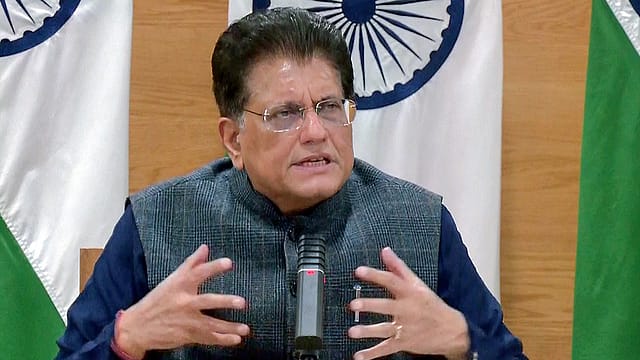
India and the United States have finished negotiating the first part of their much-awaited bilateral trade agreement. But the deal is not ready to cross the finish line yet.
The reason, according to Union Commerce Minister Piyush Goyal, is tariffs.
Speaking to reporters in Mumbai on Friday, Goyal said India and the US had closed negotiations on the first tranche of the agreement, but were now waiting for Washington to provide a framework under which Indian exports would receive preferential tariffs in the US market.
In other words, the broad negotiations may be over, but India is still waiting to see what tariff treatment its exporters will actually receive.
“We have closed the negotiations on the India-US free trade agreement,” Goyal said, adding that the first tranche would contain an initial set of proposals agreed by both sides.

Losing Memory
16 Oct 2026 - Vol 05 | Issue 42
The making of a medical and social emergency
The two countries still need to fine-tune some elements of the agreement, he said, particularly amid uncertainty over US tariffs.
Why Tariffs Are the Sticking Point
Tariffs are taxes imposed on goods when they enter another country. For exporters, they directly affect how competitive their products are in the foreign market.
That makes preferential tariffs an important part of any free trade agreement.
If Indian goods receive lower tariffs than they would otherwise face in the US, Indian exporters can potentially sell their products at more competitive prices. For Washington, similar preferential access to the Indian market would be part of the bargain.
Goyal said this preferential access is fundamental to making a trade agreement worthwhile for both countries.
“Any trade agreement has to give preferential access,” he said, stressing that this is what makes such agreements attractive to both sides.
The negotiations have therefore reached a point where the details of the tariff framework matter as much as the broader agreement itself.
India Is Not Looking to Sign a Deal Just to Meet a Deadline
Goyal also made it clear that India does not intend to rush the agreement simply to meet a deadline.
The government, he said, would prioritise the interests of Indian farmers, fishermen, micro, small and medium enterprises, startups, women entrepreneurs and young people while negotiating trade agreements.
That could make the final stages of the India-US negotiations particularly important.
Trade agreements can open markets for exporters, but they can also expose domestic industries to greater competition from imports. For India, the challenge is therefore to secure better access for its exporters without creating undue pressure on vulnerable domestic sectors.
Goyal said India and the US remain aligned on the issue and that discussions are continuing.
India and Europe Are Having a Different Trade Conversation
Goyal was speaking in Mumbai on the sidelines of the India-Belgium High-Level Dialogue on the India-European Union Free Trade Agreement.
The event took place during Belgian Prime Minister Bart De Wever's three-day official visit to India and focused on deepening economic ties between India and Belgium as well as the broader India-EU trade relationship.
Goyal described India and Europe as largely complementary economies.
Europe brings technology and capital, he said, while India offers a young workforce and a large consumer market. A deeper economic partnership could therefore act as a “force multiplier” for both sides.
Goyal also said that doubling India-Europe trade within five years should be possible, if not sooner.
The comments come as India and the European Union continue work towards their own free trade agreement, which could significantly expand market access between the two economies.
India and Belgium Want to Double Trade
The trade discussions with Europe also come against a broader push to strengthen India's relationship with Belgium.
During Prime Minister Narendra Modi's meeting with De Wever on Thursday, India and Belgium set a target of doubling bilateral trade over the next five years.
The two countries also signed a Letter of Intent on defence cooperation. Separately, the Belgian Security and Defence Industry Association and the Society of Indian Defence Manufacturers signed a memorandum of understanding aimed at strengthening industrial cooperation and improving access to Belgian markets and expertise.
The partnership is also expanding into clean energy and technology.
India-Belgium bilateral trade stood at $10.92 billion in 2025-26, according to the Ministry of External Affairs.
What Happens Next for the India-US Deal?
For now, the immediate focus remains on the tariff framework.
The first tranche of the India-US agreement is expected to capture the initial set of proposals that the two countries have agreed on. But India wants clarity on the preferential tariff treatment before the process can move ahead.
That makes Washington's next move important.
The negotiations may have formally crossed one major hurdle, but the deal still has to answer the question that matters most to exporters: what will it cost to get Indian goods into the US market?
Until that is settled, the India-US trade agreement remains negotiated, but not quite finished.