Cabinet Clears ₹3,230-Crore Yuge Yugeen Bharat Museum at North and South Block
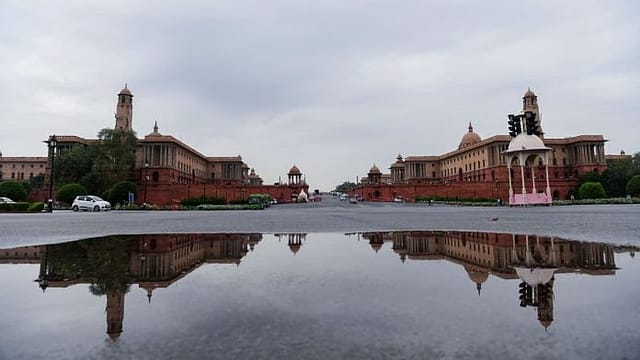
The Union Cabinet on Wednesday approved a ₹3,230-crore project to develop the Yuge Yugeen Bharat Museum at the historic North and South Block complex in New Delhi. The museum is envisaged as a major public institution showcasing India's civilizational history, cultural traditions and knowledge systems.
The Cabinet Committee on Economic Affairs, chaired by Prime Minister Narendra Modi, cleared the proposal following its appraisal by the Public Investment Board (PIB). The project will be implemented in phases between the financial years 2026-27 and 2030-31.
The museum will be developed through the adaptive reuse of the North and South Block buildings, retaining their architectural character while converting the former government offices into a public cultural institution. With a proposed built-up area of around 1,78,509 square metres, the museum is expected to have the world's largest display area, according to the government.

The Wealth Issue 2026
06 Nov 2026 - Vol 05 | Issue 45
Portraits of Dreamers and Doers under 35
FIRST GALLERY EXPECTED IN 2027
The first gallery, based on the theme of 'Adornment', is expected to open to visitors in the North Block in the latter half of 2027. The museum will follow a modular development model, allowing additional galleries to be introduced in phases.
Other proposed galleries will cover themes including architecture and cityscapes, mathematics and astronomy, languages and scripts, faith and spirituality, and India's historical links with the world through trade and ideas.
The Ministry of Culture has identified around 1.8 million objects from the National Museum and other museums under its jurisdiction, 52 Archaeological Survey of India site museums, state museums and private collections for possible display. The collection and content analysis is currently underway.
WHAT THE MUSEUM WILL FEATURE
The museum will use curated galleries, exhibitions, immersive technologies and contemporary interpretation methods to present India's tangible and intangible heritage. Its proposed facilities include collection storage and conservation spaces, visitor amenities, landscaping, intelligent building systems and supporting infrastructure.
The project is intended to bring together India's diverse cultural traditions, artistic practices, historical objects and knowledge systems under a single institutional framework. The government said its planning would follow international practices in museum design, heritage conservation and sustainable cultural management, adapted to India's cultural context.
The establishment of the museum was first announced by the Prime Minister on May 18, 2023. The relocation of government offices from the North and South Block buildings has opened the possibility of giving the historic structures a new public purpose.
CULTURAL AND ECONOMIC EXPECTATIONS
The government expects the museum to become a major cultural destination for domestic and international visitors, while strengthening India's cultural presence and soft power. It is also expected to provide a platform for public learning, academic research and engagement with the country's heritage.
The project is expected to generate employment during both construction and operational phases, including opportunities for artisans, craftspeople, researchers, museologists, designers, performers and technology professionals. It is also expected to support businesses in tourism and hospitality.
The government has said the project will promote domestic manufacturing through opportunities for Indian vendors, artisans, conservation professionals and technology providers involved in producing museum materials and services.
VISITOR CAPACITY AND REVENUE
The museum is being designed to handle an annual footfall of around one crore visitors. It is expected to generate recurring revenue through ticket sales, food and beverage facilities, events, venue rentals, digital experiences, guided tours and retail outlets.
The institution will cater to students, researchers, scholars, cultural practitioners and the general public, besides domestic and international tourists. The government has described it as a national public cultural and educational institution intended to serve visitors from all states and Union Territories.
With inputs from ANI