Why Belgium Is Deepening Its India Push Beyond Diamonds and Into Trade, Defence and Technology
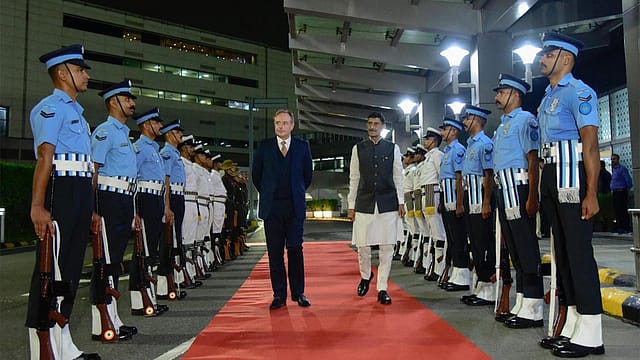
Mumbai is where Belgium’s India story gets down to business.
Belgian Prime Minister Bart De Wever arrived in the city today, moving into the second leg of a three-day visit that has already produced a string of agreements with India. His Mumbai schedule is expected to take him beyond government meetings and into some of the sectors that sit at the heart of the two countries’ commercial relationship: diamonds, ports and logistics.
De Wever was received at the airport by Jayakumar Raval, Maharashtra’s Minister of Marketing and Protocol. His engagements in the city are expected to bring him face to face with industry stakeholders as India and Belgium attempt to turn a broad diplomatic partnership into deeper economic ties.
The timing is significant. On Thursday, De Wever and Prime Minister Narendra Modi reviewed the full range of India-Belgium relations in New Delhi, with the two sides unveiling 10 key outcomes spanning trade, investment, defence, renewable energy, security and people-to-people ties.

Losing Memory
16 Oct 2026 - Vol 05 | Issue 42
The making of a medical and social emergency
But beneath the long list of agreements is a simpler ambition.
India and Belgium want to do considerably more business with each other.
The Three Ts Behind the Relationship
The language coming out of New Delhi has been unusually clear about where the relationship is headed.
According to Sibi George, Secretary (West) at the Ministry of External Affairs, the partnership is increasingly focused on what he called the “three Ts”: trade, technology and talent.
“In a nutshell, there is a clear focus on three Ts: Trade, Technology and Talent in this relationship,” George said while briefing the media after De Wever’s meeting with Modi.
That focus gives the Belgian prime minister’s Mumbai visit a commercial dimension.
The city is home to India’s financial and business establishment and is also closely connected to the country’s diamond trade, maritime infrastructure and logistics networks. These are precisely the sectors in which De Wever is scheduled to engage with stakeholders.
A Bigger Trade Ambition
The headline economic target from the visit is straightforward: India and Belgium want to double bilateral trade over the next five years.
Current bilateral trade stands at around $13 billion, according to George.
That target comes with a recognition that the relationship has room to grow. Belgium is already an important European economic partner for India, but the two countries are now looking to expand the relationship beyond established areas of commerce.
An investment fast-track mechanism has also been agreed to facilitate and promote Belgian investments in India.
The two sides are also seeking to institutionalise business engagement through the India-Belgium Business Forum.
The intention is clear: make it easier for companies on both sides to find opportunities, move capital and build longer-term commercial relationships.
From Diamonds to Defence
The economic agenda is only one part of the visit.
India and Belgium have also moved to strengthen defence cooperation, signing a Letter of Intent on Defence Cooperation and an MoU between the Belgian Security and Defence Industry Association and the Society of Indian Defence Manufacturers.
That expands the relationship into an area that has traditionally been less prominent than trade.
The two countries are also deepening cooperation in renewable energy, security, technology and connectivity.
For Belgium, India represents one of the world's most consequential growth markets. For India, Belgium offers a gateway into a European economy with deep industrial capabilities and established links to sectors such as diamonds, chemicals, pharmaceuticals, logistics and advanced technology.
Why Mumbai Matters
De Wever's arrival in Mumbai changes the character of the visit.
New Delhi is where bilateral relationships are negotiated. Mumbai is where many of those relationships eventually have to work.
The prime minister's meetings with diamond, port and logistics stakeholders therefore offer a glimpse of what India and Belgium want this relationship to become: less about diplomatic statements and more about commercial transactions, investment and industrial partnerships.
The visit began in India on September 2 at Modi's invitation. It has already produced agreements and targets.
In Mumbai, the test is more practical.
Can the three Ts of trade, technology and talent translate into three things that businesses care about most: investment, access and growth?
Belgium's prime minister is now in the city where those questions are likely to get a more commercial answer.
(With inputs from ANI)