The Spectre of Regime Change
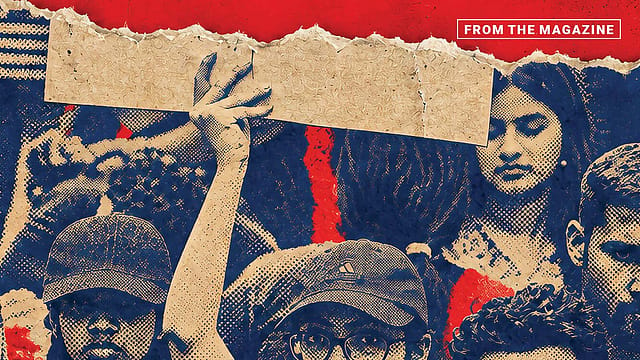
In October 22, when Cockroach Janta Party (CJP) activists Saurav Das and Ashutosh Ranka were released from custody by a special executive magistrate (SEM), the single-judge Bench of Justice Subramonium Prasad of the Delhi High Court had a few pointed questions for the duo. The June-July CJP protest over the leak of medical entrance examination papers, he said, was indeed a students’ issue, but since then the outfit appeared to have hopped causes. The cause had changed, but the people organising the protests were the same, and they had violated a peace bond a day after signing it. In a situation where the issue was breach of peace, Justice Subramonium observed, motives and objectives became important because the term ‘regime change’ is suddenly being bandied about.
Justice Subramonium’s advice that Das and Ranka await the outcome of their plea before the SEM proved fruitful, as the two were released soon after. But the judge’s remark, wondering if repeat offenders should not expect tougher scrutiny, served to remind the petitioners that they had violated peace bonds within a day of signing them. It also revived memories of the lawlessness that gripped central Delhi on July 20, when CJP’s march on Parliament led to clashes with police and destruction of public property. Agitations labelled ‘student protests’ had got out of hand in other countries, resulting in arson, looting and burning, the judge said, referring to rioting in several European cities where vandals had a field day robbing stores and terrorising people.

The court’s queries, which did not discount the possibility of protests being infiltrated by people not part of the CJP enterprise, reflect a reduced indulgence of the activism that led to the resignation of former Education Minister Dharmendra Pradhan and was seen as an outpouring of youth anger over a leaky examination system. Since then, CJP has taken up the issue of neglect in government schools in states where the Bharatiya Janata Party (BJP) is in office. CJP activists turned up at schools and carried out well-publicised ‘inspections’, and the media reported their findings. The gambit had its possibilities, as government-run schools can be found wanting on several counts. The move, however, did not pay immediate dividends. For one, administrations became alert to CJP’s tactics and the activists were denied entry to schools. It was hard to argue that CJP had any right to ‘inspect’ schools, and the activists attracted flak for disrupting academic work. Dispiritingly, the school campaign did not yield returns, and the controversy about the alleged differences within the Election Commission of India (ECI) over the Special Intensive Revision (SIR) of electoral rolls offered a more promising line of action. CJP returned to Jantar Mantar on September 25, demanding the resignation of Chief Election Commissioner (CEC) Gyanesh Kumar.
The demand for the CEC’s ouster was raised by CJP as well as the I.N.D.I.A. bloc, with Congress MP Rahul Gandhi in pole position. The two ran in parallel, and there was more than an element of competition, with Congress leaders reminding CJP’s Abhijeet Dipke that the outfit is an offshoot or surrogate of the Aam Aadmi Party (AAP) and had worked at cross purposes in states that went to polls recently. The AAP link is certainly evident, as Dipke was associated with the AAP government in Delhi and at least half-a-dozen prominent CJP members have similar links. The arrest of Das and Ranka after they entered Jantar Mantar, which had been denotified as a protest site, led to a change of script. Rather than merely detaining the CJP activists and releasing them after a few hours, Delhi Police produced them before a court, alleging breach of peace bonds. The two were sent to judicial custody for five days. This time Rahul Gandhi weighed in, saying no one should be punished for holding the Tricolour aloft, but Dipke’s call for protesters to congregate at Central Park at Connaught Place drew an indifferent response. For one, the police were out in strength, and committed protesters adept at shooting reels that often distort the scale of action held centrestage.
The determination of the police and the Modi government to prevent the street violence and anarchic scenes that accompanied the previous edition of CJP mobilisation drew strong criticism from sections of the commentariat for a “crackdown” on protesters, raising questions about the integrity of ECI. Rahul’s “vote chori (vote theft)” campaign similarly received the backing of a wide arc of opinion that has been at odds with BJP and Prime Minister Narendra Modi. But as the war of words played out, activist lawyer Prashant Bhushan, speaking at a media interaction at the Press Club of India on October 15, described the political struggle against the Modi government as a fight for “regime change” and justified the call on the grounds that electoral democracy has been undermined. The argument has been made before; Rahul Gandhi has repeatedly alleged that institutions such as the judiciary and the media have been captured by BJP and the Rashtriya Swayamsevak Sangh (RSS), or by big business aligned with the government. But Bhushan’s seeming acceptance that a change of regime through street protests is a legitimate goal, in the presence of Dipke, Left student leader Neha Bora and actor Prakash Raj, appeared to reveal the political objective of the campaign against the CEC. “Till now we have been agitating for a restoration of electoral democracy. But if the government continues to act in a barbaric manner, there will definitely be a regime change. Yes, we will see a regime change. We all want regime change. BJP has agitated often for regime change and they say there is a conspiracy for regime change? Regime change is the democratic right of every citizen. To create disaffection against the government is not an offence… This kind of dictatorial government cannot continue in this country which is crushing all our democratic rights and our electoral democracy,” Bhushan said.
Bora, the All India Students Association (AISA) president, is one of a long line of activists who have made Jawaharlal Nehru University (JNU) the base of their politics. Previous AISA presidents like Aishe Ghosh emerged at the forefront of agitations like the protests against the Citizenship Amendment Act (CAA) in 2019-20. Ever since the Modi government assumed office, AISA and other Left student organisations like the Students’ Federation of India (SFI) and the All India Students’ Federation (AISF) have not lost an opportunity to take to the streets in demonstrations that often end in violent confrontations with the police.
On October 15, BJP spokesperson Pradeep Bhandari shared a video of Bora allegedly saying that the violent protests that wracked Bangladesh in 2024 and toppled the Sheikh Hasina government had “shown the way” for similar agitations. Bhandari described Bora as Rahul’s “poster girl”, a reference to the prominence she was accorded in an I.N.D.I.A. bloc march to the Supreme Court on September 12, and said her remarks were an open admission of a regime change agenda and that Congress is the real threat to democracy. Bora’s comments were sourced to her address to the sixth national conference of Bangladesh’s Socialist Students’ Front, where she can be heard saying, “We know that the Gen Z movement we are seeing in this country first started in Bangladesh and congratulations to you for showing us the way… We know the movement that started in Bangladesh was for democracy and voter rights. Today the movement where young people are participating and leading is also for democratic voting rights. We know the fight against religious fundamentalism in your country is also Gen Z fight today… We take inspiration from you, lessons from you.”
Bora’s prominence during and after the CJP agitation drew approving comment from a section of political commentators who saw her as eloquent, fearless and engaged. AISA had carefully gauged the extent of the response to the CJP protests and jumped in with full vigour once the July protest at Jantar Mantar gained traction with Ladakh activist Sonam Wangchuk’s fast. AISA members also began fasting and, importantly, were the backbone of the July 20 protest, with their well-practised mobilisation tactics being put to use in confronting the police. Bora’s presence next to Rahul Gandhi and Priyanka Gandhi Vadra enhanced her profile, but her remarks on Bangladesh put Congress in a difficult situation. The suggestion that the 2024 Bangladesh protests were against “religious fundamentalism” flew in the face of the brutal targeting of Hindus, who were left to the mercy of the mob. Bhushan’s unfettered comments were controversial, but Bora’s bites on Bangladesh being an “inspiration” for India’s Gen Z were even more problematic. Rahul Gandhi’s decision to join campus leftists during the unrest at JNU in 2016 over the commemoration of Parliament attack convict Afzal Guru had seen BJP claim that Congress had become a fringe party catering to ultra-Left causes. Bora’s presence on the I.N.D.I.A. bloc bandwagon exposed Congress to a similar charge after her unfiltered comments at the Bangladesh conference. The regime change argument became a more credible accusation rather than a slogan.
While Congress fended off the charge, other opposition leaders sensed that the turn in events and narrative could be damaging as the discussion moved to political goals. MA Baby, general secretary of the Communist Party of India (Marxist), said the government’s persistent focus on a “regime change” remark betrays its own anxieties. “For us, regime change essentially means hope of a change of guard in the 2029 elections, in a democratic way. To that effect, we will continue to campaign against the Modi government over a raft of political issues, including irregularities in the SIR of electoral rolls. The media has exposed the designs of the government and we have evidence at the grassroots level of malpractices. We are going to expose the government through protests and campaigns,” the CPM chief said.
Baby distanced CPM from speculation, saying, “We are not preoccupied with such thoughts, and instead our thrust is on fighting the anti-people, anti-constitutional policies of the current government… So long as this government doesn’t lose its majority on its own, elections alone can decide that, and our effort is to convince the people to vote out BJP in the next election.” He added that CPM is focusing on the functioning and immunity of the CEC and related issues. Dipankar Bhattacharya, general secretary of the Communist Party of India (Marxist-Leninist) Liberation, which is the parent of student wing AISA, said the Modi government and the “Sangh-BJP establishment” are trying to mislead people and discredit the movement against electoral corruption. “It comes from their fundamental fear of the people and disdain for dissent that makes them identify and arrest activists talking about increased wages or climate justice as threats to ‘national security’. No amount of accusations of anarchy or the bogey of foreign conspiracy can stop the people from fighting for fair elections on the basis of universal adult franchise, for a responsive government and accountable institutions,” he said.
Speaking along similar lines, Rajya Sabha MP Manoj Kumar Jha, who is also the national spokesperson of the Rashtriya Janata Dal (RJD), told Open that the narrative portraying protesters and the opposition as agents of “regime change” appears to raise serious questions about a possible “false-flag” operation orchestrated by BJP. “Such allegations must, of course, be examined through credible evidence rather than political rhetoric,” he said. Stating that every genuine protester understands the value of constitutional means, he said, “We understand that challenging a government is not the same as challenging the Constitution. In a democracy, citizens have every right to question those in power, demand accountability and seek political change through peaceful and constitutional means. Defending democracy is not an act of destabilisation; it is an exercise of our constitutional rights.”
The effort at damage control was evident even as Rahul Gandhi reportedly left for a foreign destination and did not immediately react to the charge levelled by BJP. The nature of past mobilisations and the premeditated violence, of which the 2020 Delhi riots and the violence at Jamia Millia Islamia during the anti-CAA stir are cases in point, made the charge seem credible. As Justice Subramonium noted, the pattern of anarchy has been replicated in India’s neighbourhood in Nepal and Bangladesh, and beyond.
The prime minister sharpened the attack during his address on Dussehra when he said forces that harm the nation, divide society and harbour hatred for India’s culture need to be opposed tooth and nail. “They are enemies of the nation,” Modi said. “We have to rededicate ourselves on Vijaya Dashami. We must recognise the enemies of Mother India and defeat them. Everyone needs to unite,” he said. On the same day, RSS chief Mohan Bhagwat delivered a similar message in his annual Vijaya Dashami address in Nagpur, saying, “A storm has emerged from the West. Every kind of traditional norm and belief is opposed. See what is happening in France, in Albania and what happened in Nepal and Bangladesh. People say the situation will change if regime changes, but this has not happened. This is all about vested interests.” The message was amplified by top BJP leaders like Uttar Pradesh Chief Minister Yogi Adityanath and West Bengal Chief Minister Suvendu Adhikari.
A controversial social media post by the Kerala unit of Congress suggesting that Chief Justice of India (CJI) Surya Kant should resign was hastily withdrawn, but not before it caught wide attention. The deleted post said: “Dear Surya Kant, If law and order is not your domain, resign now. We will find your replacement who can handle it.” The insulting tone, couched in informality, was not lost on observers and betrayed the Congress ecosystem’s rising anger with institutions it feels do not share its views and are an impediment to its goals. The impression gained more traction when Shiv Sena (UBT) leader Sanjay Raut lashed out at the Modi government and posted a video depicting arson and unrest at Albania’s supreme court and government buildings. He warned that the people in Albania had revolted against a supreme court they felt was protecting a venal government, and added that all countries, especially India, should draw appropriate lessons. Responding to Raut, BJP leader and Maharashtra minister Nitesh Rane said the comments revealed Uddhav Thackeray’s support for undocumented illegals and that the agenda was similar to that of terrorist Dawood Ibrahim.
Rane’s remarks point to an unfolding narrative as BJP prepares to follow up its charge that CJP and the I.N.D.I.A. bloc are pursuing a regime-change agenda with a sharper attack, arguing that the opposition to the SIR and the CEC is primarily driven by a desire to protect illegal immigrants and infiltrators from Bangladesh, and is a device to promote vote banks. The discussion could then move to ground on which BJP is more comfortable and where it has cornered opponents with some success. All matters, including several allegations of impropriety regarding the functioning of ECI, are before the Supreme Court, and there is little chance of any move to replace the CEC succeeding. The potency of street protests and disruptions is also declining, and there is a lack of public appetite for prolonged agitations affecting livelihoods. The latest round of protests has refreshed memories in government about the violence in Noida and Manesar following the implementation of the new labour codes. A similar network of Left-aligned groups like the Mazdoor Bigul Dasta, with nomenclature drawn from leftist revolutionary vocabulary, sprang up to fan fears among workers and exploit discontent over wages. An early indication had come from labour representatives who were part of discussions with the government and were concerned about the dilution of the role of unions. The possibility of more such confrontations cannot be ruled out, but the police and security agencies are now increasing surveillance as well as taking a less accommodative stance towards protests that had paralysed Parliament’s Monsoon Session.
The I.N.D.I.A. bloc intends to keep the agitation going till the Winter Session of Parliament, with the next show of strength slated for November 1 at Delhi’s Ramlila Maidan. The SIR issue does serve a purpose, as it brings all I.N.D.I.A. bloc constituents on one stage and masks differences that have cropped up over issues such as the delimitation legislation and the rollout of women’s reservation. The all-important Bills are high on the Modi government’s essential list, and the governing alliance was forced to step back due to the force of the CJP agitation and the opposition’s blockade in Parliament. Although the contest is not over, and much depends on what transpires in the Supreme Court, the odds are appearing more even, not least because of a perception that the regime change being advocated is disruptive and could spell uncertainty and violence.